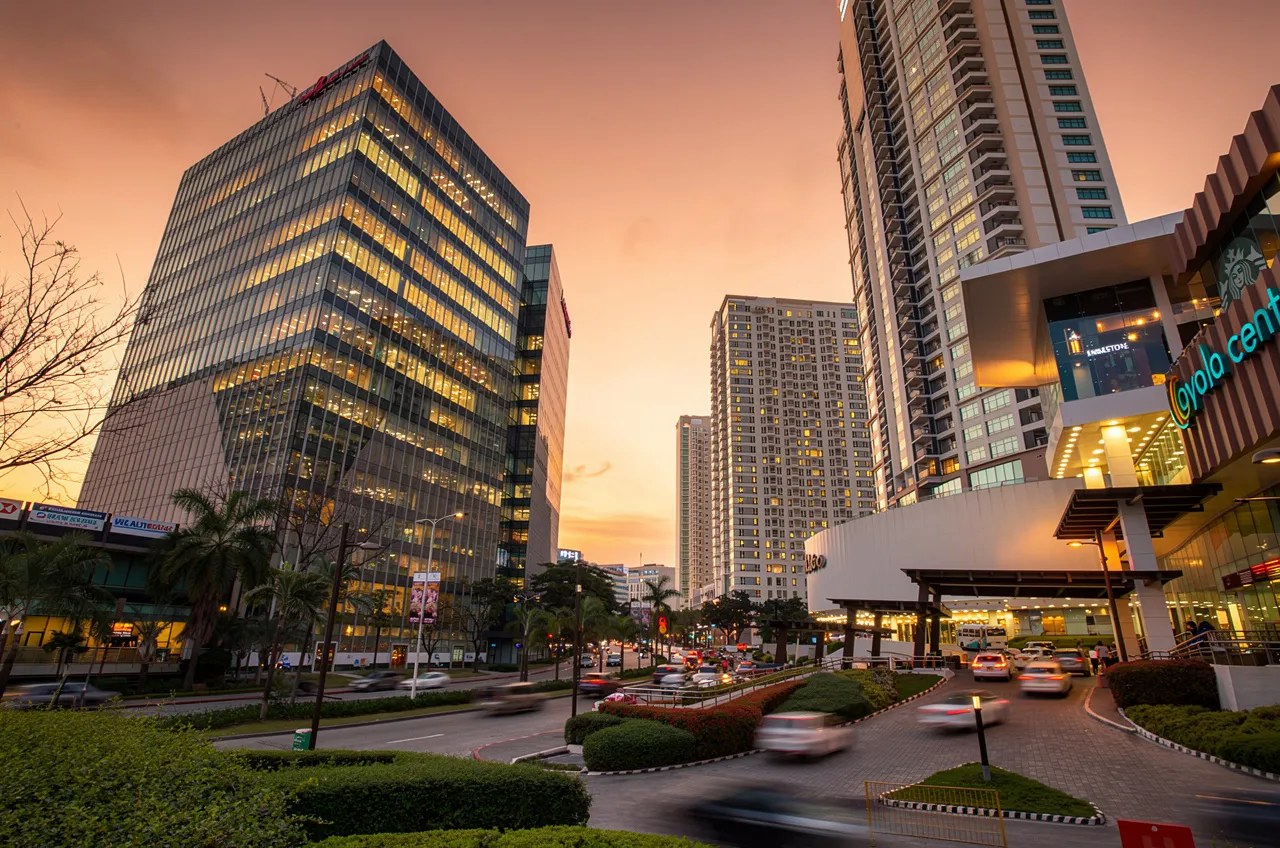
Ask why a company is scouting Cebu instead of Metro Manila, and the answer is almost never a single industry. It is IT-BPM firms filling office towers, real estate developers chasing the workers and tourists those towers bring in, and a tourism sector that increasingly sells the same convention halls and hotels the BPO industry relies on for site visits and training. Cebu's economy runs on that overlap.
This guide walks through where Cebu's business activity actually sits today: which districts are full, which are expanding, who governs the IT-BPM sector versus the broader business community, and how tourism factors into decisions that look, on the surface, like pure office-space questions.
Key Takeaways
- Cebu IT Park's office vacancy fell to roughly 14 percent in Q3 2025 from 28 percent in 2022, but with no new office supply planned there for the next three years, growth is being pushed toward South Road Properties.
- South Road Properties (SRP), anchored by developments like City di Mare, SM Seaside City Cebu, and the newer SM Seaside Cebu Arena, is emerging as Cebu's next commercial expansion zone.
- The Cebu IT-BPM Organization (CIB.O) governs the IT-BPM sector specifically, while the Cebu Chamber of Commerce and Industry (CCCI) coordinates broader cross-industry growth, including the tourism sector's MICE pivot.
- Industry estimates place Cebu's IT-BPM headcount at roughly 180,000 to 200,000, the largest concentration outside Metro Manila.
- Tourism is shifting from mass arrivals toward MICE, wedding, and sports tourism, segments that draw on the same integrated townships and hospitality infrastructure the BPO workforce uses.
- Cebu Province has ranked as the Philippines' wealthiest province for multiple consecutive years, a position built on IT-BPM, tourism, and infrastructure investment together, not any one sector alone.
Cebu's Business Geography: Three Districts, Three Roles
Most of Cebu's commercial activity concentrates in three districts, each playing a distinct role. Cebu IT Park in Lahug is the established core, built for outsourcing and now largely full. Cebu Business Park, inside the Ayala estate, anchors corporate and financial tenants. South Road Properties, a reclaimed stretch south of the city, is where the newest large-scale development is happening, from residential towers to retail and entertainment venues.
Understanding which district fits a given business matters more in Cebu than in Metro Manila, where districts blur together. Cebu's three are still distinct enough that the choice affects everything from lease rates to commute times to which industry peers a company ends up next to.
Cebu's IT-BPM Engine: The Numbers Behind the Hub
Cebu is the largest IT-BPM (information technology and business process management) cluster outside Metro Manila. Industry estimates put the sector's headcount in the province at roughly 180,000 to 200,000 workers, drawing on a graduate pipeline from Cebu's universities and a long-standing reputation for English-language proficiency.
Office demand has outpaced supply. Cebu IT Park's office vacancy declined to around 14 percent in the third quarter of 2025, down from 28 percent in 2022, according to industry property reporting. More than 96,000 square meters of office space were transacted in just the first nine months of 2025, driven largely by expansions from professional service and outsourcing firms such as Concentrix, Optum, EY, and Wipro.
Flexible workspace is filling the gap. Cebu IT Park accounts for roughly three-quarters of Metro Cebu's total flexible workspace inventory, with operators including KMC Solutions, Regus, The Company Cebu, and Enspace hosting over 10,000 flex seats between them as of late 2025. That flex capacity has become a release valve for firms that can't secure traditional office leases fast enough.
The supply constraint is structural, not temporary. With no new office supply expected in Cebu IT Park over the next three years, real estate analysts have urged developers to activate idle projects elsewhere in Metro Cebu, with an emphasis on green, BPO-grade, and disaster-resilient design. That recommendation is a direct response to Cebu's earthquake exposure and is part of why newer developments increasingly market resilience as a selling point to tenants, not just an engineering afterthought.
BPO and call center locations across Cebu, concentrated in Cebu IT Park. Browse BPO & Call Centers listings on azifind →
Who Governs Cebu's Business Community: CIB.O, IBPAP, and CCCI
Three organizations show up repeatedly in Cebu business coverage, and they are not interchangeable. Knowing which one to approach depends on whether the interest is IT-BPM specifically or Cebu's business community broadly.
| Organization | Scope | What it does |
|---|---|---|
| CIB.O | Cebu, IT-BPM sector only | Investor marketing, talent development, and policy advocacy specific to IT and BPM firms; runs the annual Cebu IT-BPM Summit and the City of Coders programme |
| IBPAP | National, all IT-BPM | The nationwide federation CIB.O reports up to; sets the national roadmap Cebu's targets are measured against |
| CCCI | Cebu, all industries | Cross-industry chamber that convenes events like Cebu Business Month and the MICE-tourism summit, bringing IT-BPM, tourism, retail, and other sectors into one platform |
CIB.O was formed in 2017, succeeding the earlier Cebu Education Development Foundation for Information Technology (CEDFIT). Its four-pillar structure, investor marketing, talent development, policy advocacy, and innovation, mirrors IBPAP's national model but localizes it to Cebu, with member firms including Concentrix, Accenture, Qualfon, and JPMorgan Chase alongside Cebu-headquartered firms like Hybrain Development Corporation. Its annual summit draws 800 to 1,000 delegates, sponsored by companies including PLDT, Globe, and JLL.
CCCI operates at a different altitude. Rather than IT-BPM specifically, it organizes initiatives like Cebu Business Month, which in 2026 included a dedicated MICE-Tourism Summit aimed at positioning Cebu as a meetings and conventions destination, a goal that depends on hospitality infrastructure rather than office space.
The Shift South: Real Estate and South Road Properties
With Cebu IT Park effectively full and no new supply coming, the momentum in Cebu real estate has moved south to South Road Properties (SRP), a reclaimed coastal stretch built for exactly this kind of large-scale, master-planned expansion.
City di Mare and SM Seaside City Cebu anchor the district as its two largest commercial developments, combining retail, residential, and office components in a way that echoes the integrated-township model Megaworld used earlier at Mactan Newtown, just applied to a different stretch of coastline. Recent commercial reporting on SRP points to accelerating activity there as both a retail and business location, consistent with the broader pattern of Metro Cebu development moving to where land is still available.
SM Seaside Cebu Arena adds a piece SRP didn't previously have: large-scale entertainment and events capacity. That matters beyond retail, because Cebu's tourism sector is simultaneously trying to build out its MICE (meetings, incentives, conferences, and exhibitions) capacity, and a venue built for concerts and major events doubles as convention infrastructure.
Infrastructure is what makes the shift viable. The Cebu-Cordova Link Expressway (CCLEX), the country's longest sea-crossing bridge, has already reshaped connectivity between Cebu mainland and Mactan Island. Combined with the Metro Cebu Expressway and ongoing improvements around Mactan-Cebu International Airport, the infrastructure investment supporting SRP is the same infrastructure supporting tourism access, not a separate track.
Condominium and residential developments across Cebu, increasingly concentrated around SRP. Browse Real Estate listings on azifind →
Tourism's Pivot: From Mass Arrivals to MICE
Cebu's tourism sector is explicitly repositioning around what industry leaders call "quality over quantity." At the 2026 Cebu Business Month MICE-Tourism Summit, CCCI president Regan Rex King framed the strategy around capturing high-value travelers, premium events, and sustainable economic returns rather than simply maximizing arrival counts.
MICE is the centerpiece. Cebu's successful hosting of the 48th ASEAN Summit is being used internally as proof the province can compete for international conference and meeting business, a segment CBM 2026 tourism committee chairman Josef Chiongbian has acknowledged Cebu still isn't always shortlisted for, despite having the venues. His diagnosis was blunt: capability isn't the gap, strategy and alignment are.
Wedding and sports tourism are the supporting segments. Both create recurring visitation cycles that help fill off-peak demand, and both carry an economic footprint that extends into events management, food and beverage, and creative services, industries that also serve Cebu's corporate and BPO population day to day.
A newly formed MICE Alliance, led by president Cleofé Albiso, is attempting to consolidate what had previously been individually sold hotels and tours into a single, venue-backed offering. CBM 2026 chairperson Bryan Yap has similarly pushed for one unified Cebu tourism narrative rather than the fragmented beach-destination, food-hub, cultural-center messaging the province has used in the past.
Tourist attractions across Cebu, the same hospitality footprint the province's MICE push draws on. Explore Cebu's travel directory on azifind →
Where Business and Tourism Actually Overlap
It's easy to treat IT-BPM, real estate, and tourism as three separate sections of a report. In Cebu, they are frequently the same building. Integrated townships built to house BPO office towers, such as Mactan Newtown, were designed from the start with hotels, retail, and residential towers alongside the office space, because the developer was selling to BPO tenants, tourists, and residents at the same time.
That pattern is repeating at SRP. City di Mare and SM Seaside City Cebu combine retail and residential elements the way a purely BPO-focused development wouldn't need to, and SM Seaside Cebu Arena serves both a tourism function, as an entertainment draw, and a business function, as event and convention space. A company evaluating office space at SRP is, whether it intends to or not, also evaluating proximity to the amenities driving Cebu's tourism pitch.
The workforce side reinforces the same overlap. A large, English-proficient BPO workforce with disposable income sustains the retail, dining, and hospitality businesses that also serve tourists, which is part of why Cebu's retail and F&B sectors have grown in step with its office towers rather than independently of them.
The Talent Pipeline Behind Both Sectors
Cebu's ability to sustain both its IT-BPM sector and its tourism ambitions rests on the same underlying resource: its universities. The province is home to multiple higher-education institutions producing tens of thousands of graduates a year in business, IT, hospitality, and related fields, feeding both BPO hiring pipelines and the hospitality and events staffing that MICE tourism depends on.
CIB.O's City of Coders programme is a direct response to keeping that pipeline moving up the value chain, aiming to embed coding and digital-skills training across Cebu's school system so the workforce isn't limited to voice-based call center roles as the sector matures toward knowledge process outsourcing (KPO) and software work.
Workforce stability is also a selling point. Cebu is frequently cited as having lower attrition than Metro Manila's outsourcing market, a factor operators weigh heavily given how costly retraining and rehiring are in high-volume BPO operations.
Cebu vs Metro Manila: A Quick Comparison
| Factor | Cebu | Metro Manila |
|---|---|---|
| Office vacancy (prime districts) | Tightening, roughly 14% in Cebu IT Park as of Q3 2025 | Varies widely by district; generally more supply available |
| Labor and real estate costs | Generally lower | Generally higher |
| Talent pool size | Smaller in absolute terms, roughly 180,000 to 200,000 IT-BPM workers | Larger; the national IT-BPM center |
| Attrition | Comparatively lower, often cited as a retention advantage | Comparatively higher in high-volume BPO roles |
| Airport access | Mactan-Cebu International Airport, second busiest in the country | Ninoy Aquino International Airport, busiest in the country |
| Tourism-adjacent amenities | Strong and expanding, integrated with commercial townships | Present but less tied to specific business districts |
What This Means for a Business Scouting Cebu
A company evaluating Cebu today is making a different decision than it would have five years ago. Cebu IT Park is no longer the default answer; it's close to full, and the next three years of supply constraints there are already priced in. The realistic options are securing flex space in the existing core, or planning around SRP's newer, still-forming inventory.
Which makes sense depends on how much a business values being inside the established IT-BPM cluster, near CIB.O's member network and the talent pipeline built around it, versus getting in early on a district that is still being built out but comes with more room to grow and closer proximity to the amenities driving Cebu's tourism push.
Either way, treating IT-BPM, real estate, and tourism as separate questions misses how Cebu's economy is actually structured. They're one demand curve, expressed across three sectors.
Frequently Asked Questions
What makes Cebu the top business hub outside Metro Manila?
Cebu combines the largest IT-BPM cluster outside Metro Manila with a diversified economy in real estate, tourism, and shipbuilding, backed by an international airport, a large English-proficient graduate pool, and PEZA-accredited business parks.
What is the difference between Cebu IT Park and South Road Properties (SRP)?
Cebu IT Park in Lahug is the established, near-full IT-BPM core with limited new supply planned. South Road Properties is the newer reclaimed expansion zone south of the city, anchored by mixed-use developments like City di Mare and SM Seaside City Cebu.
What is the Cebu IT-BPM Organization (CIB.O) and how does it differ from the Cebu Chamber of Commerce and Industry?
CIB.O is the industry body specific to Cebu's IT and business process management sector, covering investor marketing, talent, and policy for that sector. The Cebu Chamber of Commerce and Industry (CCCI) is a broader, cross-industry body that also drives initiatives like Cebu Business Month and the MICE-tourism push.
Why is Cebu's IT-BPM sector facing tight office supply?
Office vacancy in Cebu IT Park fell sharply as demand from firms expanding their outsourcing footprint outpaced new construction, and with no new office supply expected in the district over the next several years, developers are being urged to activate projects elsewhere in Metro Cebu instead.
How is tourism connected to Cebu's business growth?
Tourism and BPO growth draw on the same real estate: integrated townships built for BPO office towers also include hotels, retail, and residential units used by both workers and visitors, and Cebu's push into MICE tourism depends on the same convention and hospitality infrastructure that supports corporate relocations.
Is Cebu more affordable than Metro Manila for business investment?
Cebu generally offers lower labor and real estate costs than Metro Manila, which is one reason firms cite it as an expansion or relocation destination, though tightening office supply in Cebu IT Park is narrowing that gap for premium space specifically.
What industries beyond BPO are growing in Cebu?
Beyond IT-BPM, Cebu has an established shipbuilding and manufacturing base, a growing real estate and retail sector concentrated around South Road Properties, and a tourism industry pivoting toward MICE, wedding, and sports tourism segments.
What role does the Cebu-Cordova Link Expressway (CCLEX) play in Cebu's economy?
CCLEX is the country's longest sea-crossing bridge, connecting Cebu mainland to Mactan Island. It shortens travel between the airport, Mactan's hotel and BPO clusters, and Cebu City, supporting both tourism access and business commuting across the two islands.
Looking for a business partner in Cebu?
Browse verified BPO, real estate, and service providers operating in Cebu on azifind, or add your own Cebu-based business to reach companies scouting the province.