Most guides to business ideas in the Philippines tell you what you could start. Almost none tell you the two numbers that decide whether you actually make money: what it costs to start in pesos, and how many months until the business pays you back.
A sari-sari store and a freelance design service can both work, but they demand completely different amounts of capital, patience, and skill. This guide sorts the ideas that hold up in 2026 by real startup cost and break-even, then walks the part almost every other list leaves out: how to register your business, where to get the cheapest financing, and how to actually get paid once you commit.
Under 5K
Lowest-capital start
(freelancing), in PHP
8%
Flat tax option for
micro earners
PHP 3M
VAT threshold for
small business
1,300+
Negosyo Centers
nationwide
How to Pick a Business That Actually Fits You
Before any list is useful, run each idea through four filters. Capital: how much you can put in without touching money you need to live on. Skill: what you can already do at a level someone will pay for today, without months of training. Time: whether you can work this full-time or it has to run alongside a job. Risk: how many months of no income you can absorb before it hurts.
Most people fail not because the idea was bad, but because they picked one that clashed with their real situation. A high-capital laundry shop is a poor fit for someone with PHP 15,000 and no savings buffer. A freelance writing business is a poor fit for someone who cannot write. Match the idea to the four factors first, then look at the options below.
Business Ideas at a Glance: Cost and Break-Even
The table below groups the ideas into three tiers by capital. Figures are realistic planning ranges for 2026 and vary by location, pricing, and volume. Treat them as a starting point, not a guarantee.
Months to Break Even by Business Idea
Bar length reflects the midpoint of each planning range; labels show the full range. Sky bar marks the fastest payback. Skill-based services break even first because capital is not the constraint.
| Business Idea | Startup Cost (PHP) | Realistic Monthly Income | Break-Even |
|---|---|---|---|
| Freelancing / VA | Under 5,000 | 20,000 to 60,000 | Immediate |
| Home food / packed meals | 5,000 to 15,000 | 30 to 50% margin | 1 to 3 months |
| Sari-sari store 2.0 | 5,000 to 20,000 | Thin, volume-driven | 2 to 4 months |
| E-loading station | 1,000 to 3,000 | Low, add-on income | Fast, low ceiling |
| Print-on-demand | Near zero to a few thousand | Traffic-dependent | Marketing-dependent |
| Laundry shop | 80,000 to 200,000 | Recurring | 8 to 18 months |
| Cloud kitchen | 30,000 to 150,000 | After 20 to 30% platform cut | 3 to 9 months |
| Pet grooming / daycare | 50,000 to 150,000 | Recurring regulars | 6 to 12 months |
| Printing business | 50,000 to 200,000 | B2B plus events | 6 to 15 months |
| Hydroponics / small farm | 30,000 to 150,000 | Sells to restos, markets | 6 to 12 months |
| Digital marketing agency | Under 20,000 | 8,000 to 40,000 per client | Fast |
| Bookkeeping / BIR compliance | Under 10,000 | 3,000 to 15,000 per client | Fast |
| Consulting | Under 10,000 | 1,000 to 5,000+ per hour | Immediate |
Planning ranges for 2026. Actual costs and timelines vary by region, pricing, and volume. Verify against current local figures for your area before committing capital.
Low-Capital Ideas Under PHP 20,000
These are the ideas you can start with what most people can scrape together. The trade-off is that the low-capital options with the widest appeal also carry the thinnest margins, so volume and consistency matter more than the idea itself.
Freelancing and Virtual Assistance
Startup cost is often under PHP 5,000 because you likely already own the laptop and pay for internet. Rates run from around PHP 300 per hour for entry-level admin work to PHP 800 and up for specialized skills like development, design, or paid-ads management. A solo freelancer working steadily can clear PHP 20,000 to 60,000 a month, and break-even is immediate. This is the highest-return low-capital option in the country, and the only real barrier is skill, not money. If your skill is marketing, design, or software, the firms that outsource this work fill our digital marketing directory and IT and software directory.
Home Food and Packed Meals
Startup cost is roughly PHP 5,000 to 15,000 for ingredients, packaging, and basic appliances. Food carries healthy margins, often 30 to 50 percent when priced properly, and break-even can come within one to three months if you have steady orders near offices or schools. The honest risk is underpricing and spoilage. Many home cooks forget to price in their own labor and gas, then wonder why there is no profit. Register as a micro enterprise and you can elect the flat 8 percent tax to keep bookkeeping light.
Sari-Sari Store 2.0
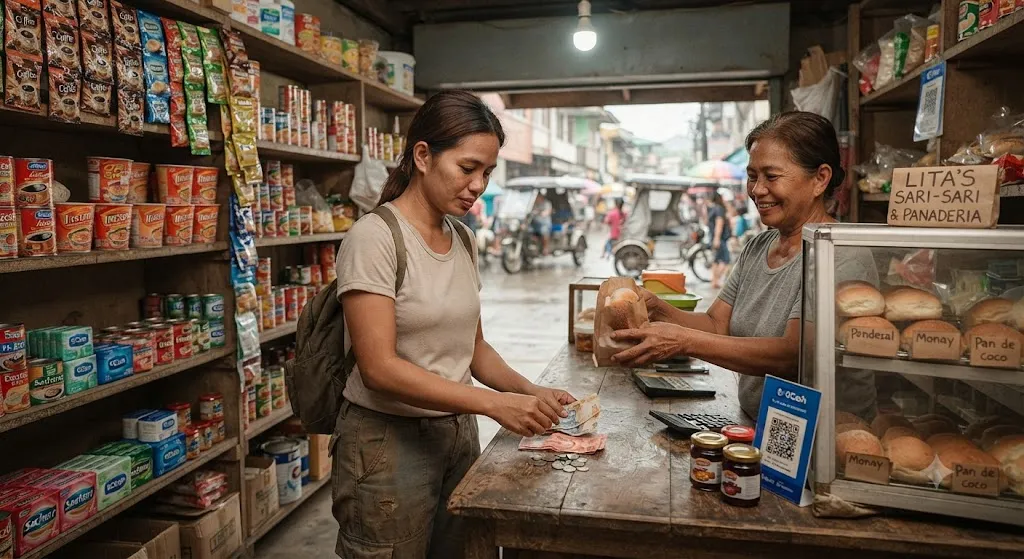
Startup cost runs from PHP 5,000 to 20,000 for starting inventory and simple shelving. The old model sold snacks on thin 10 to 20 percent margins. The 2026 version adds GCash cash-in and cash-out, bill payments, and e-loading, which earn service fees on top of goods. Break-even is often two to four months where foot traffic is real. The classic killer is pautang, informal credit to neighbors that quietly drains working capital. This is exactly the kind of micro retail that SBCorp's RISE UP Tindahan program was built to finance.
E-Loading and Print-on-Demand
An e-loading station starts at PHP 1,000 to 3,000, but margins per transaction are small, so profit is entirely about volume. Treat it as an add-on to another counter business, not a standalone plan. Print-on-demand starts near zero because a third-party printer holds no inventory and ships for you, with margins around 15 to 40 percent per item after the platform's cut. The catch is that capital is not what makes it work, traffic and audience are. Break-even depends on your marketing, not your budget. You can browse the kinds of retail and shopping businesses you would be competing with to find a gap worth filling.
Mid-Capital Ideas, PHP 20,000 to 200,000
This tier buys equipment and, usually, a location. These businesses take longer to break even, but they tend to produce recurring revenue that a purely skill-based service does not.
Laundry Shop
Startup cost is roughly PHP 80,000 to 200,000 for two or three industrial washers and dryers, a space deposit, and supplies. Demand is steady in dense residential areas, dormitory clusters, and neighborhoods where units lack laundry space. Break-even typically falls between eight and eighteen months depending on location and volume. It is operationally simple and does not need many staff, which is why it is a common first brick-and-mortar business.
Cloud Kitchen
Startup cost is around PHP 30,000 to 150,000 for a kitchen upgrade, packaging, and onboarding to GrabFood or Foodpanda. You skip dining-room rent entirely and sell delivery-only. The number to respect is the platform commission, often 20 to 30 percent, which eats directly into margin. Break-even can arrive in three to nine months if one hero dish catches on. Pick one dish you do better than anyone nearby rather than a broad menu.
Pet Grooming, Printing, and Hydroponics
Pet grooming and daycare start at about PHP 50,000 to 150,000 for a grooming table, tools, and a clean, safe space, and the pet-care market is one of the fastest-growing consumer segments in the country. A printing business runs PHP 50,000 to 200,000 for a heavy-duty printer, laminator, and cutter, and it climbs faster if you also offer design, since that captures the higher-margin work. Hydroponics and small vegetable farming start around PHP 30,000 to 150,000 and do not need hectares of land, though perishability is the standing risk, so line up buyers before you scale planting. All three break even in roughly six to fifteen months.
Home-Based Service Businesses With the Best Margins
If you have a professional skill, this is where the real returns are. These businesses need almost no capital, carry the highest margins in this guide, and scale by adding clients rather than buying equipment.
A digital marketing or social media management agency starts under PHP 20,000, with retainers commonly running PHP 8,000 to 40,000 per client per month. Countless clinics, cafes, and retailers know they need to be online and have no one to run it, and that gap is your pipeline. See the competitive landscape on our digital marketing directory.
A bookkeeping and BIR compliance service starts under PHP 10,000, with monthly retainers of PHP 3,000 to 15,000 per client. The work is sticky because every registered business needs it every single month, and demand only grows as more online sellers get pulled into the tax net. See the scale of the market on our accounting and professional services directory.
Consulting starts under PHP 10,000, mostly a website and calling cards, with rates from PHP 1,000 to 5,000 and up per hour depending on your niche and track record. If you have deep experience in an industry, package it. Our business consulting directory shows how many operators are already selling exactly this. And if you can build software, a niche tool for small groceries or salons does not need millions of users. Fifty loyal businesses paying monthly is a real income.
Register, Fund, and Get Paid
This is the part the other lists name-drop and never explain. Getting these three right is what separates a hobby from a business.
Registering Is a Stack, Not a Single License
As a sole proprietor you register your business name with the DTI through the Business Name Registration System, then get a barangay clearance, then a mayor's permit from your city or municipality's Business Permit and Licensing Office, and finally register with the BIR through its online ORUS portal to get your Certificate of Registration and the authority to issue receipts. Home-based businesses, online sellers, and freelancers all need the full stack, and there is no size-based exemption from local permitting. One piece of good news: the PHP 500 annual BIR registration fee was permanently waived in 2024 under the Ease of Paying Taxes Act, so you no longer file or pay it, and only a small documentary stamp tax applies at registration. If you qualify as a Barangay Micro Business Enterprise, you can register as a BMBE and get income-tax relief on top of that.
| Registration Item | Typical Cost (PHP) |
|---|---|
| DTI business name | Around 530 |
| Barangay clearance | 500 to 1,000 |
| Mayor's permit plus fire and sanitary fees | 3,000 to 8,000 |
| BIR registration plus documentary stamp tax | Around 530 |
| Books of account | 1,000 to 2,000 |
A typical small-business registration lands somewhere around PHP 5,000 to 12,000 in total. Costs vary by LGU. If you are choosing between registering as a sole proprietor and forming a company, start with our DTI vs SEC registration guide.
Your Tax Setup Can Be Simple
A self-employed individual or professional whose gross sales and other income stay at or below PHP 3,000,000 for the year can elect a flat 8 percent income tax on gross receipts above PHP 250,000, in place of both the graduated income tax and the 3 percent percentage tax. That PHP 3,000,000 line is also the VAT threshold, and it still stands in 2026. The 8 percent option means far less bookkeeping, which suits most small and home-based businesses. One caution: the 8 percent applies to gross, not profit, so a high-cost, low-margin business like food trading can actually pay less under graduated rates with itemized deductions. Run your real expense ratio before you elect, and remember you must re-choose the option at the start of each year.
Financing Is Cheaper From the Government
| Funding Source | Amount (PHP) | Cost | Collateral | Best For |
|---|---|---|---|---|
| Negosyo Center | Not a lender | Free | None | Orientation, mentoring, business plan help before you borrow |
| RISE UP Multi-Purpose (SBCorp) | 10,000 to 5M | Low, soft terms | Minimal on smaller loans | General MSMEs, any industry |
| RISE UP Tindahan | Micro to small | Low, soft terms | Minimal | Sari-sari and retail food supply |
| RISE UP Turismo | Up to 5M | Interest-free | Collateral-free | Homestays, tours, tourism ventures |
| Bank MSME loan | Varies | Market interest | Often required | Established businesses with records |
| Fintech (GCash, banks' apps) | Small to mid | Higher, varies | None | Fast cash when speed beats cost |
| Informal lenders (5-6) | Small | Very high | Varies | Avoid. Rates will bury a young business |
Loan terms per SBCorp RISE UP program listings. Start at the top of the ladder and work down only if you must. Source: Small Business Corporation (DTI).
SBCorp, the financing arm of the DTI, runs the RISE UP program for MSMEs. Its multi-purpose loan lets businesses of any industry borrow from PHP 10,000 up to PHP 5 million with repayment terms of up to three years and a grace period of up to 12 months on smaller loans. There is a RISE UP Tindahan track built for small retail and sari-sari operators, and a RISE UP Turismo track offering collateral-free, interest-free loans for tourism-related businesses, worth knowing if you are starting a homestay or tour service in a destination area. Before you borrow anything, visit a Negosyo Center. There are more than 1,300 of them nationwide offering free orientation and the Kapatid Mentor ME mentoring program, and they will help you build the business plan a loan application needs. Only after that ladder should you consider fintech options like GCash's loan products or a bank MSME loan, which are faster but cost more, and never informal lenders, whose rates will bury a young business.
Getting Paid Should Be Frictionless
Set up GCash and Maya and display a QR Ph code from day one, because a large share of Filipino customers now expect digital payment. If you sell products, decide deliberately between your own online store and the marketplaces. Shopee, Lazada, and TikTok Shop give you instant reach but take a commission and hold payouts on their own schedule, so factor both into your pricing rather than discovering them after your first sale. TikTok Shop live selling in particular has become one of the strongest retail channels in the country, and it rewards sellers who show up consistently.
Validate Before You Spend
The most common reason small businesses fail is not a bad idea, it is spending money before confirming anyone will pay. Test first. Sell to your first ten real customers before you buy equipment, sign a lease, or take a loan. If ten people who are not your friends will pay, you have a business. If they will not, you have saved yourself the capital. Watch your cash, price in your own time, and grow from proven demand rather than optimism.
The best business to start is the one that matches your skills, your capital, and the time you can give it. Pick the idea that fits all three, validate it cheaply, register it properly, and fund it from the cheapest source available. That is a far stronger start than chasing whichever idea is trending this year.
Frequently Asked Questions
Magkano ang puhunan para makapagsimula ng negosyo?
It depends on the type. Skill-based services like freelancing, bookkeeping, or digital marketing can start under PHP 5,000 to 20,000, mostly a laptop and internet you may already have. Retail and food businesses like a sari-sari store or home kitchen run PHP 5,000 to 20,000. Equipment-based businesses like a laundry shop or printing service usually need PHP 50,000 to 200,000.
What is the most profitable small business in the Philippines right now?
In margin terms, skill-based service businesses lead because they need almost no capital and scale by adding clients. Digital marketing, bookkeeping and BIR compliance, and consulting are strong examples. Profitability ultimately depends on your skill, your local demand, and how well you run it, not on the idea alone.
What business can I start with PHP 10,000 or less?
Freelancing or virtual assistance, home food and baking, a small sari-sari store, e-loading, and print-on-demand all fit under PHP 10,000. The service-based ones tend to earn more per hour because you are selling skill rather than thin-margin goods.
Do I need to register a home-based or online business?
Yes. Home-based businesses, online sellers, and freelancers all need the full stack of DTI registration, barangay clearance, a mayor's permit, and BIR registration. There is no exemption based on size, and the BIR has been actively registering online sellers on Shopee, Lazada, and TikTok Shop.
Anong negosyong patok ngayong 2026?
Steady performers include home food, laundry, pet care, and skill-based online services. The less crowded 2026 opportunities include parcel-drop lockers, home eldercare, EV and e-bike servicing, and farm-to-table logistics, which have real demand and far less competition than the usual ideas.
How long before a small business breaks even?
It varies by model. Low-capital services can break even almost immediately. Home food often breaks even in one to three months. Equipment-heavy businesses like a laundry shop or printing service usually take eight to eighteen months. These are planning ranges, and your actual timeline depends on location, pricing, and volume.
Starting a business in the Philippines?
See who you would be competing with, or find suppliers and partners near you. Browse thousands of registered businesses by industry and city, and add your own once you launch. Both are free.