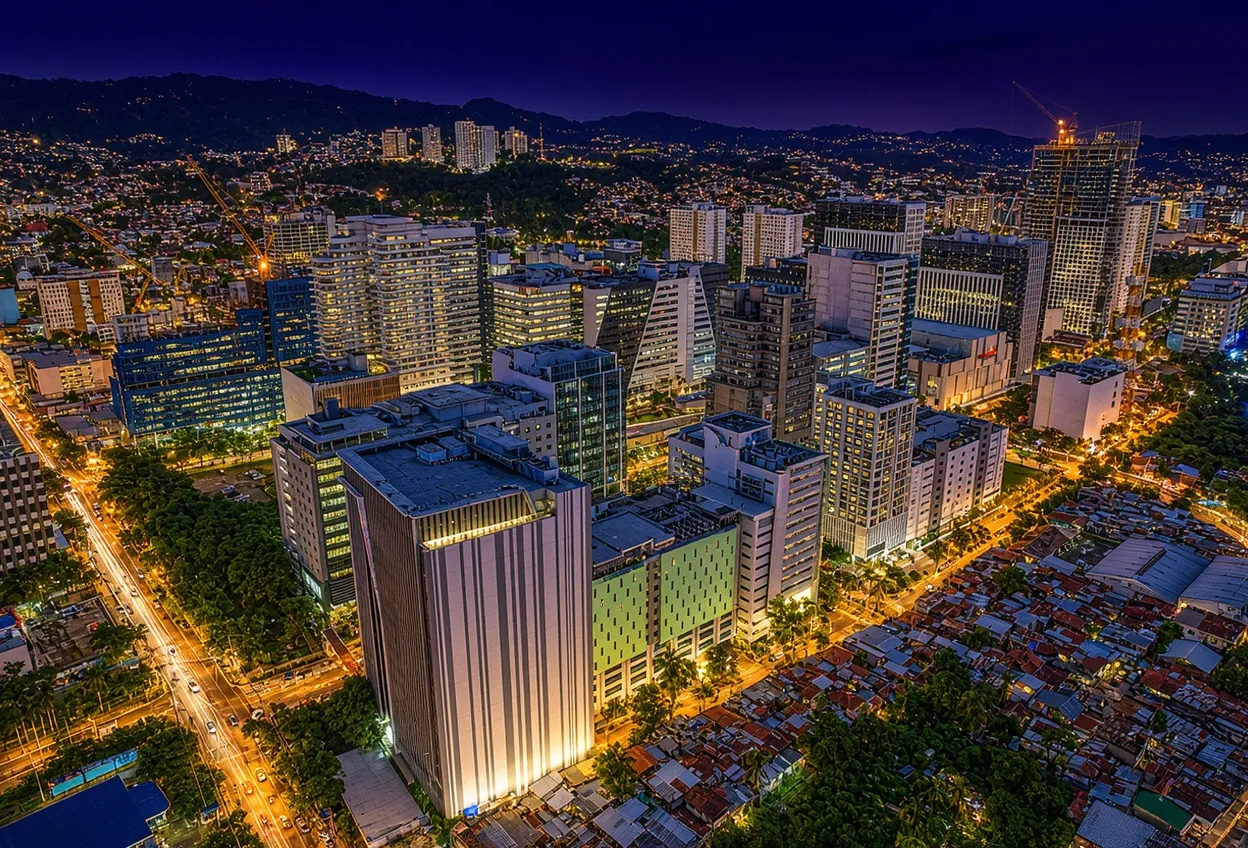
Metro Manila still holds the largest single concentration of business process outsourcing activity in the country, but growth is increasingly landing in provincial hubs. Cebu, Clark, Laguna, Davao, Iloilo, and Bacolod each now carry their own talent pool, PEZA-accredited stock, and roster of anchor employers.
Below is a breakdown of the regional hubs that host the most IT-BPM delivery centers, the providers operating in each one, and the factors a business should weigh before shortlisting a location. If you're evaluating the capital specifically, see our guide to Metro Manila's BPO hubs.
Regional BPO Hubs, By the Numbers
The Philippine IT-BPM sector closed 2025 with export revenues exceeding 40 billion dollars and is on track to generate 42 billion dollars in 2026, employing roughly 1.9 million workers nationwide. Regional hubs account for a growing share of that total: Cebu alone is estimated at 160,000 to 272,000 BPO workers depending on the source and how the sector is counted, Clark and Pampanga at roughly 100,000 to 136,000, Davao City above 85,000 and climbing about 12 percent year over year, Iloilo City between 30,000 and 47,000, and Bacolod City around 51,000.
These hubs aren't just cost plays. Colliers has pointed to workforce sustainability, university pipelines, and lower attrition as the real advantage of provincial markets over Metro Manila's rising rents and worsening congestion. Government support through PEZA accreditation and the CREATE MORE Act has accelerated that shift further.
Cebu City (Cebu IT Park, Cebu Business Park)
Cebu remains the largest IT-BPM cluster outside Metro Manila, and vacancy trends back that up: Cebu IT Park's office vacancy fell to 14 percent in Q3 2025, down from 28 percent in 2022, with more than 96,000 square meters absorbed in the first nine months of that year. Concentrix, Optum, EY, and Wipro have driven a good share of that demand, and Cebu IT Park now hosts around 10,500 flexible workspace seats across operators like KMC Solutions and Regus.
Cebu City's population reached 965,332 as of the 2024 Census, with a 94.3 percent urbanization level, among the highest of any highly urbanized city outside the NCR. Neighboring Mandaue is even more urbanized at 98.8 percent, and Lapu-Lapu sits at 95.4 percent, together forming one of the most densely built-up labor catchments in the country outside Metro Manila.
Best for: enterprise-scale delivery centers, companies wanting the deepest non-Manila talent bench, healthcare and finance accounts already comfortable with a mature market.
Trade-off: no new office supply expected in Cebu IT Park over the next three years, so tenants now need to consider Mandaue, Mactan, or South Road Properties for expansion room.
See Cebu province travel and geographic overview →
Clark / Pampanga (Clark Freeport Zone, SM City Clark Tech Hub)
Clark carries a Tier 1 provincial designation and roughly 529,000 square meters of total office stock, with about 130,000 square meters currently available, making it one of the few regional hubs with real near-term room to scale. IT-BPM now accounts for 45 percent of the province's total commercial demand, and the PEZA-accredited Clark Freeport Zone has drawn Concentrix, TaskUs, Alorica, Cloudstaff, and Startek, among others.
Angeles City, which hosts the Clark Freeport Zone, recorded the highest urbanization level of any highly urbanized city outside the NCR at a full 100.0 percent, with a total population of 483,452 as of 2024. That confirms Angeles proper is essentially built out already, which is part of why growth pressure is now pushing toward New Clark City and the surrounding conurbation rather than staying inside the original zone.
Best for: companies needing scale fast, back-office and technical support operations, firms wanting Metro Manila-adjacent infrastructure without Metro Manila rents.
Trade-off: talent draws heavily from Pampanga and neighboring Tarlac, Bulacan, Bataan, and Zambales, a smaller catchment than Cebu or Metro Manila's.
See Pampanga province travel and geographic overview →
Laguna (Santa Rosa, Calamba, Cabuyao corridor)
Laguna's BPO footprint centers on the Santa Rosa-Calamba-Cabuyao corridor, anchored by developments like Nuvali Technohub's PEZA-accredited One and Two Evotech buildings. Afni, iQor, and IBM have all placed sites here, drawn by proximity to Metro Manila's southern labor catchment without the capital's congestion or rents. Afni's 2026 Santa Rosa site alone spans over 94,000 square feet.
This corridor is some of the most urbanized ground in the entire country. Cabuyao is the only component city in the Philippines classified as 100.0 percent urban. Santa Rosa itself sits at 99.5 percent with 430,920 residents, Calamba is at 96.6 percent with 575,046, and Biñan is at 99.2 percent with 584,479. CALABARZON as a whole leads every region outside NCR in urbanization at 73.0 percent.
Best for: companies wanting a Metro Manila-adjacent alternative for technical support, customer relations, or back-office roles, and firms prioritizing newer, sustainability-certified buildings.
Trade-off: the market is smaller and less mature than Cebu or Clark, with fewer large-scale delivery centers to point to as precedent.
See Laguna province travel and geographic overview →
Davao City
Davao is the largest talent hub in Mindanao, with over 100,000 IT-BPM professionals and a reputation for low attrition. Teleperformance (TP) opened its second Davao site in early 2026 at The Uprise at Felcris Centrale, a PEZA-accredited development, making it TP's fourth Mindanao location. Local estimates put the city's IT-BPM labor force growth at roughly 12 percent year over year.
Davao City posted the largest urban population of any highly urbanized city outside the NCR, 1.7 million urban residents out of 1,848,947 total, a 91.8 percent urbanization level. That scale backs up Davao's position as Mindanao's primary hub rather than an emerging afterthought.
Best for: companies wanting a Mindanao-based delivery center, customer experience and voice operations, businesses prioritizing workforce stability and low attrition.
Trade-off: the market is younger and thinner than Cebu's, with fewer specialized KPO or finance-heavy operations established so far.
See Davao Region travel and geographic overview →
Iloilo City (Iloilo Business Park, Atria Gardens IT Park)
Iloilo's IT-BPO sector crossed PHP 18.2 billion in direct revenue in 2024 and employs an estimated 30,000 to 35,000 FTEs across 45 operational centers, with the Iloilo Business Park cluster anchoring around 40 percent of total employment. The sector has also shifted quality: voice work has dropped from 70 percent of headcount in 2020 to roughly 55 percent today, as fintech KPO and healthcare information management accounts from firms like ANZ, Citi Service Center, and QBE Insurance Group expand.
Iloilo City's population reached 473,728 in 2024, but its urbanization level is comparatively low at 66.7 percent, the lowest among the highly urbanized cities covered here. That's worth reading alongside the KPO-growth story above: the surrounding barangays still have real runway to urbanize further, which tracks with the talent pipeline strain the sector is currently working through.
Best for: fintech back-office and healthcare information management, companies wanting a growing KPO market rather than pure voice.
Trade-off: mid-management and specialist hiring is tight, with fill rates around 62 percent for those tiers, so ramping specialized teams takes longer than in Cebu or Clark.
See Iloilo province travel and geographic overview →
Bacolod City
Bacolod, nicknamed the City of Smiles, has built its reputation on customer service delivery and workforce loyalty rather than scale, with Transcom and Teleperformance among its major clusters. It runs on active PEZA zones and affordable office space, and is seeing growth extend into healthcare and fintech support work in 2026.
Bacolod's population stood at 624,787 in 2024, with a 98.0 percent urbanization level, among the highest outside NCR and consistent with its reputation as a stable, already-built-out labor market rather than a growth frontier.
Best for: voice-based customer service, stable long-term accounts, companies prioritizing retention over rapid scale.
Trade-off: the smallest talent pool of the hubs covered here, better suited to steady-state operations than fast scaling.
See Negros Occidental travel and geographic overview →
Top 20 BPO and Call Center Companies in the Regional Hubs
The providers below are a mix of global majors and established Philippine-founded firms with confirmed operations across the hubs covered above. Where a certification isn't publicly listed for the company's Philippine operations specifically, it's marked as not disclosed rather than assumed. A few of these, Citi Service Center, ANZ Global Services, and QBE Insurance Group, are captive shared-services centers rather than third-party BPO providers, worth flagging separately since it changes what a business would actually be evaluating.
| Company | Regional Hub(s) | Certifications | Known For |
|---|---|---|---|
| Concentrix | Cebu, Clark | Not publicly disclosed for PH sites | CX strategy, digital engineering, data analytics |
| Teleperformance (TP) | Davao, Cebu | Not publicly disclosed for PH sites | Large-scale customer experience, 23+ sites nationwide |
| Accenture | Cebu | Not publicly disclosed for PH sites | IT and management consulting, back-office operations |
| TaskUs | Clark | PCI DSS, SOC 2, ISO 27001-aligned | Digital CX, trust and safety, AI operations |
| Alorica | Clark | Not publicly disclosed for PH sites | CX at scale, 100K+ employees across 16 countries |
| Wipro | Cebu | Not publicly disclosed for PH sites | IT-BPM, enterprise accounts |
| Optum | Cebu | Not publicly disclosed for PH sites | Healthcare BPO |
| EY | Cebu | Not publicly disclosed for PH sites | Shared services, finance and assurance |
| Transcom | Bacolod | Not publicly disclosed for PH sites | Voice-based customer support |
| Hinduja Global Solutions (HGS) | Iloilo | Not publicly disclosed for PH sites | BPO and KPO services |
| WNS | Iloilo | Not publicly disclosed for PH sites | Knowledge process outsourcing |
| Cloudstaff | Clark, Metro Manila | Not publicly disclosed | Offshore staffing across software, marketing, customer service |
| iQor | Clark, Laguna (Santa Rosa) | Not publicly disclosed | Customer engagement, technology-enabled BPO |
| Startek | Clark | Not publicly disclosed | Customer experience solutions |
| Qualfon | Cebu | Not publicly disclosed | Voice and back-office BPO |
| VXI Global Solutions | Clark | Not publicly disclosed | Customer experience outsourcing |
| Majorel | Clark | Not publicly disclosed | Customer experience outsourcing |
| Connext Global Solutions | Clark (plus multiple provincial sites) | Not publicly disclosed | Remote staffing and co-sourcing for mid-sized businesses |
| Afni | Laguna (Santa Rosa) | Not publicly disclosed | Customer relations, technical support |
| IBM | Laguna (Santa Rosa) | Not publicly disclosed | BPO shared services facility |
Company details reflect publicly available information as of this writing and are provided for reference. Confirm current services, certifications, and office locations directly with each provider before engaging.
How to Evaluate a Regional Hub, Not Just a City Name
A city's reputation only tells part of the story, and neither does a single company name. When shortlisting a delivery center location, businesses should score against measurable criteria rather than relying on "best BPO" claims.
| Criteria | Why It Matters |
|---|---|
| PEZA or IPA accreditation | Determines tax incentives and export eligibility |
| Office vacancy and available stock | Signals how much room exists to scale in that market right now |
| Talent catchment size and urbanization level | Affects hiring speed, attrition risk, and long-term labor supply |
| University pipeline | Drives long-term graduate supply for both voice and specialist roles |
| Disaster resilience of buildings | Fire code compliance, structural standards, backup power |
| Sector specialization | Some hubs skew voice, others are shifting toward KPO and fintech |
Comparing the Hubs at a Glance
| Hub | 2024 Urban Population | Urbanization Level | Strongest For |
|---|---|---|---|
| Cebu City | 909,922 | 94.3% | Enterprise scale, healthcare, finance |
| Clark (Angeles City) | 483,452 | 100.0% | Fast scaling, back office, technical support |
| Laguna (Santa Rosa) | 428,563 | 99.5% | Metro Manila-adjacent alternative |
| Davao City | 1,698,052 | 91.8% | Mindanao delivery, low attrition |
| Iloilo City | 315,895 | 66.7% | Fintech KPO, healthcare information management |
| Bacolod City | 612,567 | 98.0% | Voice CX, stable long-term accounts |
One Last Thing
No single hub is the right answer for every business. Cebu still carries the deepest enterprise and healthcare pedigree, Clark leads on near-term room to scale, and Davao anchors Mindanao delivery at a scale no other hub in the region can match. The right starting point depends on which industries, compliance requirements, and scale a company needs first, then which providers already operate where that hub sits.
Once you have a shortlist, browse verified business listings on azifind.com to compare providers directly.
Frequently Asked Questions
Is Metro Manila still the top BPO destination in the Philippines?
It remains the largest single concentration of delivery centers in the country, but growth is increasingly landing in Cebu, Clark, Davao, Iloilo, and Bacolod as firms look for lower costs and stronger talent retention outside the capital.
Which regional hub has the most room to scale right now?
Clark currently has the most available office stock among the hubs covered here, with roughly 130,000 square meters open, while Cebu IT Park has effectively no new supply coming for the next three years.
Which hub is best for fintech or healthcare KPO work?
Iloilo has seen the clearest shift toward fintech back-office and healthcare information management accounts, moving away from a voice-only market.
Is Laguna a serious BPO hub or just an extension of Metro Manila?
The Santa Rosa-Calamba-Cabuyao corridor is one of the most urbanized areas in the entire country, with Cabuyao the only fully urban component city in the Philippines. It functions as a Metro Manila-adjacent alternative rather than an independent hub the way Cebu or Davao are, but it has drawn established names like IBM and Afni specifically to avoid Metro Manila's congestion and costs.
Which city in the Philippines is known as a hub for business process outsourcing (BPO) and entrepreneurial ventures?
Cebu City carries that reputation most strongly. It built its name on IT-BPM through Cebu IT Park and Cebu Business Park, but provincial leadership has been explicit in 2026 that the city's next phase leans into a broader entrepreneurial base, covering exports, manufacturing, maritime industries, and tourism alongside outsourcing rather than BPO alone.
What is the list of BPO and call center hubs outside Metro Manila?
The main regional hubs are Cebu City, Clark/Pampanga, Laguna (the Santa Rosa-Calamba-Cabuyao corridor), Davao City, Iloilo City, and Bacolod City, each covered in detail above.
Where are the BPO and call center hubs outside Metro Manila located?
Cebu City sits in Central Visayas, Clark/Pampanga in Central Luzon near Angeles City, Laguna's corridor in CALABARZON south of Metro Manila, Davao City in Mindanao's Davao Region, Iloilo City in Western Visayas, and Bacolod City in Negros Occidental.
What is the best BPO and call center hub outside Metro Manila?
There's no single answer, it depends on what a business needs. Cebu offers the deepest enterprise-scale talent pool, Clark currently has the most available office stock to scale into, Laguna suits companies wanting Metro Manila-adjacent access without the capital's costs, Davao anchors Mindanao delivery, Iloilo is shifting toward fintech and healthcare KPO, and Bacolod offers the most stable, low-attrition voice operations. The hub comparison table above breaks this down by use case.
How big is the Philippine BPO industry overall?
The IT-BPM sector closed 2025 with over 40 billion dollars in export revenue and is on track for 42 billion dollars in 2026, employing roughly 1.9 million workers nationwide.
Is your business listed on azifind?
Claim your existing listing to update contact details, add a logo, and respond to reviews, or add your business if it isn't on azifind yet. Both are free.