There is a difference between knowing a festival exists and standing inside one. A calendar tells you Sinulog happens in January. It cannot tell you what it feels like when forty thousand people move in the same rhythm at once, or what the air smells like in Lucban when an entire street is covered in roasted vegetables and woven rice wafers, or how the drumbeat at Ati-Atihan gets into your chest before you even see the dancers.
This is a guide to fourteen of the country's most famous festivals written the way they actually feel, not the way they look on a brochure, so that you know not just where and when to go, but what you're walking into.
Sinulog
Cebu City · Third Sunday of January
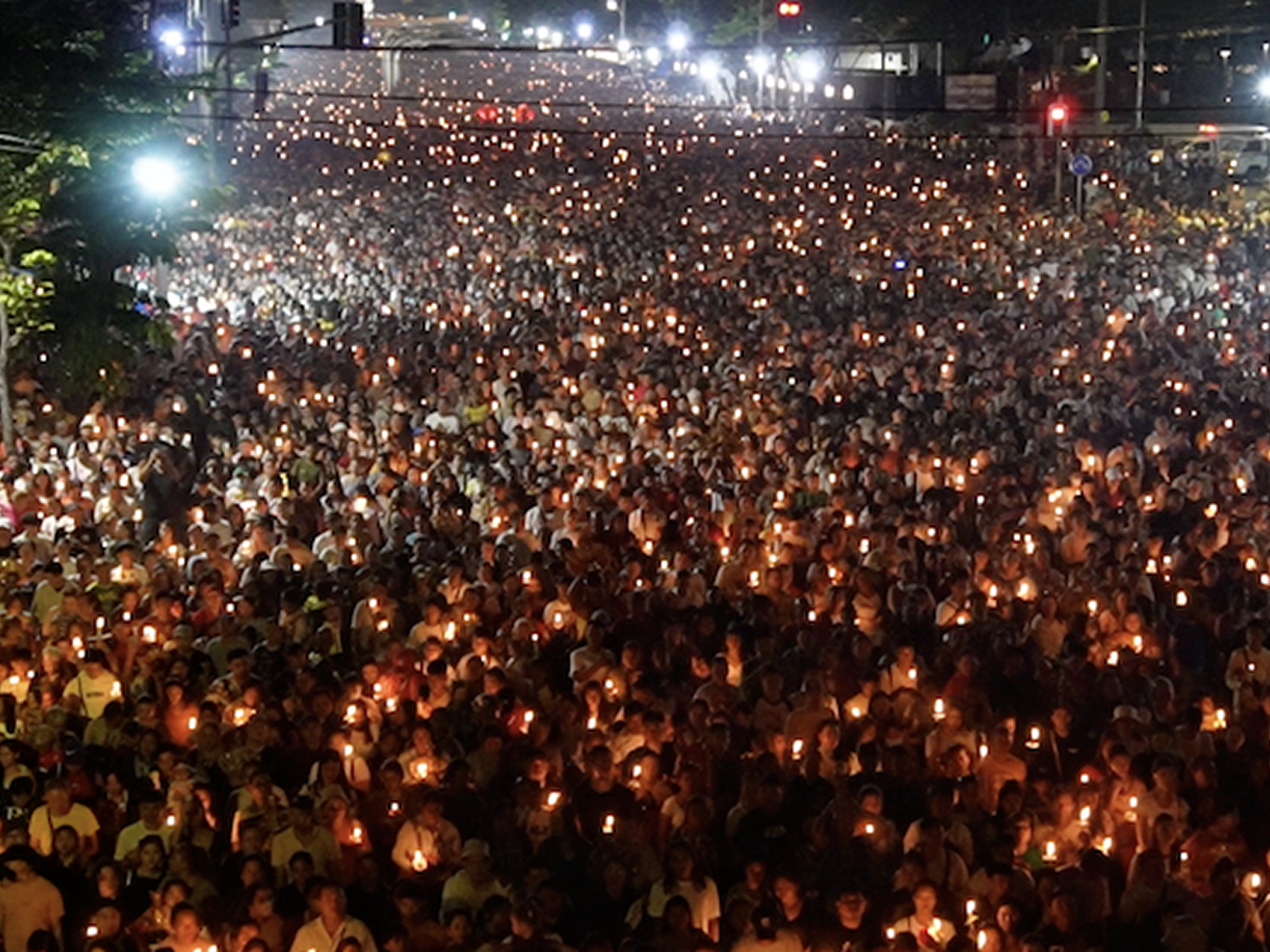
You feel it before you see it. The bass line of the dadabu drum carries for blocks, and by the time you reach Osmeña Boulevard the crowd has already closed in around you, shoulder to shoulder, all facing the same direction. Someone hands you a small Santo Niño candle without asking if you want one.
The chant starts low, "Pit Senyor," and rolls down the street ahead of the dancers before you can see them, a wave of voice moving faster than anyone can walk. Then the contingents arrive: hundreds of dancers in feathered headdresses and tribal paint, moving in that unmistakable two steps forward, one step back Sinulog rhythm, sweat already soaking through their costumes by nine in the morning because the sun in Cebu in January does not care that it is supposed to be the cool season.
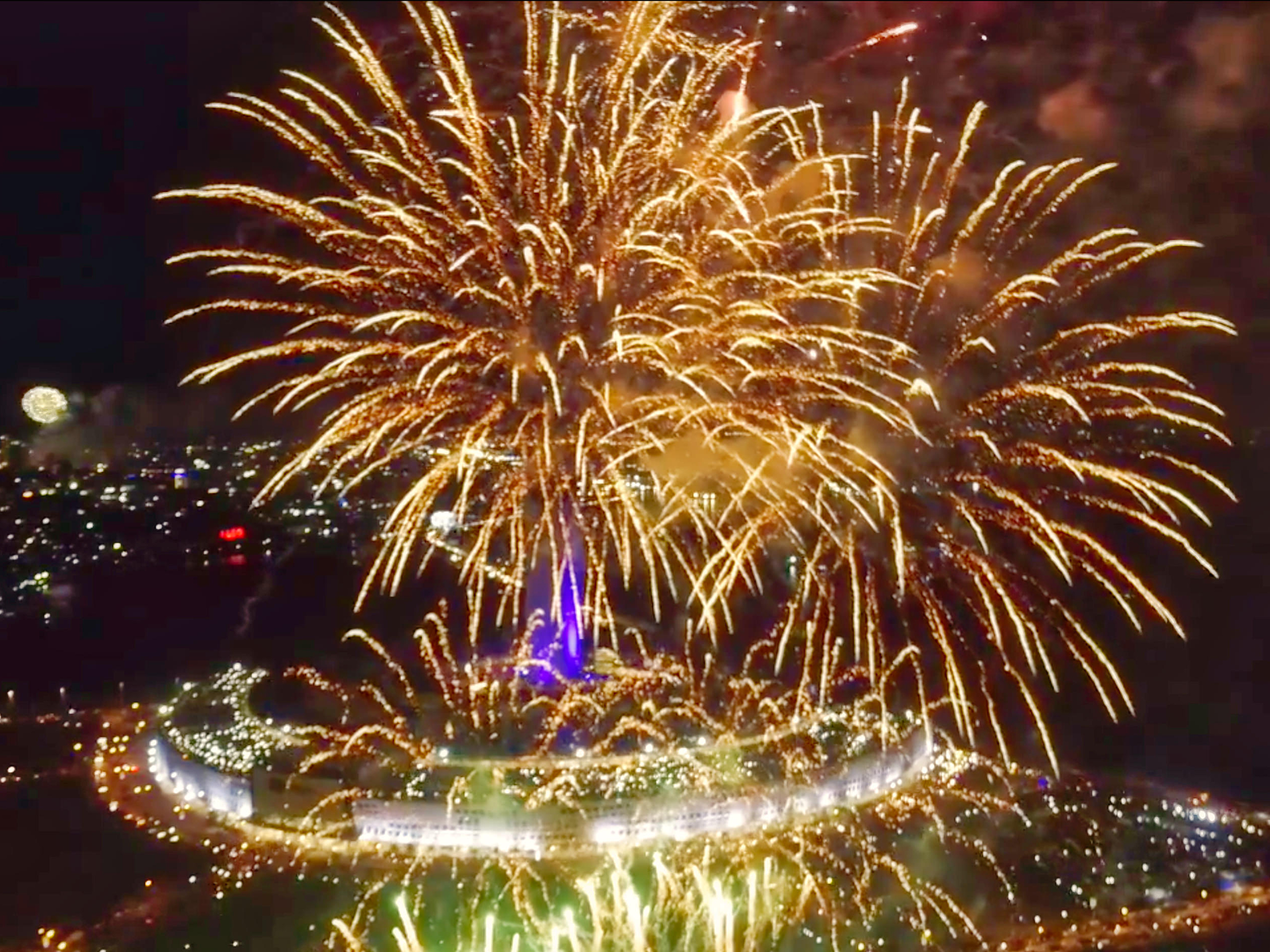
The smell of grilled lechon manok drifts from the sidewalk vendors who have set up since dawn. Somewhere behind you, a grandmother is crying, openly, watching the image of the Santo Niño pass on a flower covered float. Nobody around you finds that strange. Stay until the fireworks close the night over Fuente Osmeña, and you will understand why people fly home every year just for this one Sunday in Cebu.

azifind.com Travel
Philippine Festival Guide
Sinulog · Cebu City 🌐
Forty thousand people moving in the same rhythm at once. Sinulog never feels like spectator sport once the contingents pass within arm's reach.
azifind.com Travel
Philippine Festival Guide
Sinulog · Cebu City 🌐
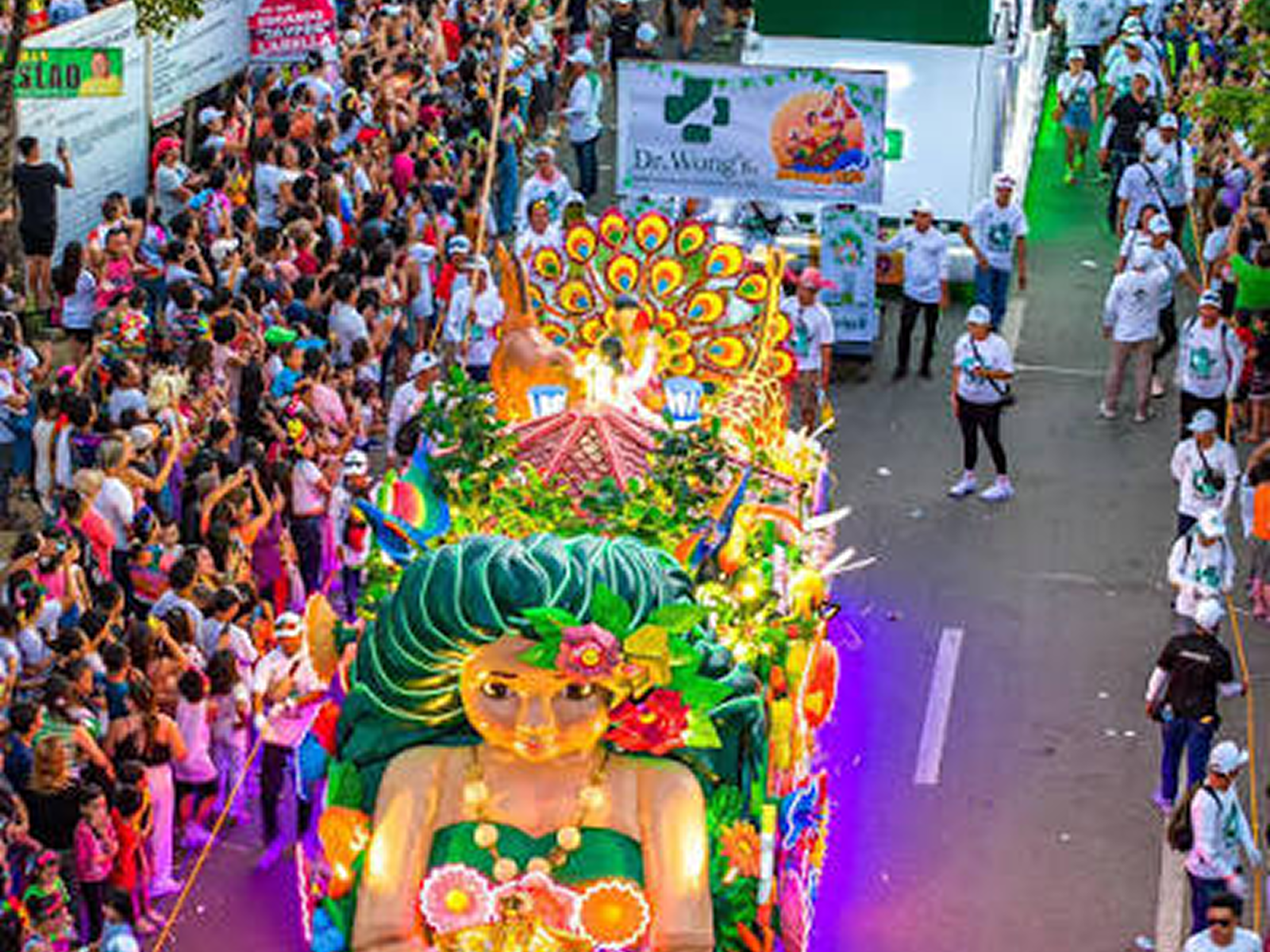
Watching this float pass and seeing a grandmother openly crying next to me is when Sinulog stopped being a parade and started being something else.
azifind.com Travel
Philippine Festival Guide
Sinulog · Cebu City 🌐
Stayed until the fireworks closed the night over Fuente Osmeña. This is why people fly home every year for one Sunday.
Ati-Atihan
Kalibo, Aklan · Third Sunday of January
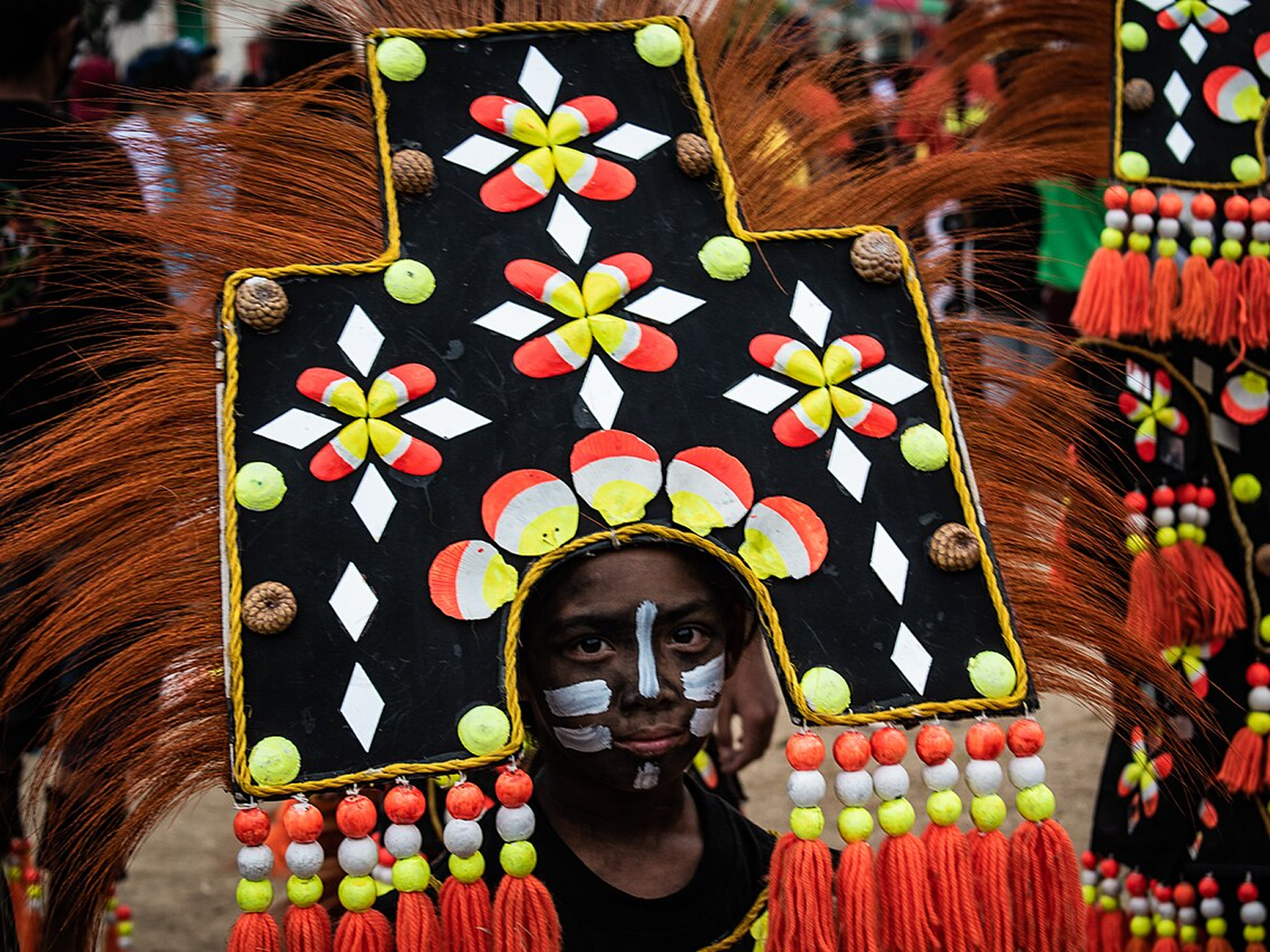
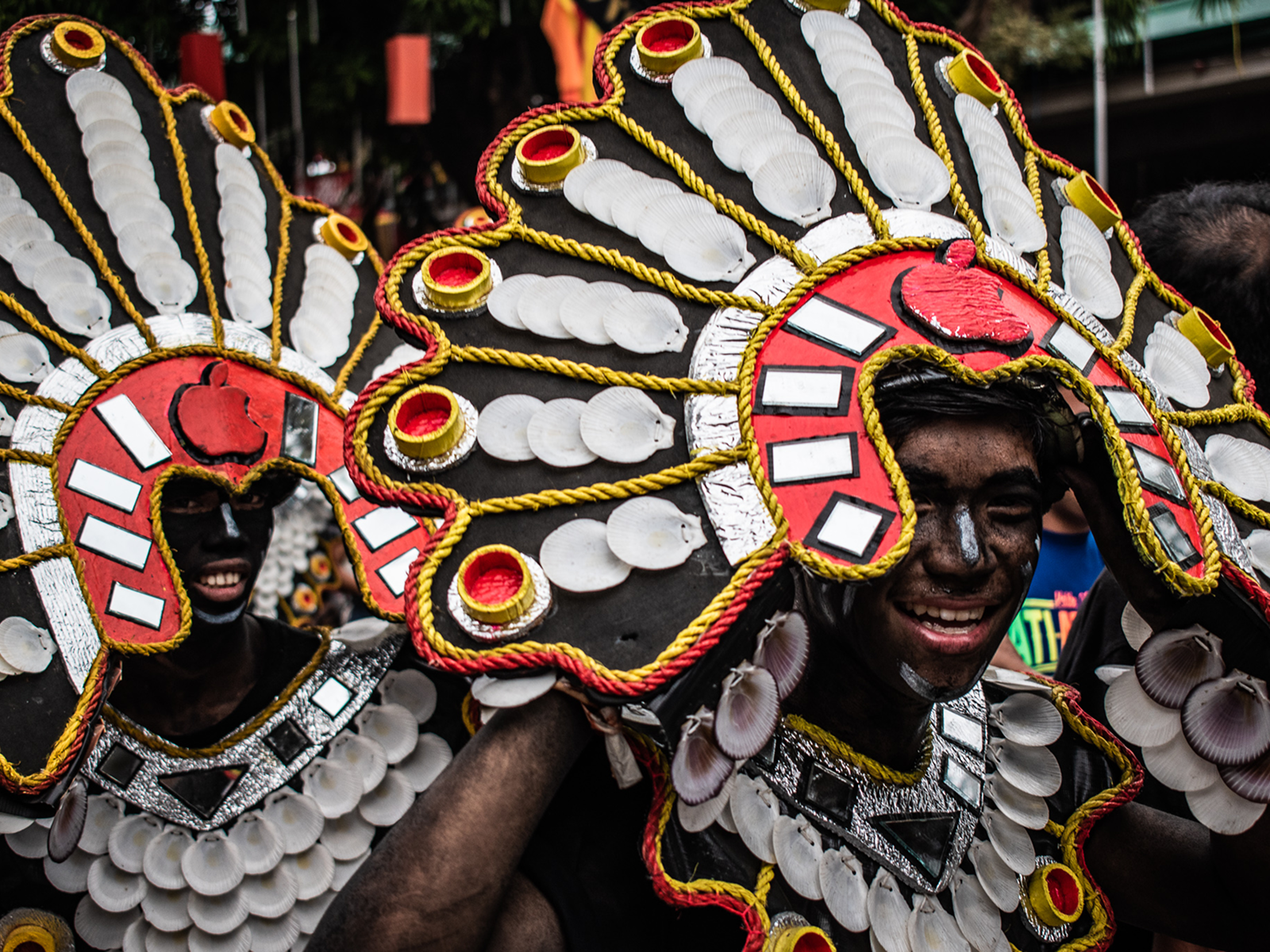
The soot gets on you whether you want it or not. That's the point. Strangers will smear black paint on your face and arms as you walk through Kalibo's streets, and the only correct response is to let them, because Ati-Atihan was never built for spectators standing on the sidelines.
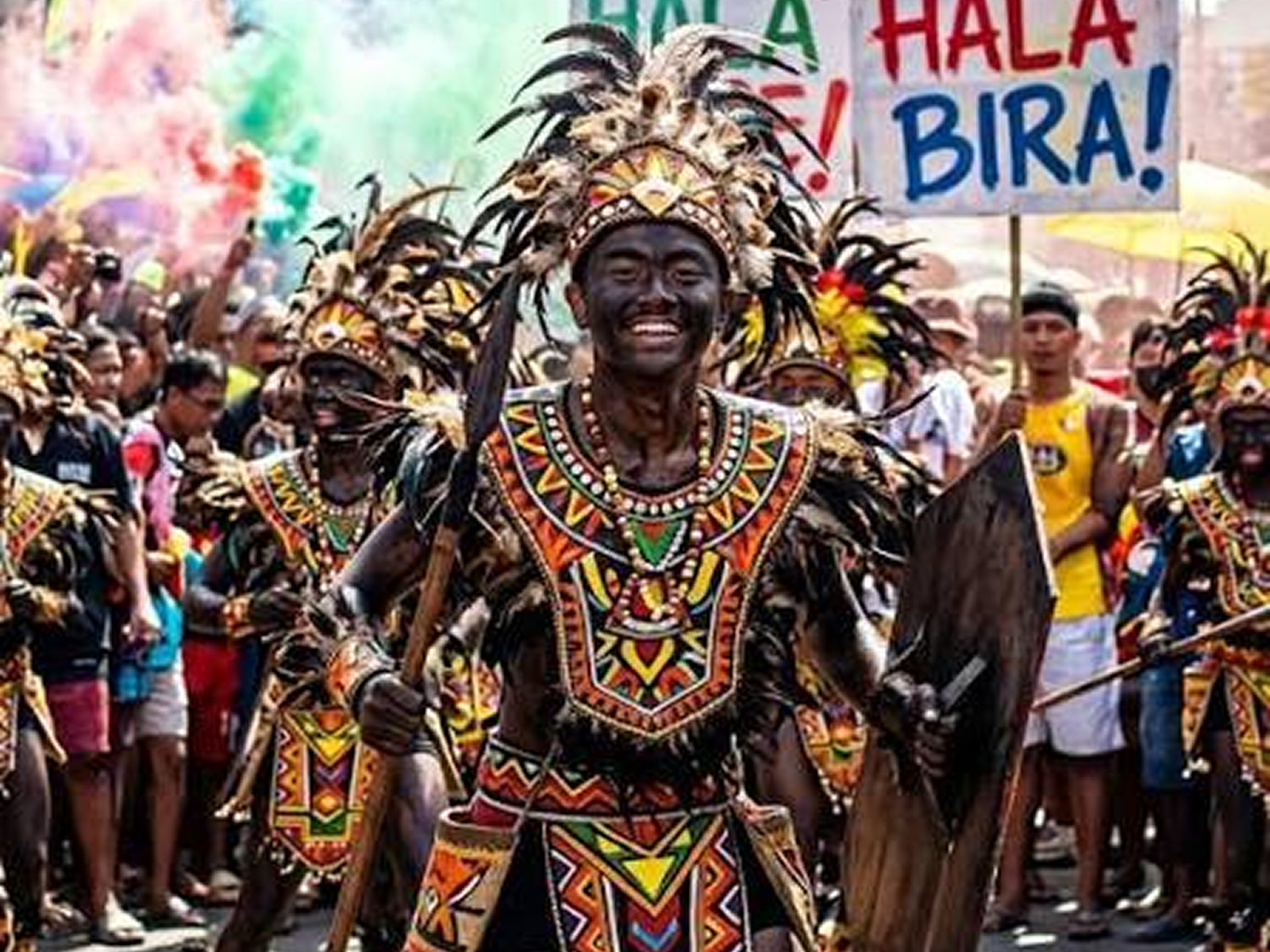
The drumbeat here is more primal than Sinulog's, less choreographed, closer to trance than performance. Groups of dancers in coconut husk skirts and improvised tribal costumes move through the crowd rather than past it, pulling bystanders into the line without warning. By midafternoon the heat, the rum being passed in plastic cups, and the relentless repetition of "Hala Bira" chanted over and over start to blur the edges of everything, which longtime attendees will tell you is exactly the intended effect.
This is called the Mother of All Philippine Festivals not because it is the biggest, but because every other festival on this list owes something to the raw, unpolished energy that Kalibo never bothered to clean up for tourism.
azifind.com Travel
Philippine Festival Guide
Ati-Atihan · Kalibo, Aklan 🌐
Got my face painted by a total stranger within the first ten minutes. That's just how Ati-Atihan works.
azifind.com Travel
Philippine Festival Guide
Ati-Atihan · Kalibo, Aklan 🌐
These dancers pulled half the crowd into their line without warning. Nobody complained.
azifind.com Travel
Philippine Festival Guide
Ati-Atihan · Kalibo, Aklan 🌐
Hala Bira chanted on repeat until the whole street felt like one moving body.
Dinagyang
Iloilo City · Fourth Sunday of January
Where Ati-Atihan is chaos, Dinagyang in Iloilo is precision. You notice it in the silence right before each contingent performs, a held breath across the grandstand crowd before the drums explode in unison and forty dancers hit the same beat on the same foot at the same instant.
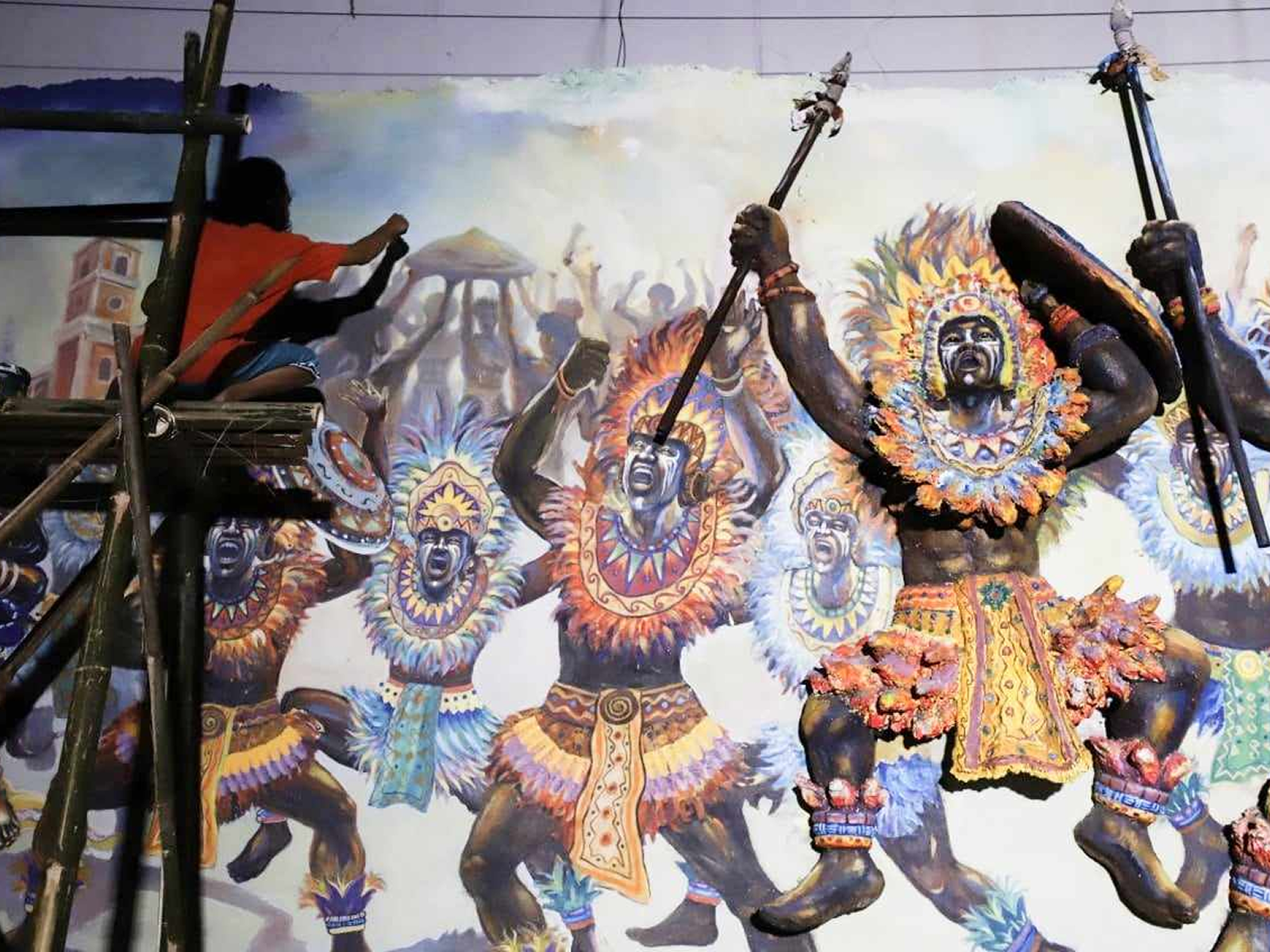
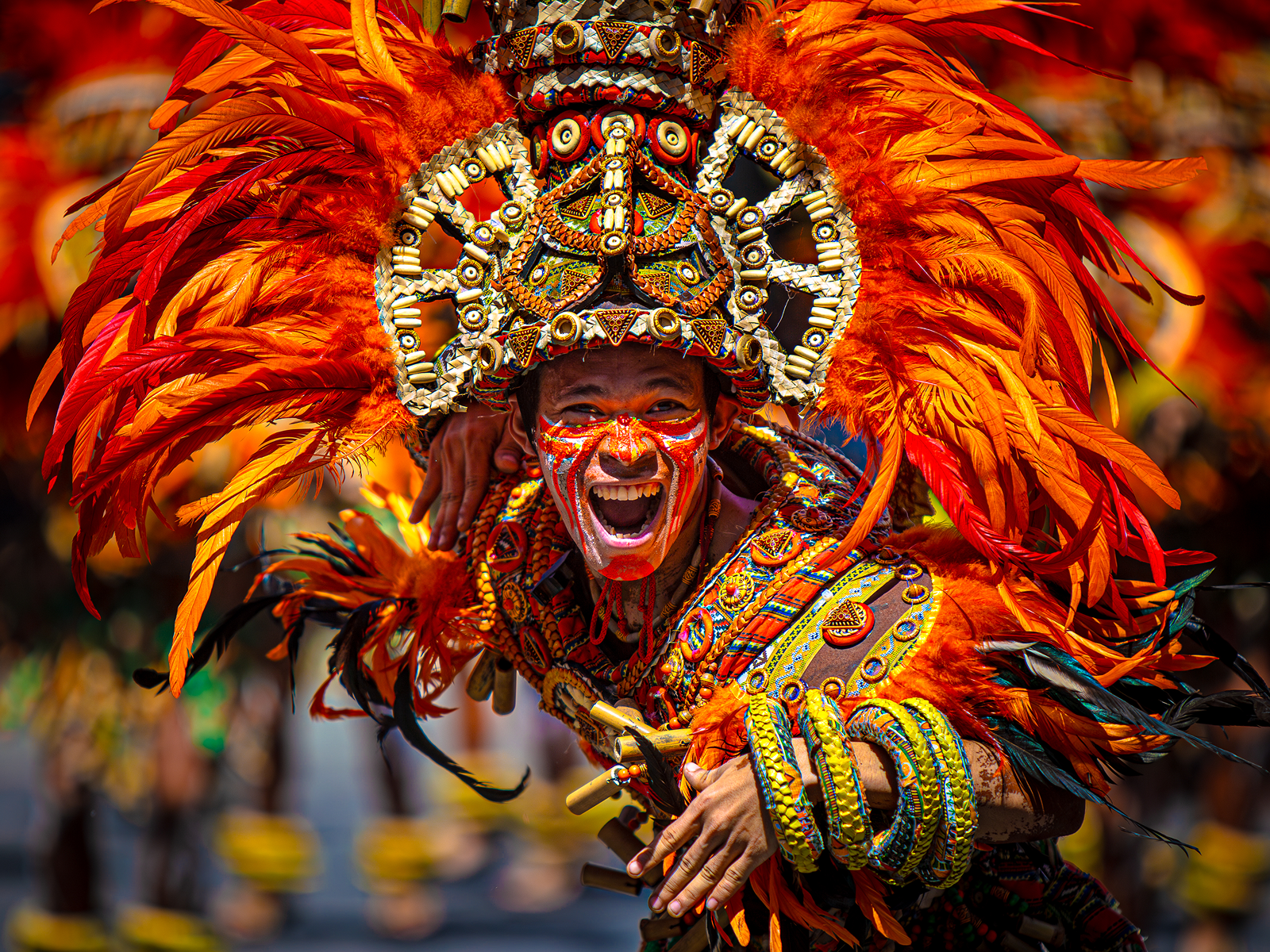
This is a judged competition, and it shows in a way that makes it feel less like a street party and more like watching a sport reach its championship round. The choreography tells an actual story, usually a reenactment of the Bornean datus bartering with the Ati for land, performed with body paint, fire, and acrobatics that look genuinely dangerous up close.
Get a seat near the judges' platform if you can. The difference between watching from a distance and watching from where the performers can see your face is the difference between a parade and a performance built entirely for the people in front of it.
azifind.com Travel
Philippine Festival Guide
Dinagyang · Iloilo City 🌐
The silence before the drums hit is somehow louder than the drums themselves.
azifind.com Travel
Philippine Festival Guide
Dinagyang · Iloilo City 🌐
Body paint, fire, and acrobatics this close should not be legal. Dinagyang doesn't care.
azifind.com Travel
Philippine Festival Guide
Dinagyang · Iloilo City 🌐
Forty dancers, one beat, zero margin for error. This is what a judged festival looks like.
Panagbenga
Baguio City · Throughout February
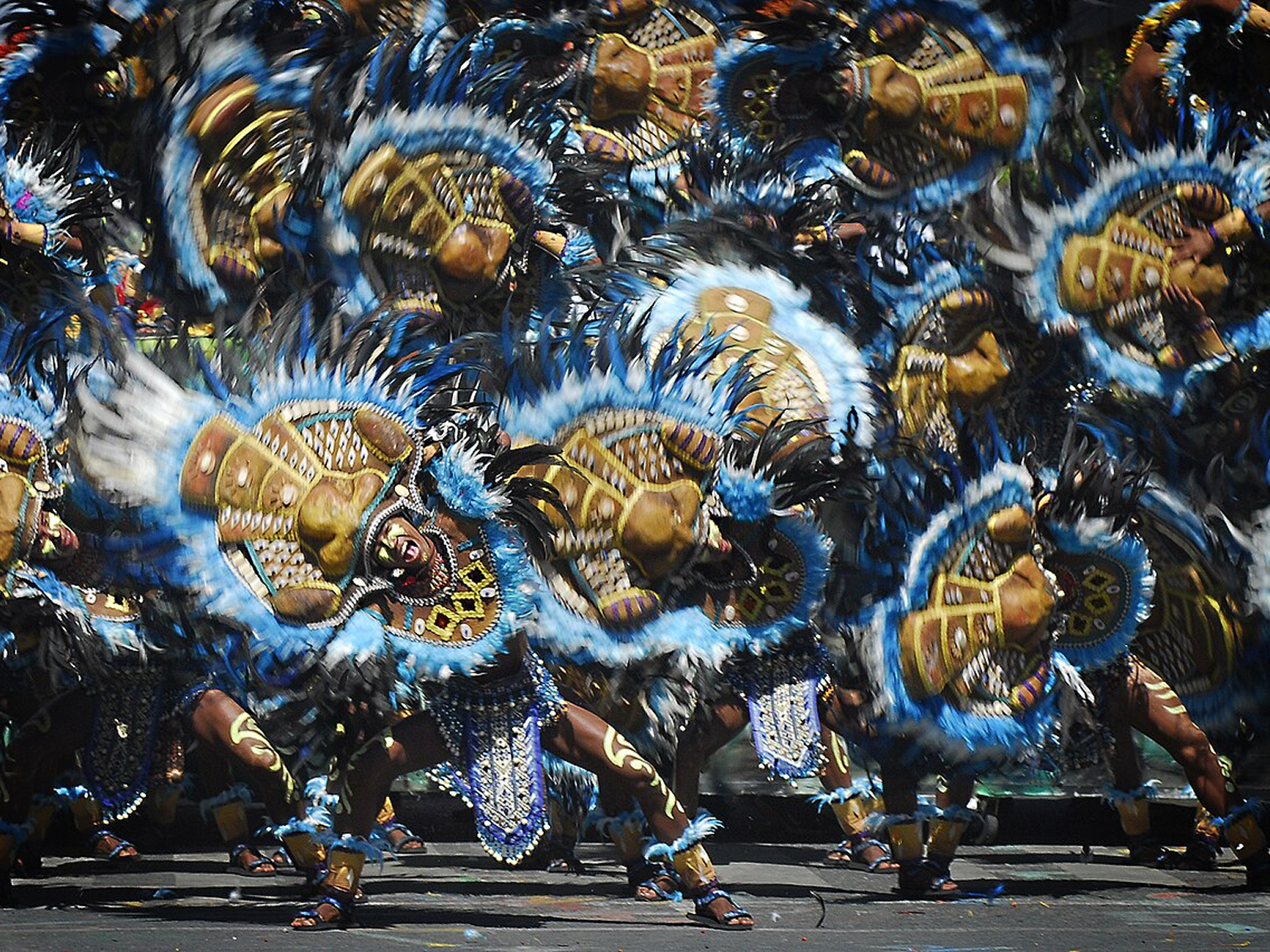
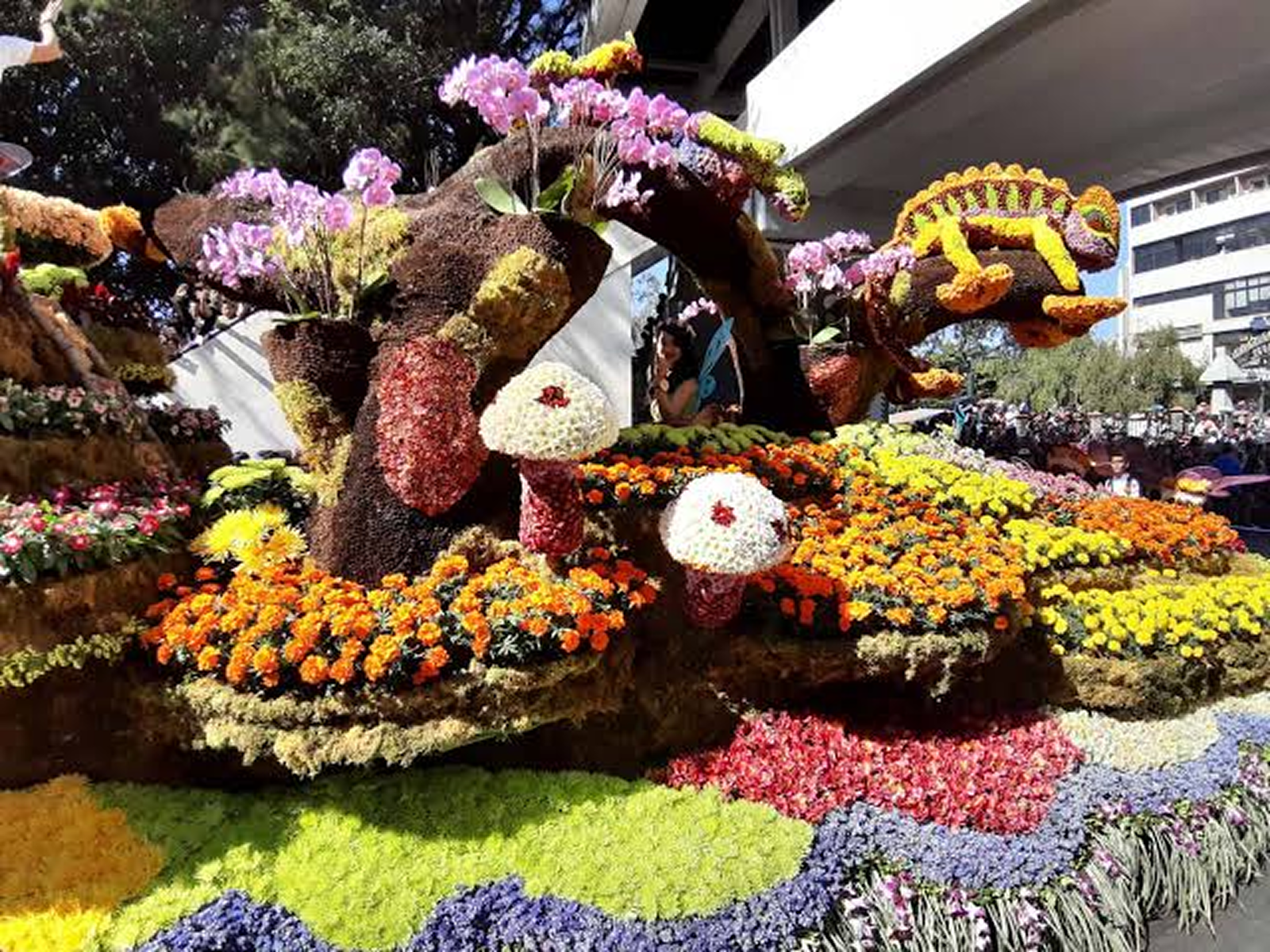
The cold gets you first, a relief if you've just come from anywhere else in the country, and then the flowers do. Baguio's Session Road is closed to traffic for the grand float parade, and the floats are not made of paper or plastic flowers, they are built entirely from real chrysanthemums, sunflowers, and orchids grown in the surrounding Cordillera farms of Benguet, which means the air along the parade route smells faintly of crushed petals by the time the last float passes.
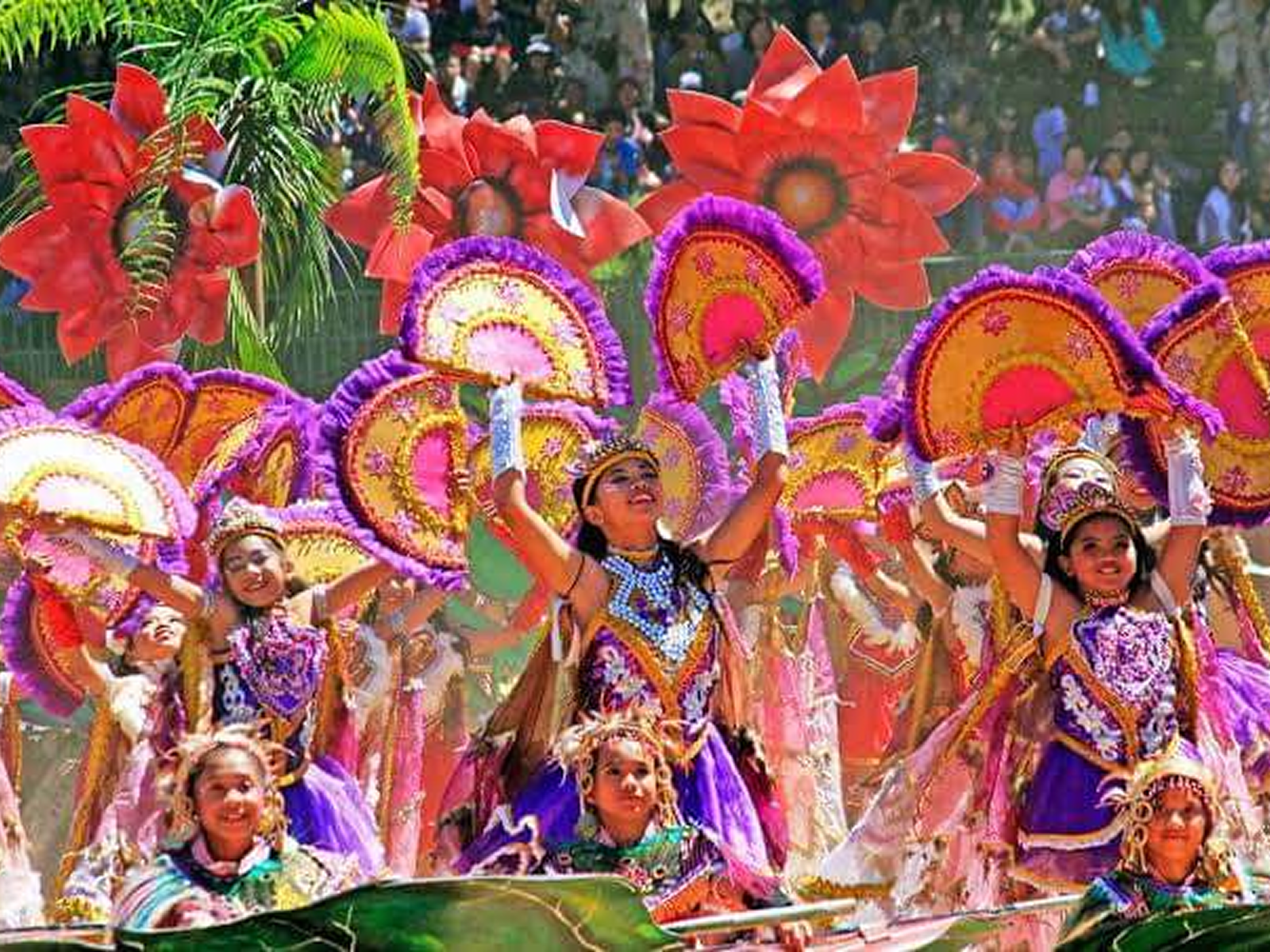
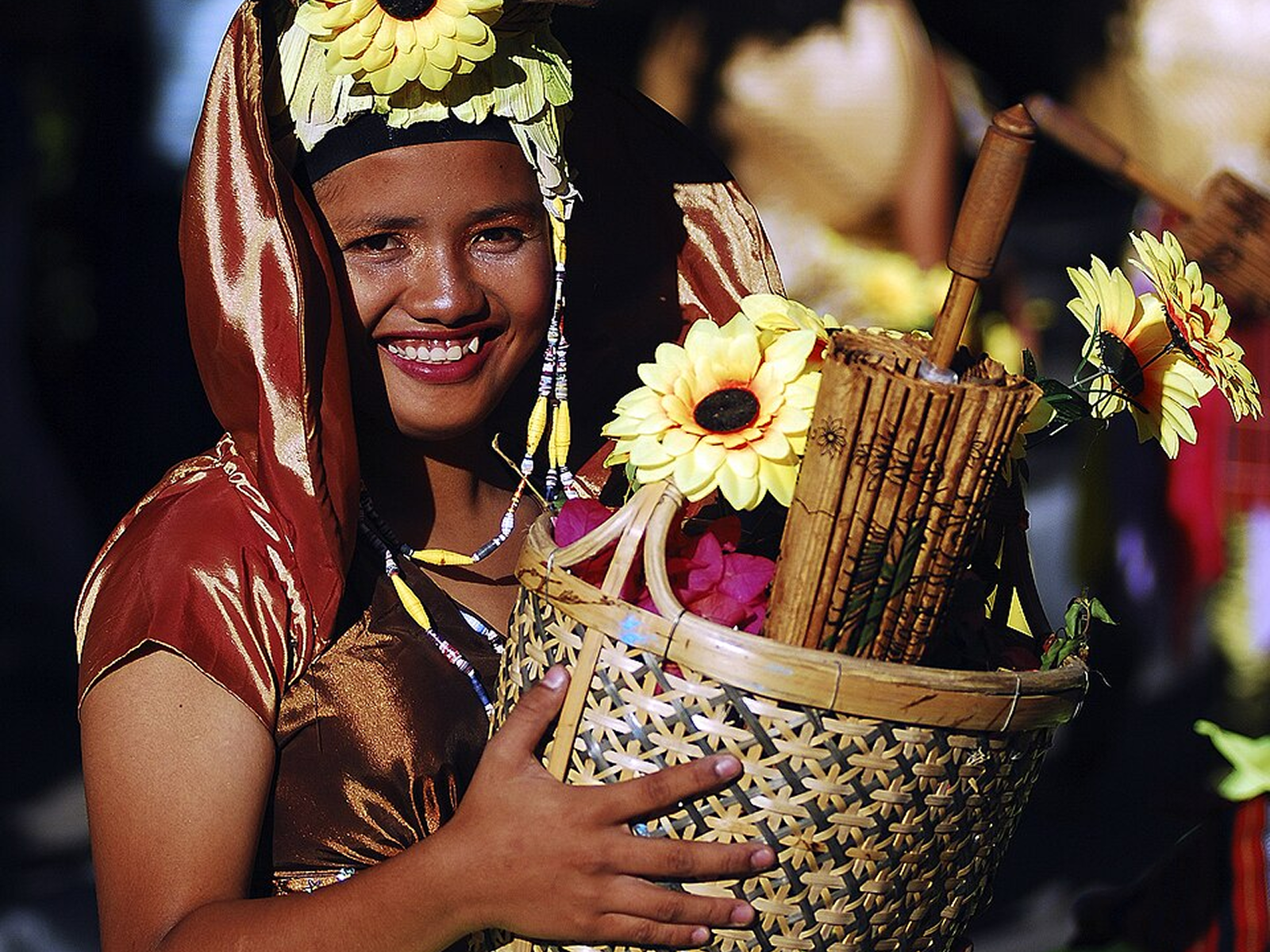
Street dancers in flower headdresses move to a slower, more deliberate rhythm than the Visayan festivals, more procession than frenzy. Walk away from the main parade route afterward and into the markets, where flower vendors sell bundles for a fraction of Manila prices, and you'll understand Panagbenga is less a single event than a month long mood the entire city settles into.
azifind.com Travel
Philippine Festival Guide
Panagbenga · Baguio City 🌐
Every petal on this float is real. Session Road smelled like crushed flowers for blocks.
azifind.com Travel
Philippine Festival Guide
Panagbenga · Baguio City 🌐
Slower, more deliberate than the Visayan festivals. Panagbenga moves like a procession, not a party.
azifind.com Travel
Philippine Festival Guide
Panagbenga · Baguio City 🌐
Bought flowers for a fraction of Manila prices right after the parade ended.
Kaamulan
Malaybalay City, Bukidnon · March 23 to April 23
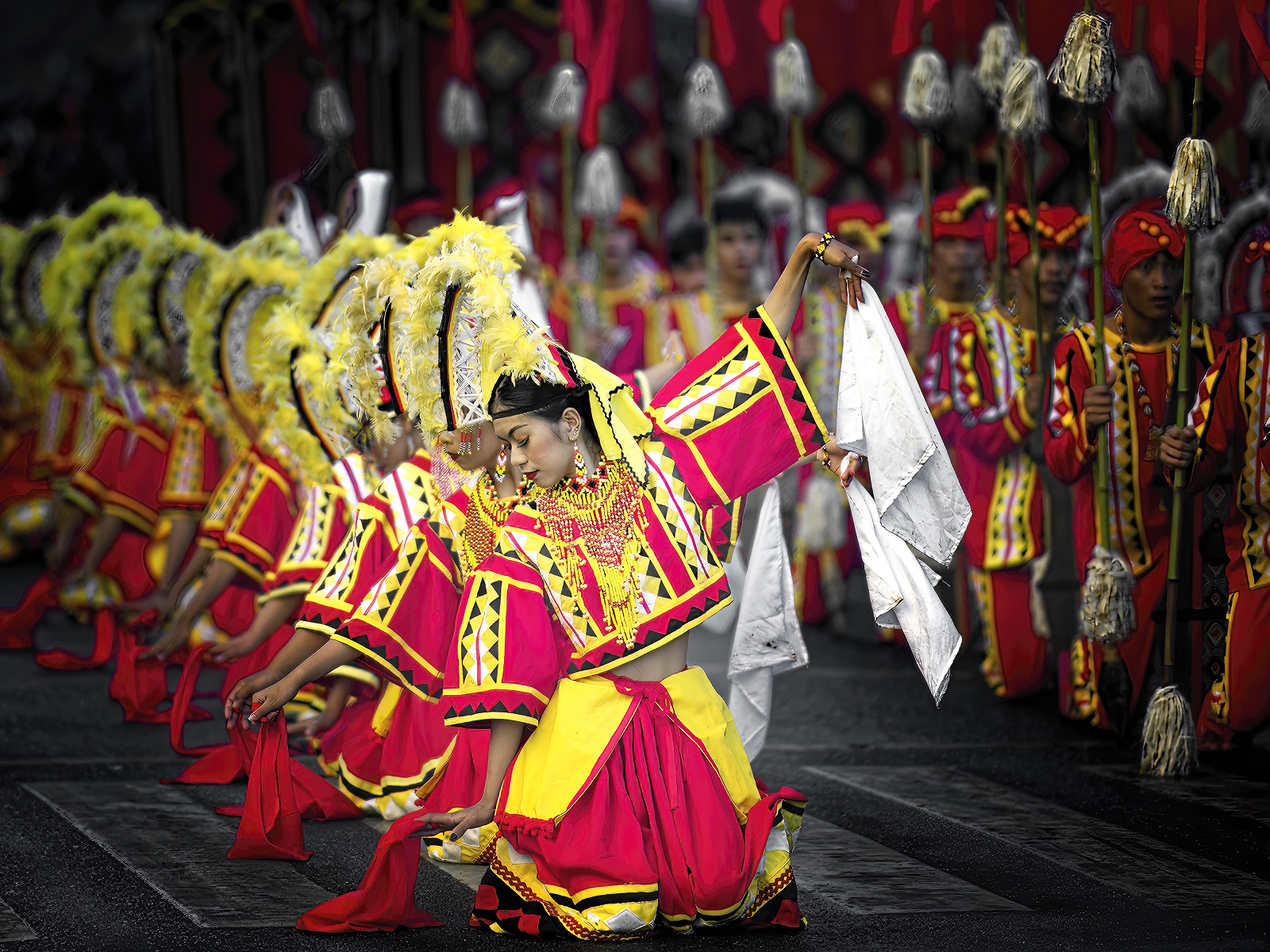
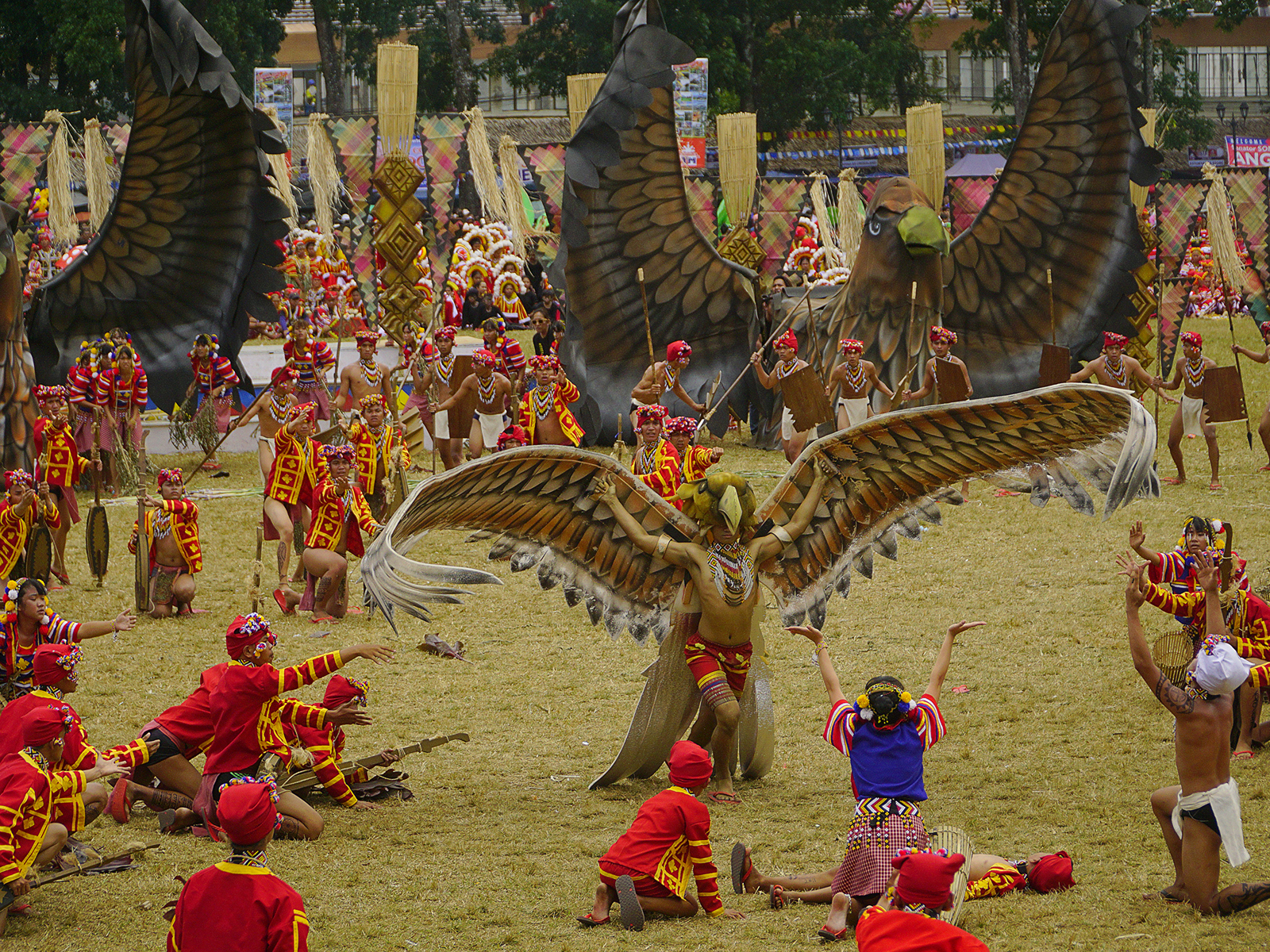
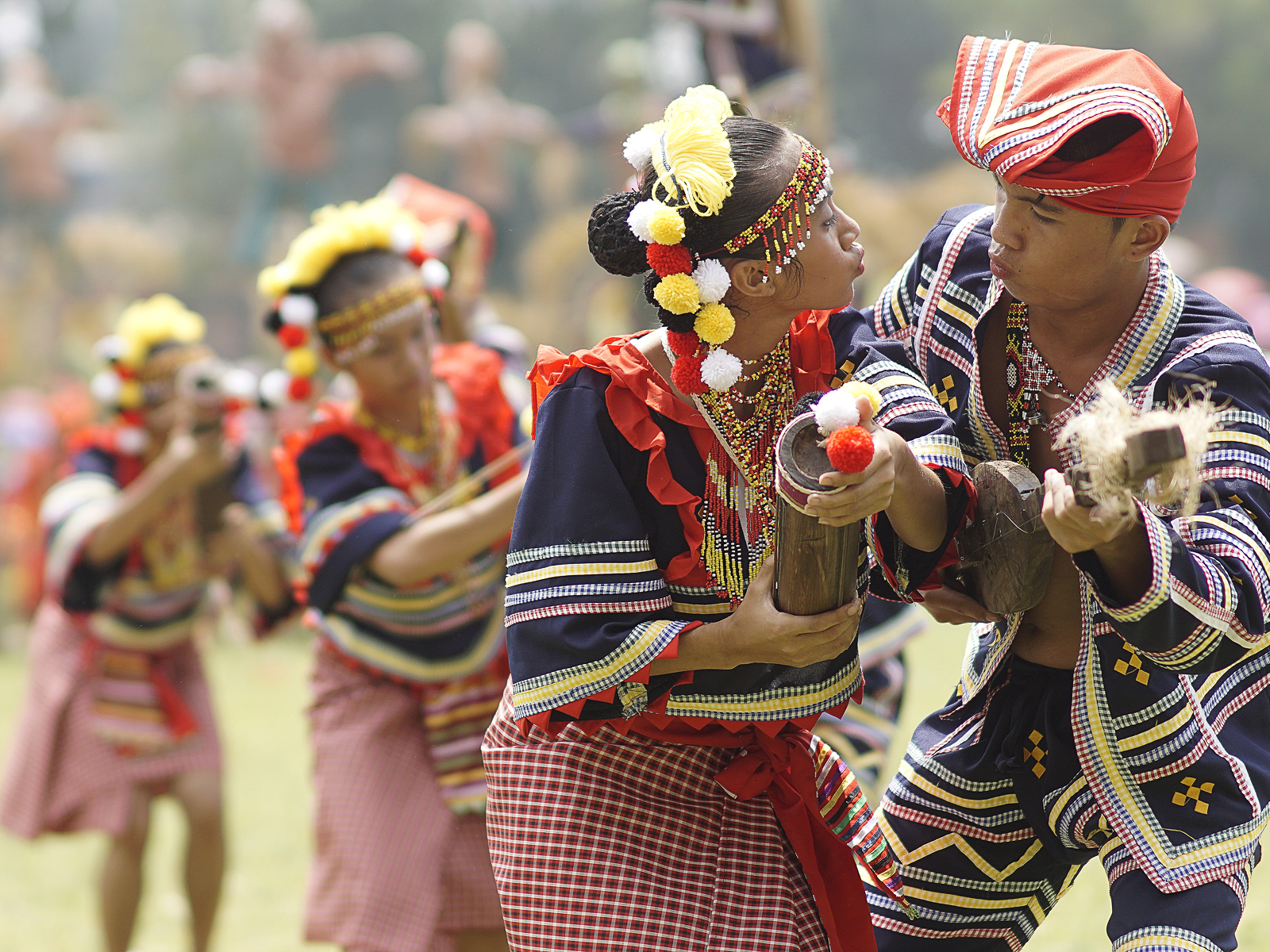
There is no stage built for an audience here, which is what makes Kaamulan different from everything else on this list. Seven indigenous tribes, the Bukidnon, Talaandig, Tigwahanon, Manobo, Umayamnon, Matigsalog, and Higaonon, gather across a full month in this corner of Northern Mindanao not to perform a festival but to actually hold one: a thanksgiving ritual, a peace pact between tribal datus, the formal installation of a chieftain, a rite to drive off evil spirits, all stitched into a single gathering that predates any Catholic feast day attached to it.
The sound is the first thing that separates it from the lowland festivals, agung gongs and hanging drums in slow, layered patterns instead of the marching band brass of Sinulog or Dinagyang. Tribal elders in woven cloth and beadwork move with a deliberateness that has nothing to do with crowd entertainment, because for them this is still a real ceremony, not a reenactment of one.
If you arrive expecting a parade, recalibrate. What you get instead is closer to being allowed to witness something that was never meant to need an audience in the first place.
azifind.com Travel
Philippine Festival Guide
Kaamulan · Malaybalay, Bukidnon 🌐
No stage, no audience built in. This is a real ceremony, not a reenactment of one.
azifind.com Travel
Philippine Festival Guide
Kaamulan · Malaybalay, Bukidnon 🌐
Agung gongs in slow layered patterns instead of marching band brass. Completely different language.
azifind.com Travel
Philippine Festival Guide
Kaamulan · Malaybalay, Bukidnon 🌐
Watched a peace pact between tribal datus happen a few feet away. Recalibrated everything I expected.
Pahiyas
Lucban, Quezon · May 15
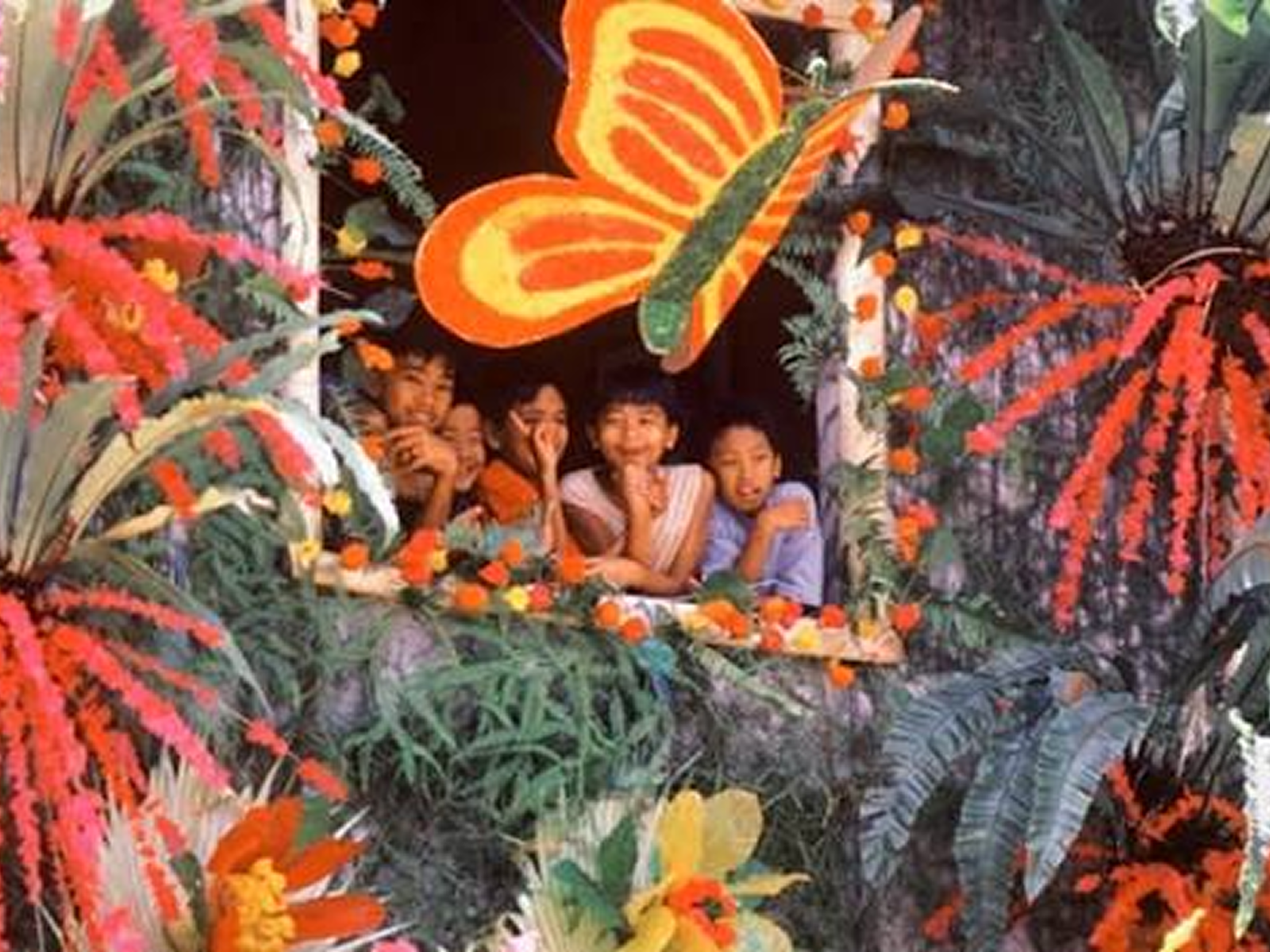
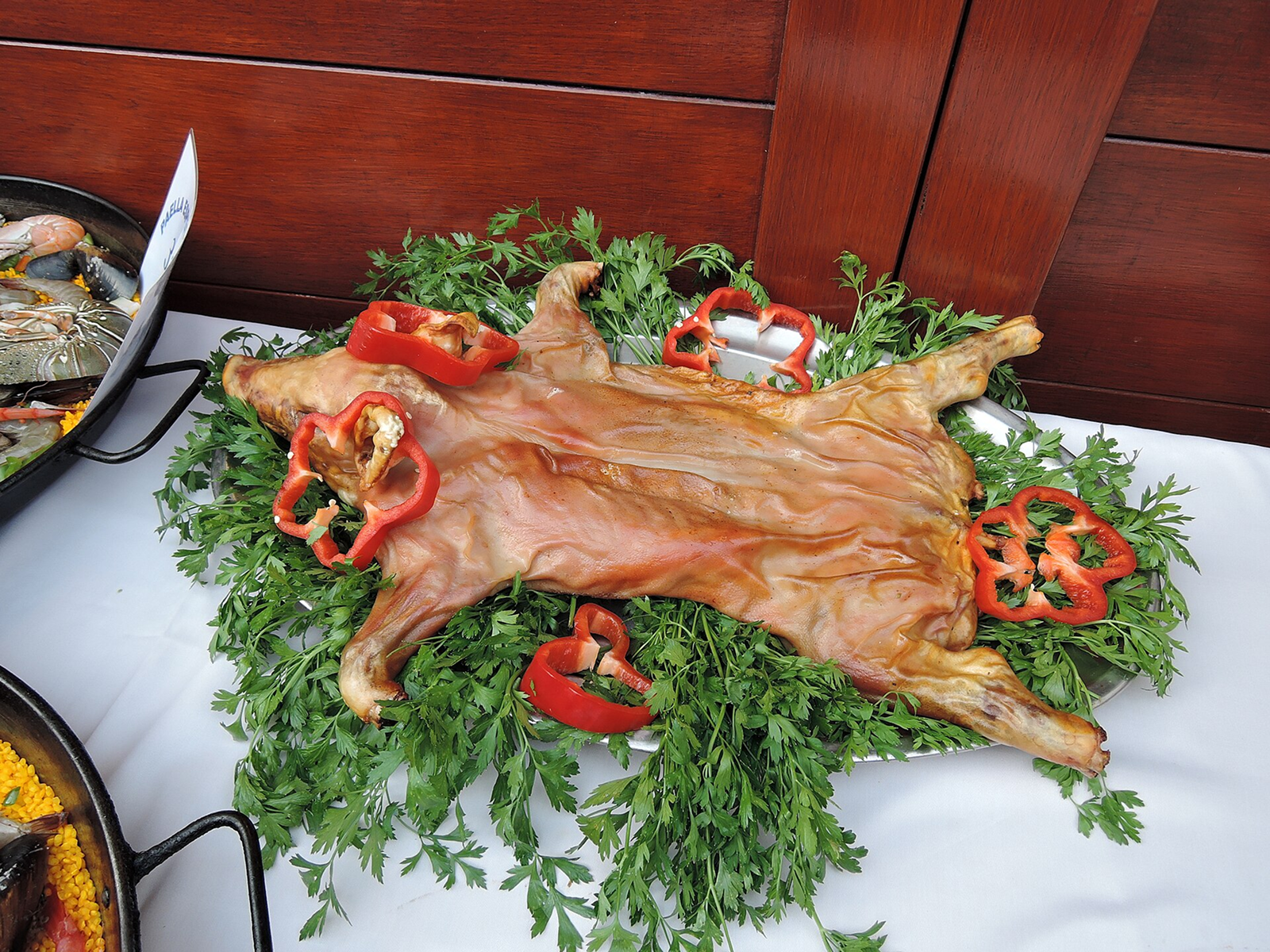
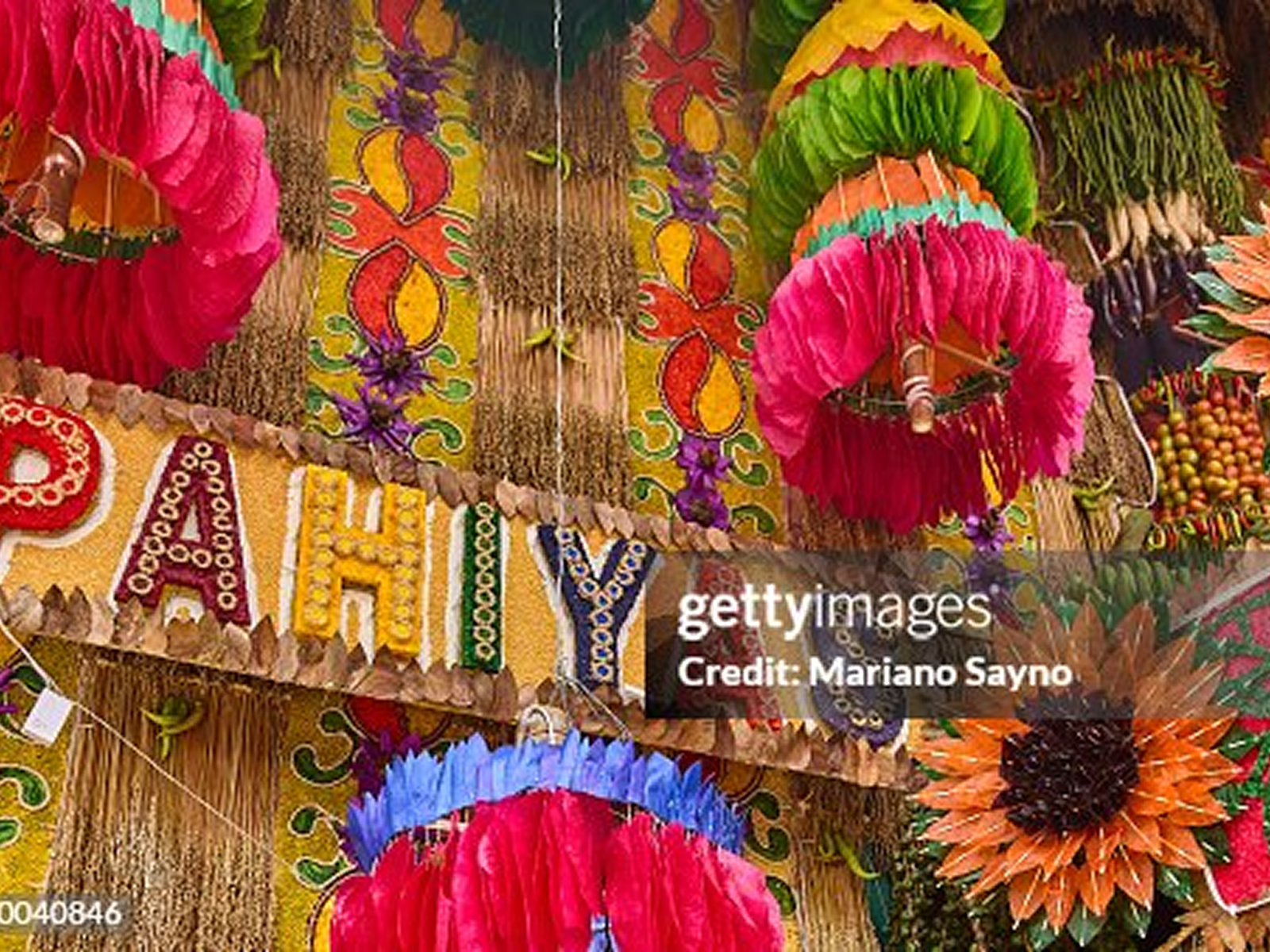
You will not be able to walk in a straight line through Lucban on this day, a town tucked into the hills of CALABARZON, because every house on the main road has turned its entire facade into an edible mural. Rice wafers called kiping, dyed in red, yellow, and green, are layered over windows and doorframes like overlapping fish scales, catching the light when the sun hits them right. Vegetables, woven rice stalks, and whole roasted pigs hang from balconies.
The smell is unlike anything else on this list, sweet rice paper, grilled garlic, and roasted meat all at once. Locals will offer you food directly off the house decorations, because the entire point of Pahiyas is thanksgiving for the harvest expressed through abundance, and abundance is meant to be shared, not photographed from a distance.
By late afternoon the crowd thins and the families start peeling the kiping off their own walls to eat, which is your cue that the day is winding toward something quieter and more personal than the morning's spectacle suggested.
azifind.com Travel
Philippine Festival Guide
Pahiyas · Lucban, Quezon 🌐
By late afternoon families start peeling kiping off their own walls to eat. Quietest part of the day.
azifind.com Travel
Philippine Festival Guide
Pahiyas · Lucban, Quezon 🌐
Whole roasted pigs hanging from balconies and locals offering food straight off the decorations.
azifind.com Travel
Philippine Festival Guide
Pahiyas · Lucban, Quezon 🌐
Every house on this street turned its own wall into an edible mural. Could not walk in a straight line.
Moriones
Marinduque · Holy Week (March or April)
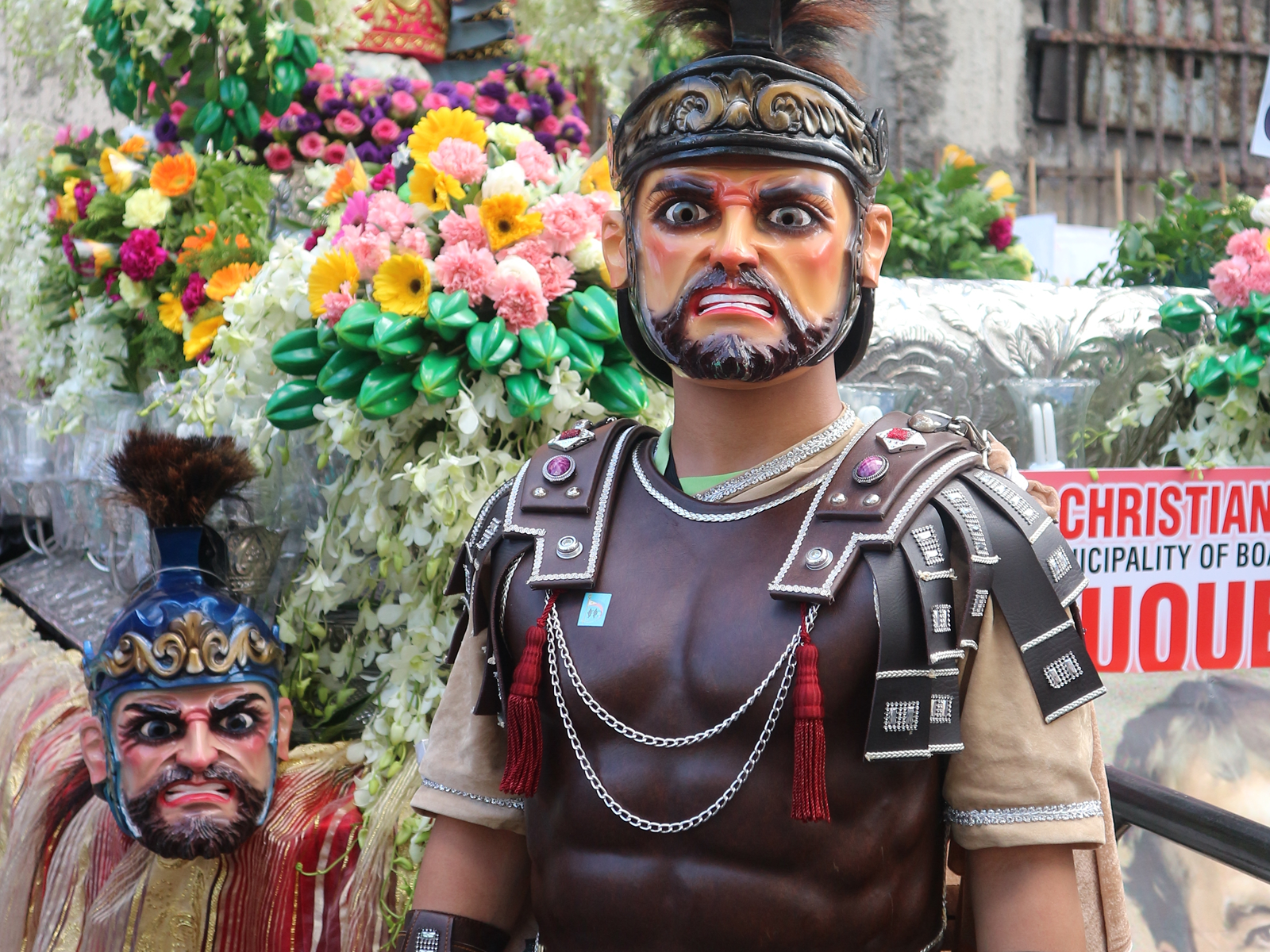
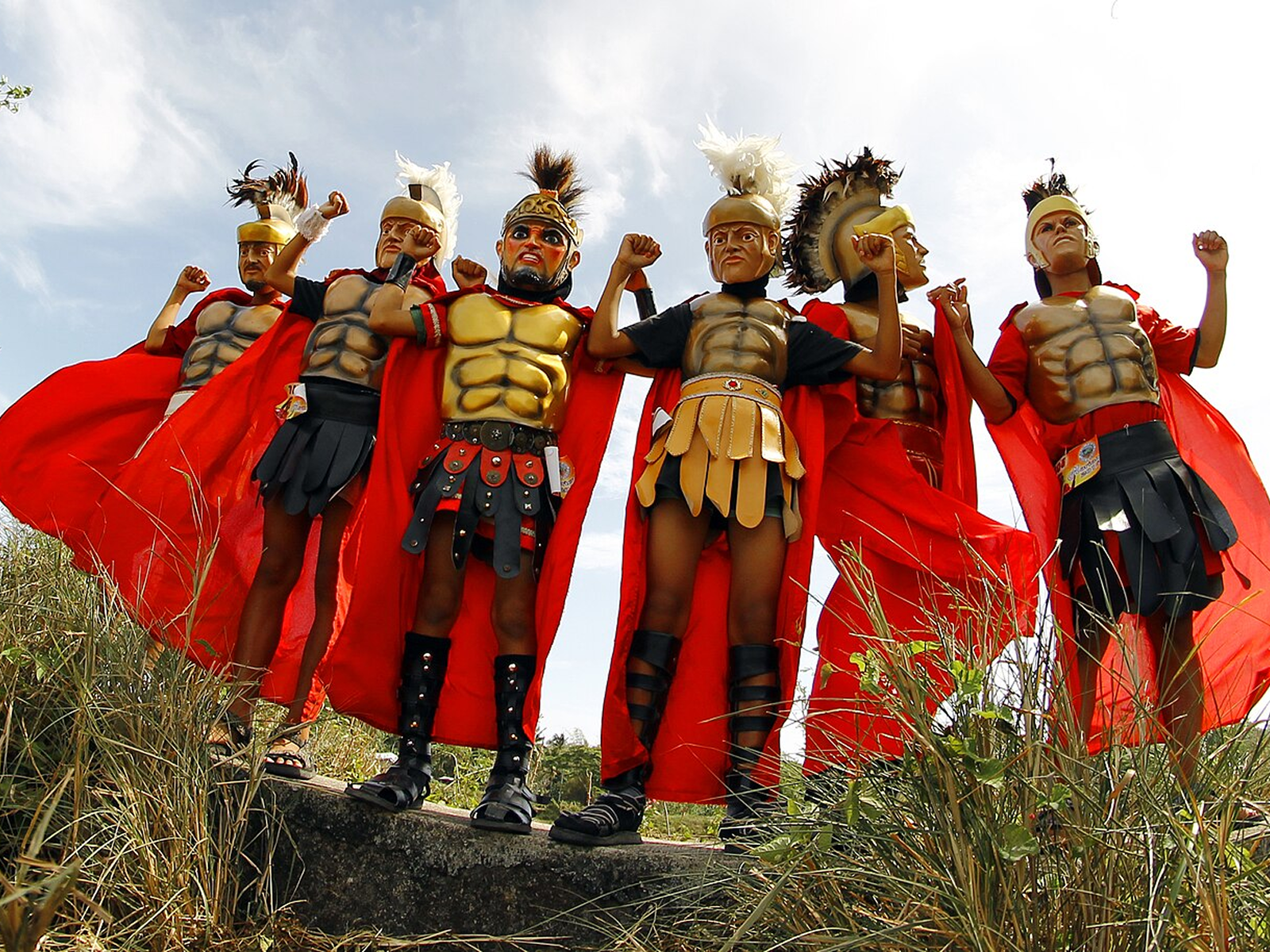
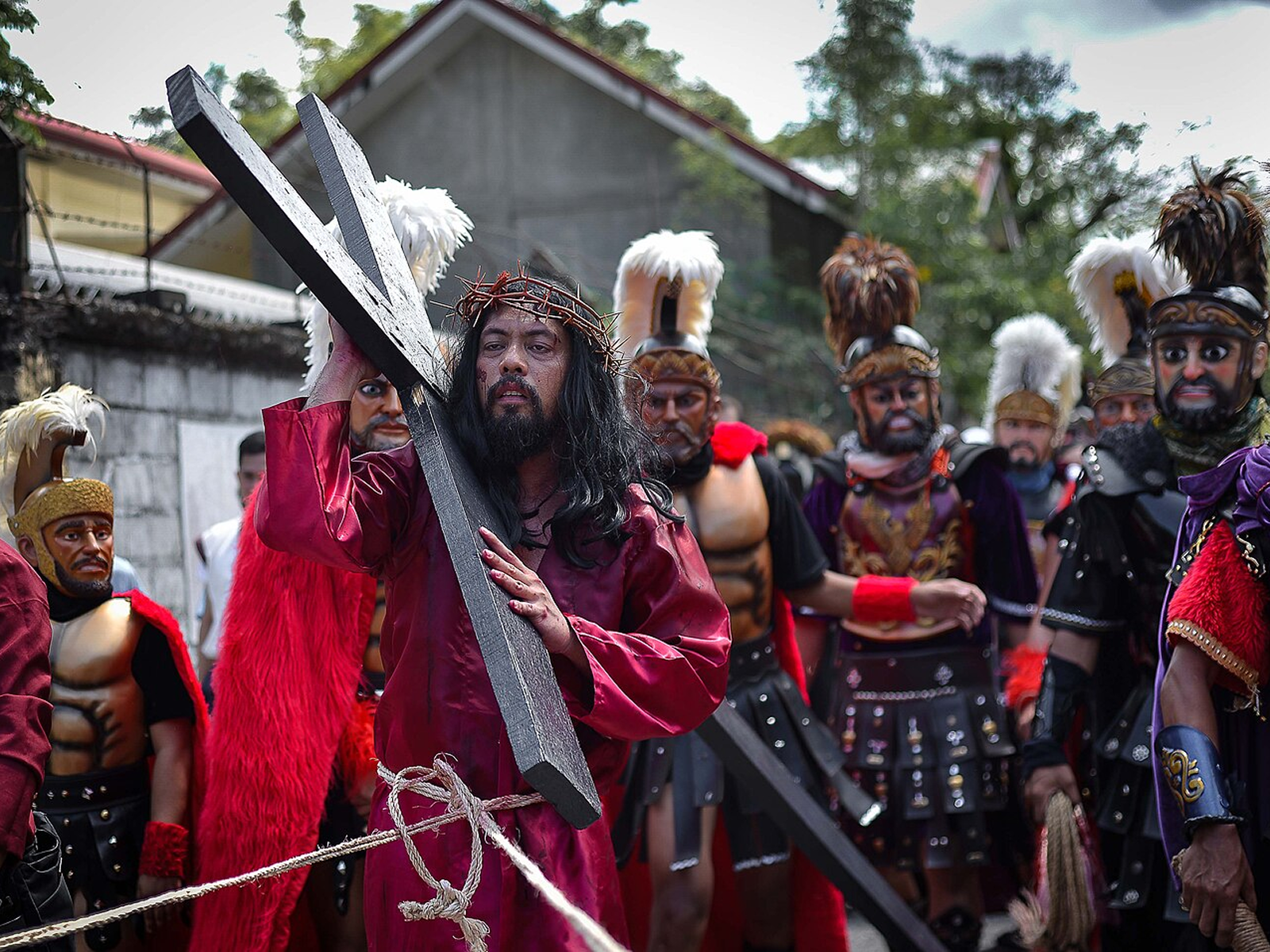
This is the only festival on this list that asks you to be quiet. Men in centurion armor and painted Roman masks wander the streets of Marinduque's towns for the entire week leading up to Easter, reenacting the story of Longinus, the blind soldier whose sight was restored by Christ's blood and who was later beheaded for his conversion.
There is no music competing for attention here, just the slow, deliberate movement of masked figures through town squares, the occasional staged chase as "soldiers" hunt for Longinus among the crowd, and the heavy religious weight of Holy Week itself pressing on everything. The masks are genuinely unsettling up close, hand carved, exaggerated, designed centuries ago to be frightening rather than decorative.
On Easter Sunday the mood breaks entirely. Longinus is "caught," his head theatrically removed, and the streets that had been quiet all week erupt into celebration.
azifind.com Travel
Philippine Festival Guide
Moriones · Marinduque 🌐
The only festival on this list that asked me to be quiet. Centurion armor, hand carved masks, dead serious.
azifind.com Travel
Philippine Festival Guide
Moriones · Marinduque 🌐
These masks are genuinely unsettling up close. Designed centuries ago to frighten, not decorate.
azifind.com Travel
Philippine Festival Guide
Moriones · Marinduque 🌐
Easter Sunday breaks the silence completely. Longinus is caught, and the whole town erupts.
Pintados
Tacloban City · June
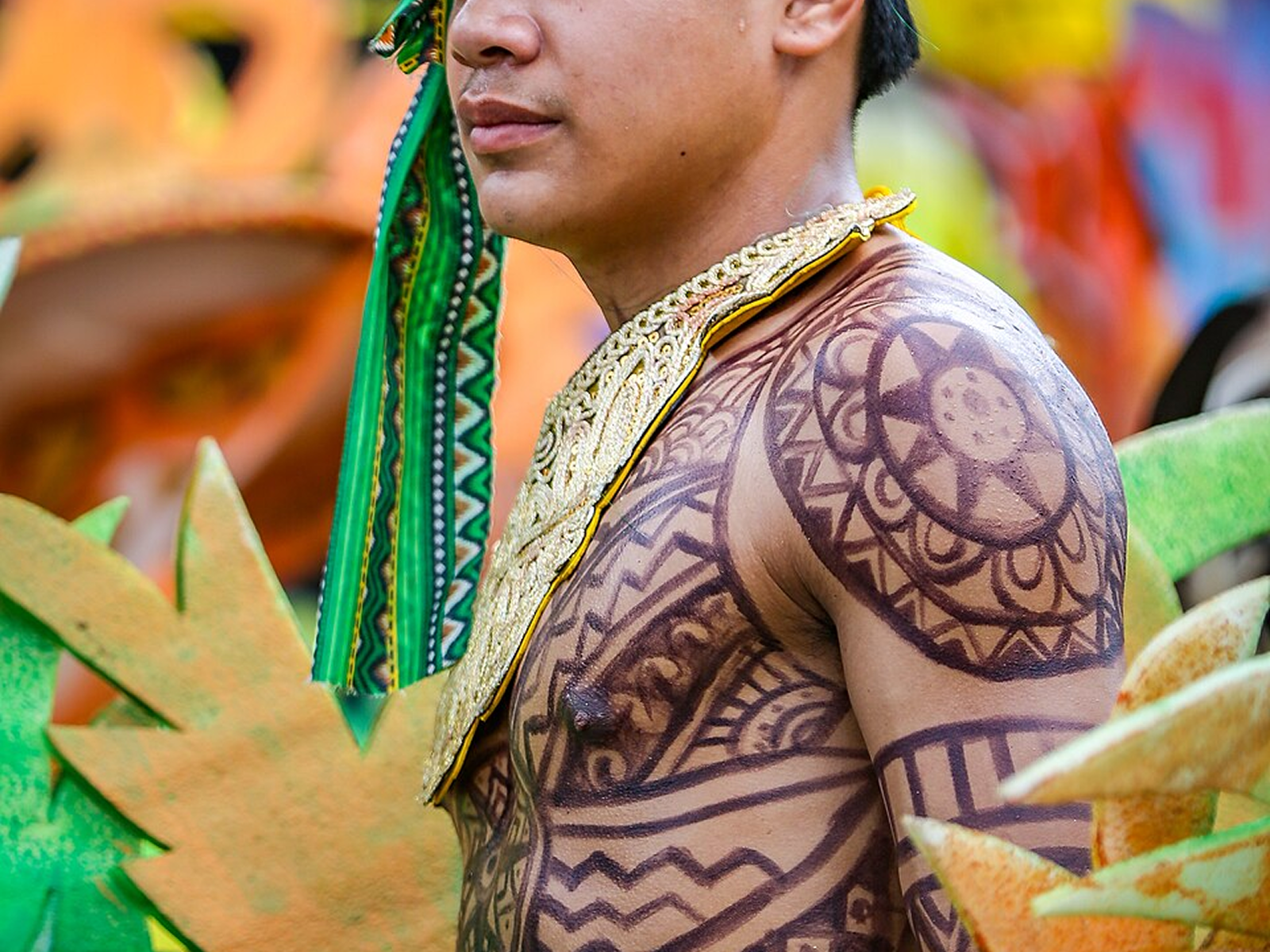
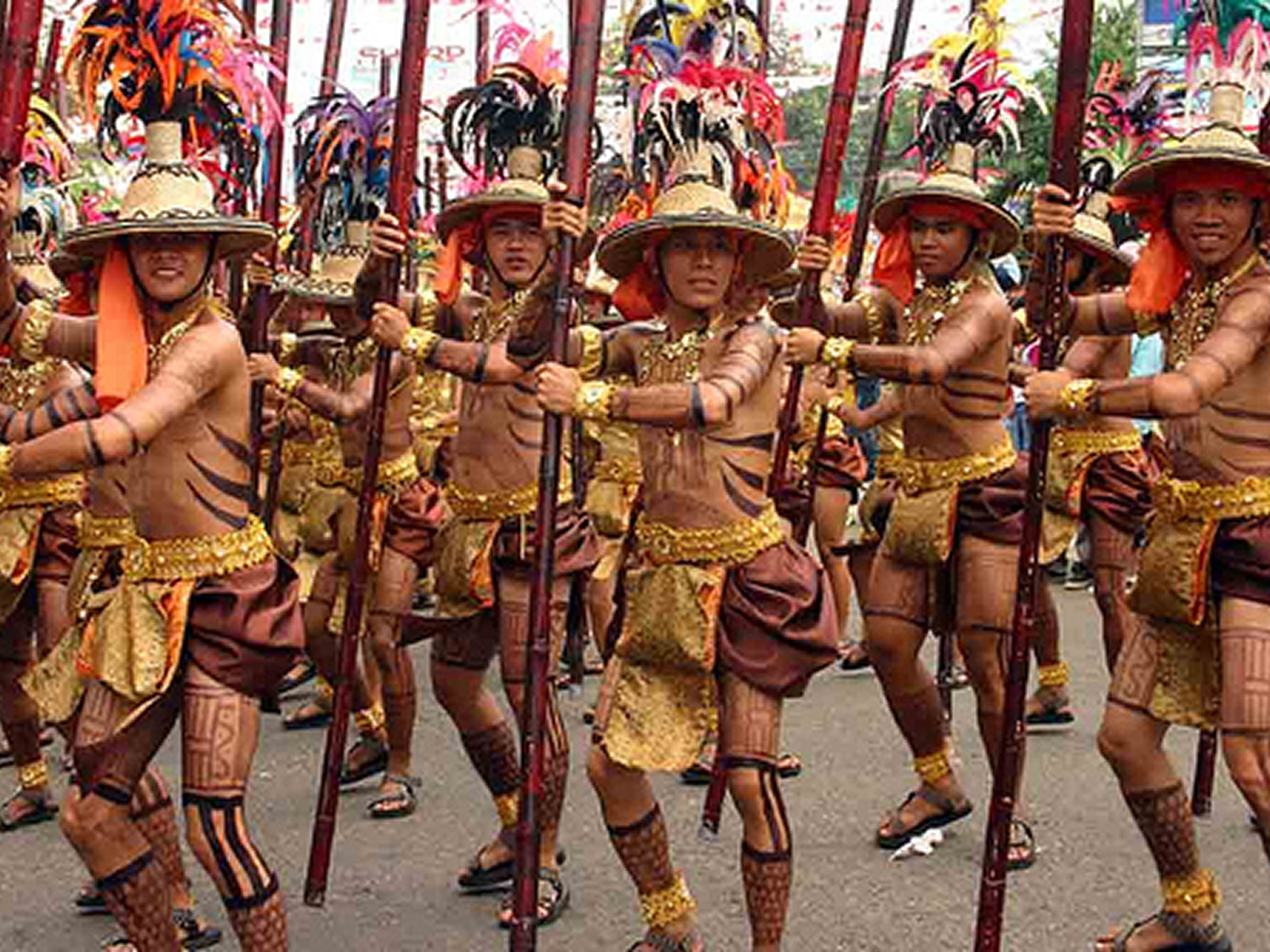
The paint is the entire language of this festival, rooted in the warrior tradition of Leyte and Samar in Eastern Visayas. Before Spanish chroniclers ever wrote the word Filipino, they wrote about the Pintados, the heavily tattooed warriors of Leyte and Samar whose ink covered most of their bodies and marked status, battles survived, and rank within the community.
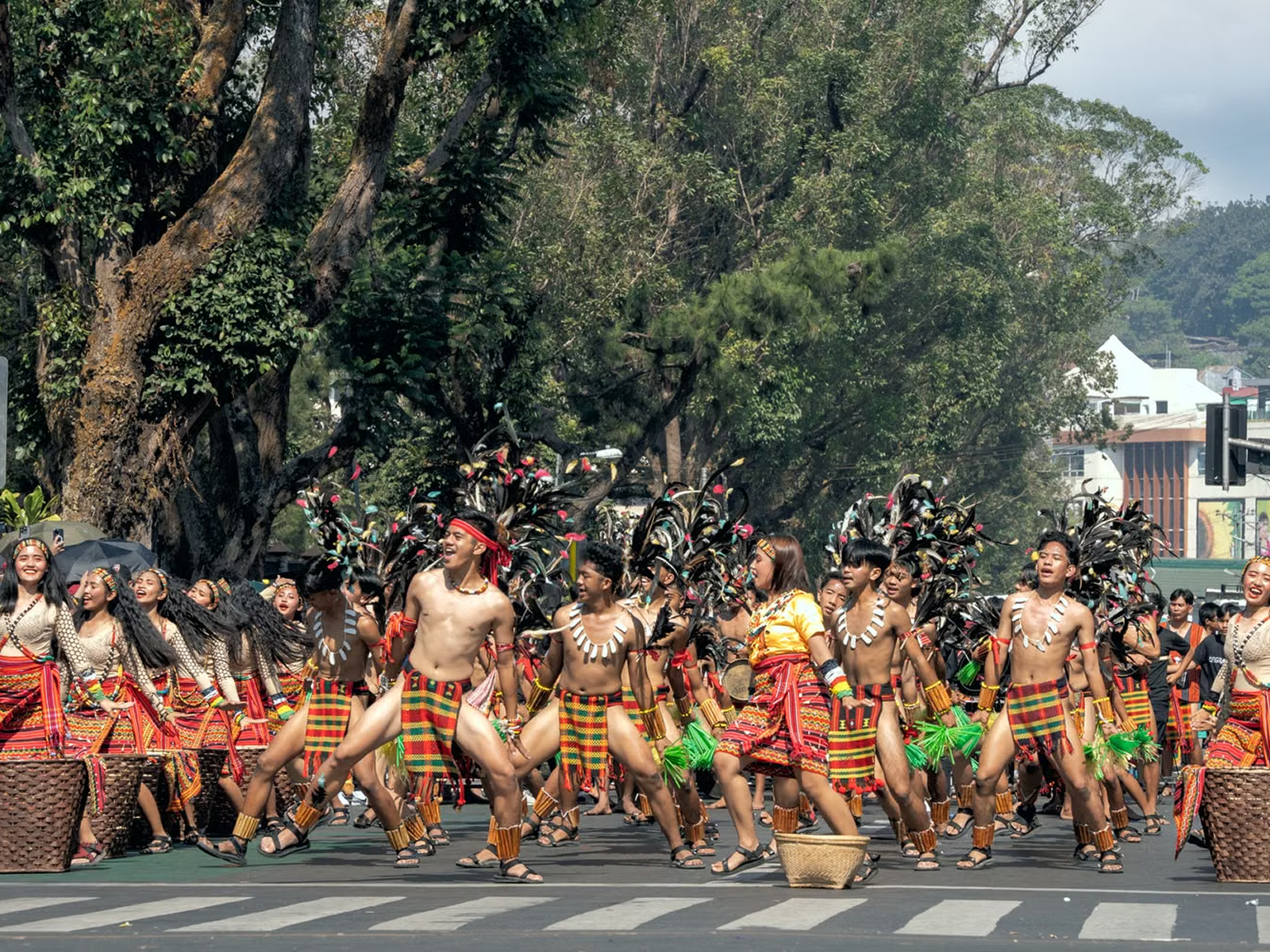
Tacloban's festival rebuilds that image every June, locals covering their skin in painted patterns of black, green, and blue rather than tattoos, moving through the streets to drumbeats that deliberately avoid the brass band sound of the Visayan Catholic festivals in favor of something rawer and more percussive. There's a heat to Pintados that has nothing to do with the weather, a kind of unapologetic pride in a pre colonial identity that most of the country's other festivals only gesture at underneath layers of Catholic iconography.
Stand close enough to the dancers and you'll notice the paint is never quite dry, smudging slightly with sweat by midafternoon, a small reminder that this is built fresh every year rather than preserved behind glass.
azifind.com Travel
Philippine Festival Guide
Pintados · Tacloban City 🌐
Body paint recreating pre colonial tattoo patterns. The paint is still wet by midafternoon.
azifind.com Travel
Philippine Festival Guide
Pintados · Tacloban City 🌐
Drumbeats here avoid the brass band sound entirely. Rawer, more percussive, more deliberate.
azifind.com Travel
Philippine Festival Guide
Pintados · Tacloban City 🌐
Unapologetic pride in a pre colonial identity most festivals only gesture at.
Kadayawan
Davao City · Third Week of August
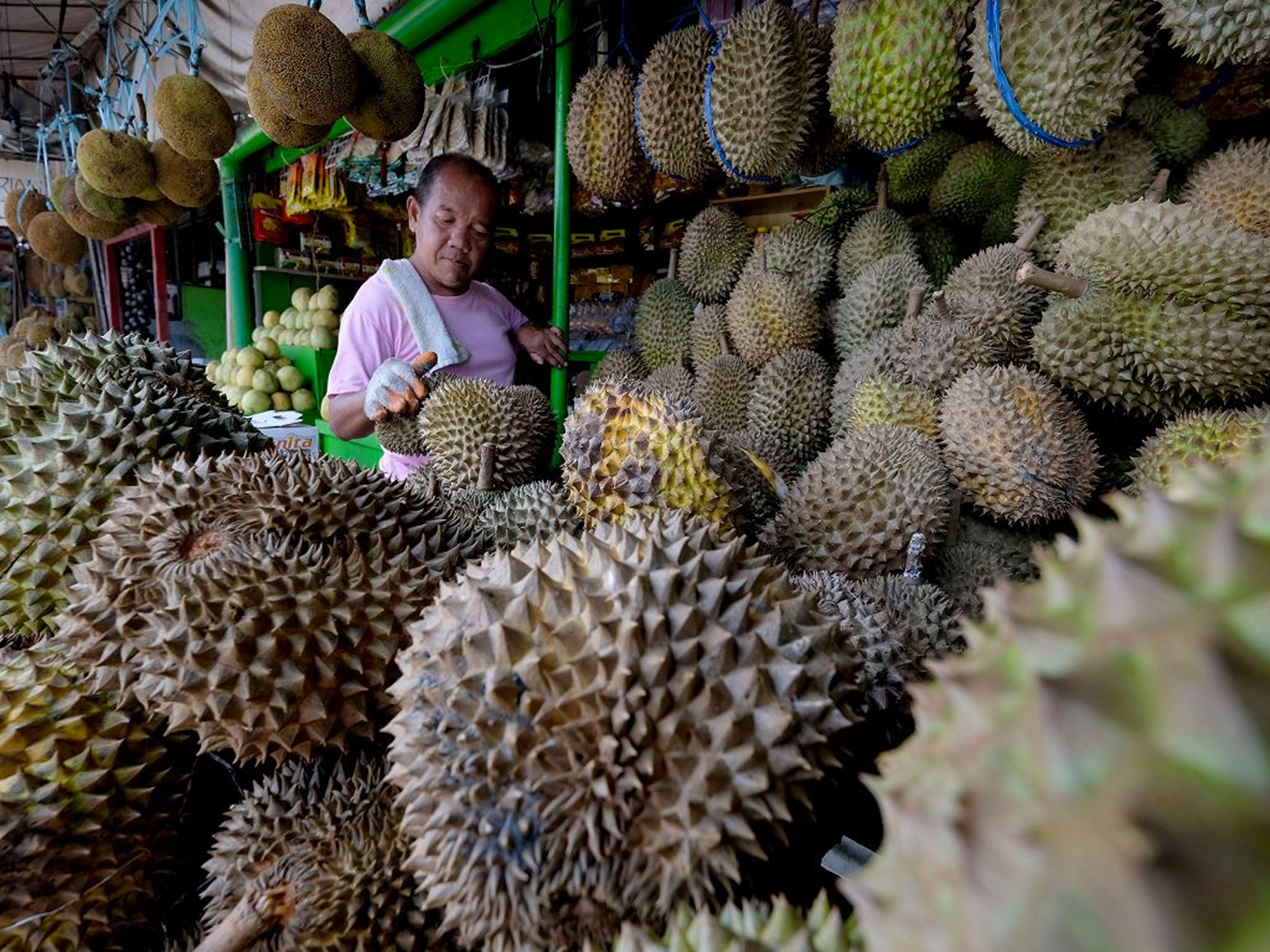
The first thing you notice is the smell of fruit, durian, mangosteen, rambutan, piled in stalls that line every street near the festival grounds in Davao, the city's way of putting its harvest on full display before anyone says a word about it.
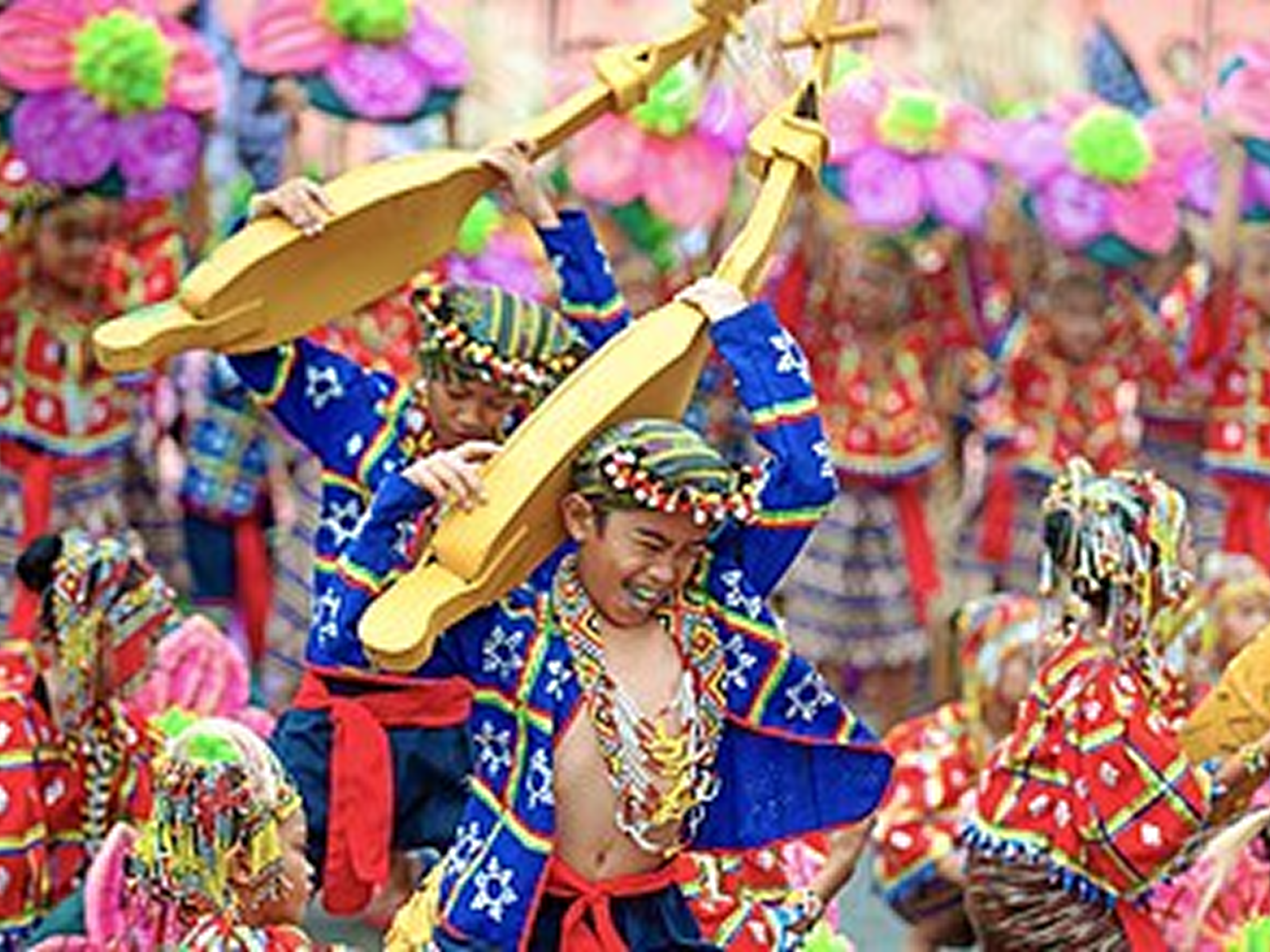
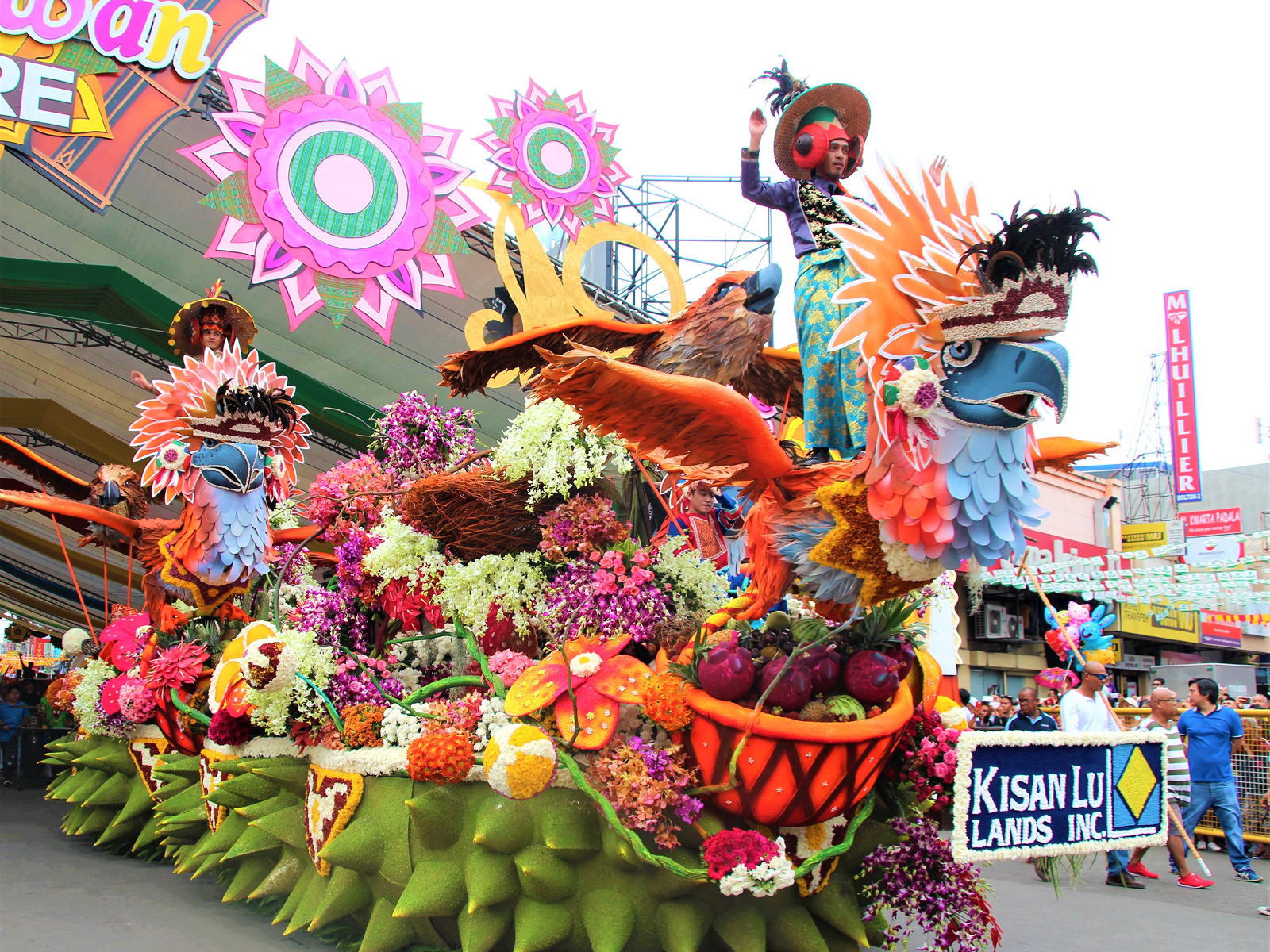
The Indak Indak street dance moves through downtown Davao with dancers dressed as fruit, flowers, and the indigenous tribes of Mindanao, all to a rhythm that has more brass and percussion than the Visayan festivals, closer to a parade band than a ritual drumbeat. The Pamulak float parade follows, floats built entirely from flowers in patterns so dense they look upholstered.
Locals here treat Kadayawan less as a tourist spectacle and more as an actual harvest celebration, which means the best version of the experience isn't the parade itself but the open air markets afterward, where you can buy fruit straight from the farmers who grew it for less than it costs anywhere else in the country.
azifind.com Travel
Philippine Festival Guide
Kadayawan · Davao City 🌐
Durian, mangosteen, rambutan, piled high before anyone says a word about the harvest.
azifind.com Travel
Philippine Festival Guide
Kadayawan · Davao City 🌐
Dancers dressed as fruit and flowers moving to more brass than anything in the Visayas.
azifind.com Travel
Philippine Festival Guide
Kadayawan · Davao City 🌐
Bought fruit straight from the farmers after the parade. Cheaper than anywhere else in the country.
Peñafrancia
Naga City · Third Weekend of September
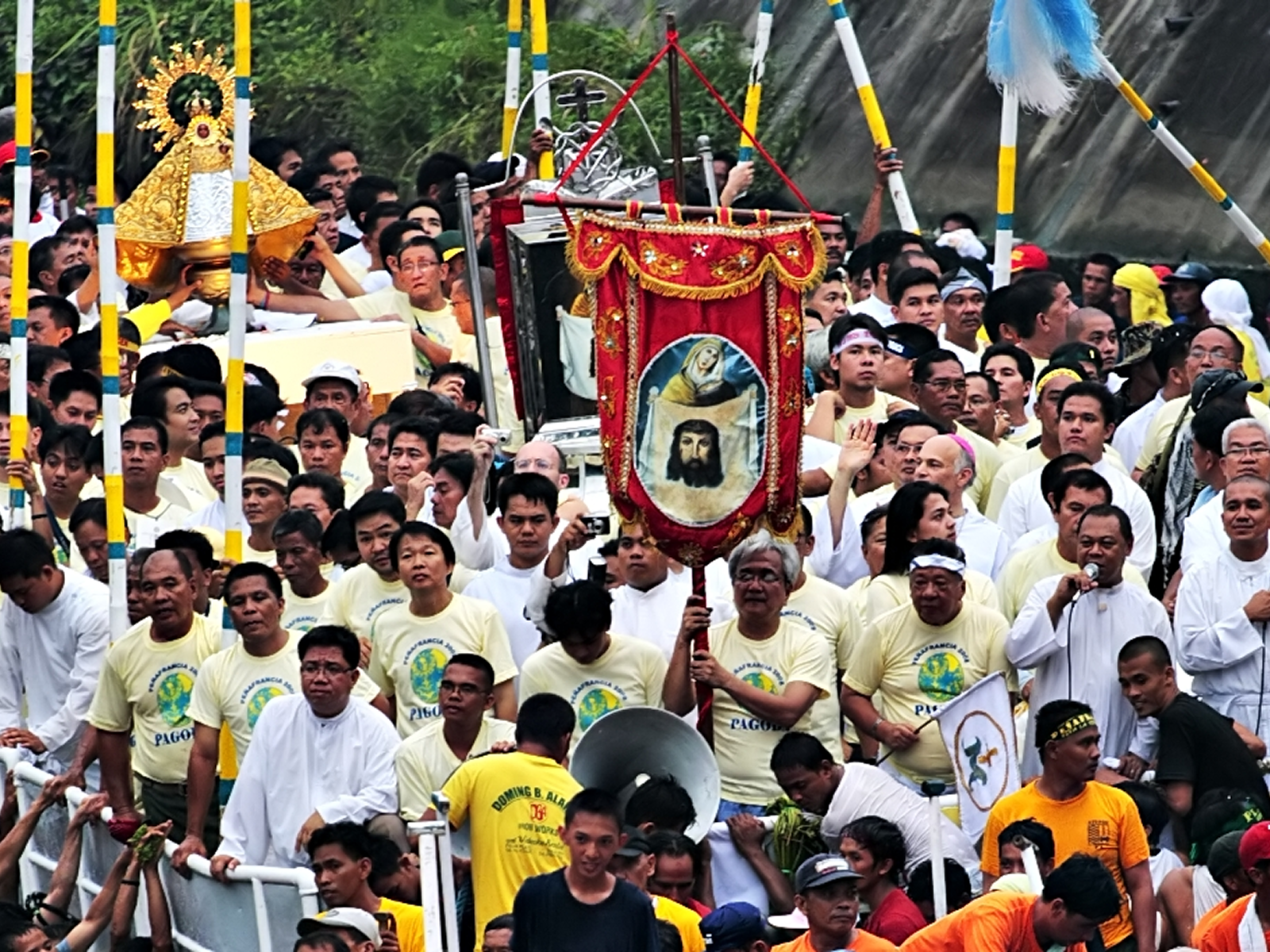
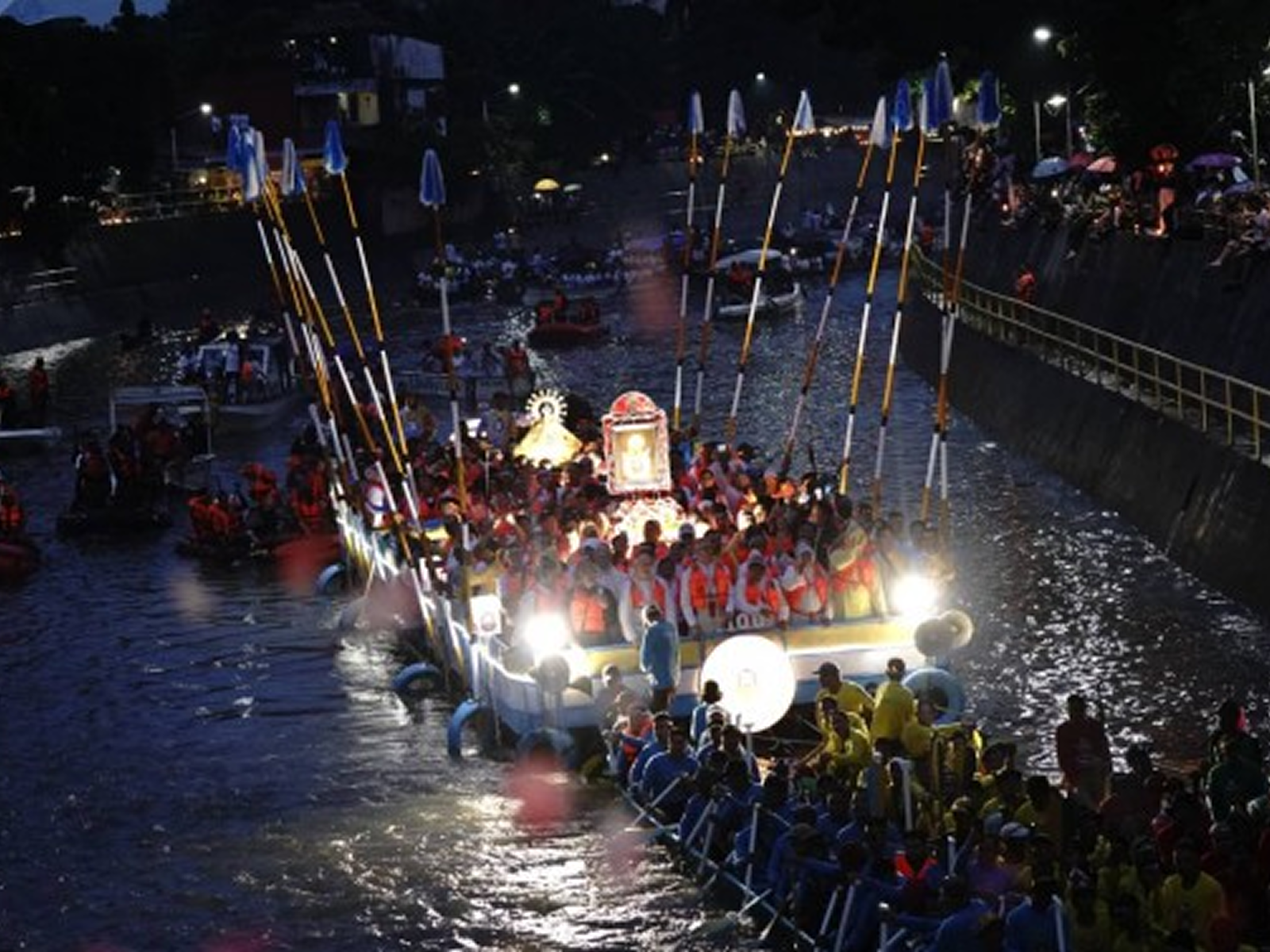
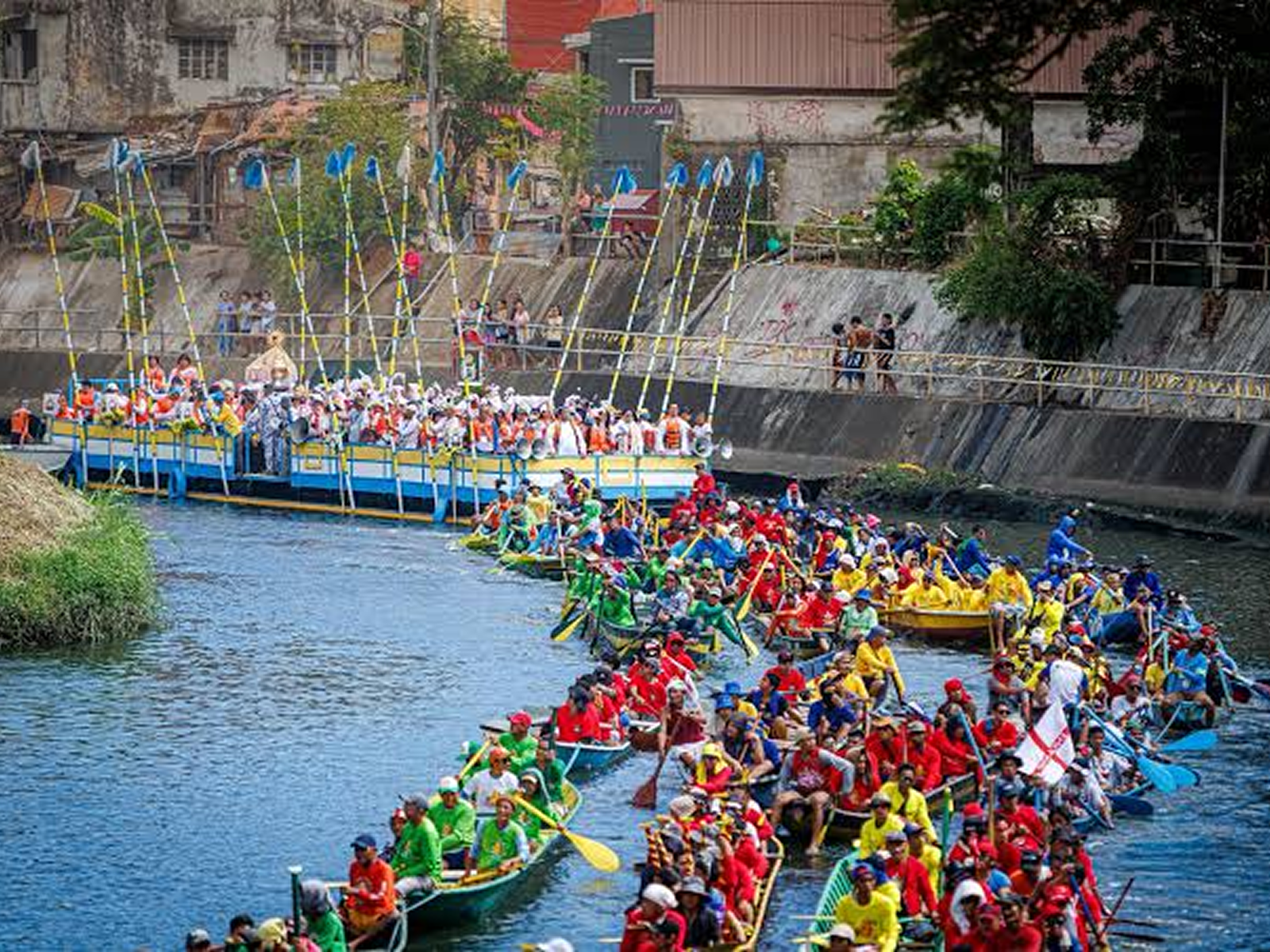
The fluvial procession is the moment to be there for. As night falls over the Bicol River, the image of Our Lady of Peñafrancia is loaded onto a pagoda style boat lit with hundreds of small lights, and thousands of devotees wade into the water alongside it, some swimming, trying to touch the boat as it passes.
The chanting carries across the water differently than it would on land, softer, more layered, voices echoing off the river itself. Boats packed with onlookers line the route, and the combined glow of candles, boat lights, and phone flashlights turns the entire river into something that looks staged even though nothing about it is.
This is the largest Marian devotion in the Camarines Sur region, and unlike the Visayan street festivals, the emotional center here is reverence, not spectacle, even with thousands of people pressed into the same stretch of river.
azifind.com Travel
Philippine Festival Guide
Peñafrancia · Naga City 🌐
The pagoda boat lit up against the dark river. Nothing else on this list looks like this.
azifind.com Travel
Philippine Festival Guide
Peñafrancia · Naga City 🌐
Thousands wading into the Bicol River just to touch the boat as it passes.
azifind.com Travel
Philippine Festival Guide
Peñafrancia · Naga City 🌐
Candles, boat lights, and phone flashlights turned the entire river into something that looked staged. It wasn't.
MassKara
Bacolod City · Throughout October
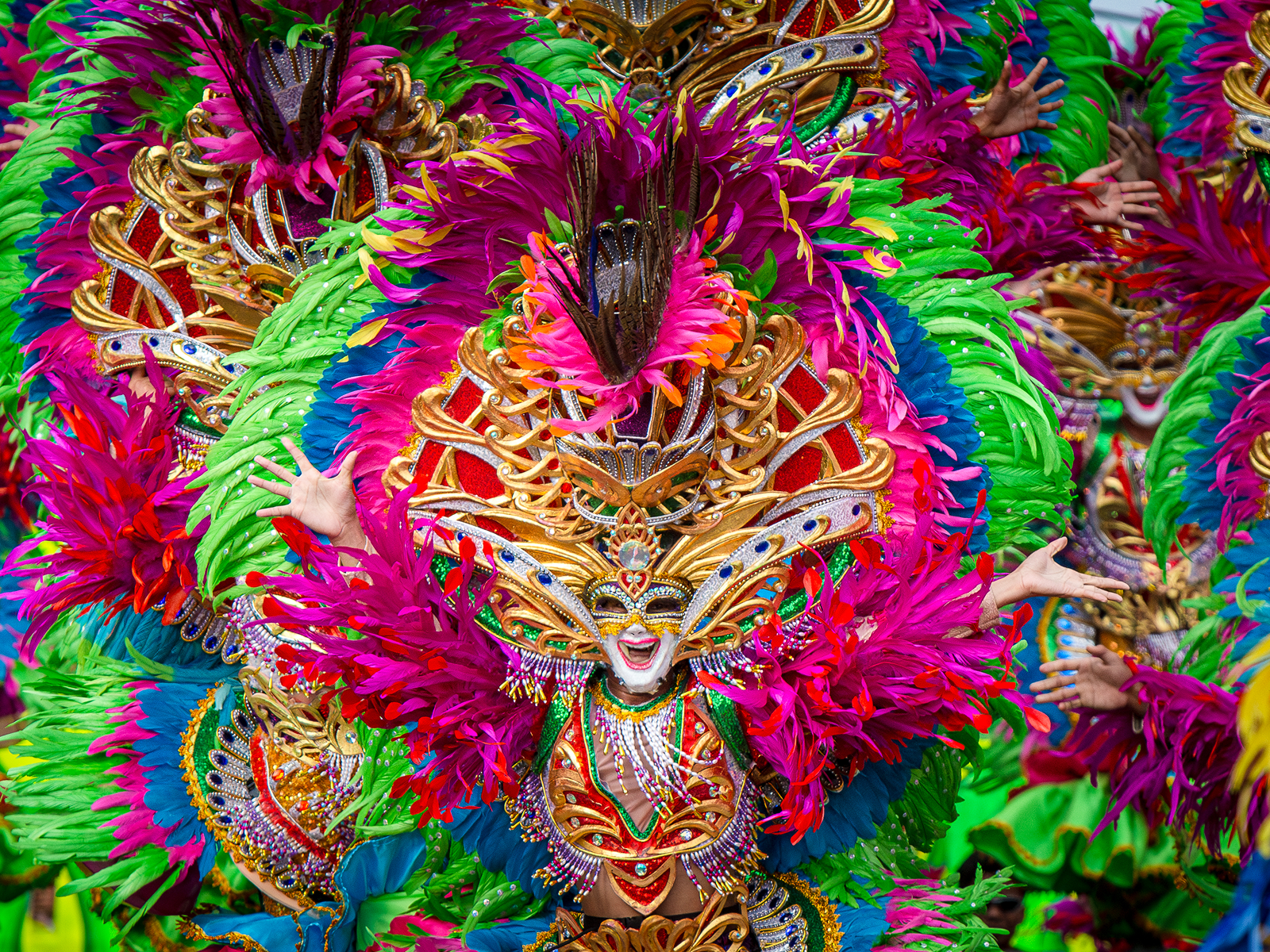
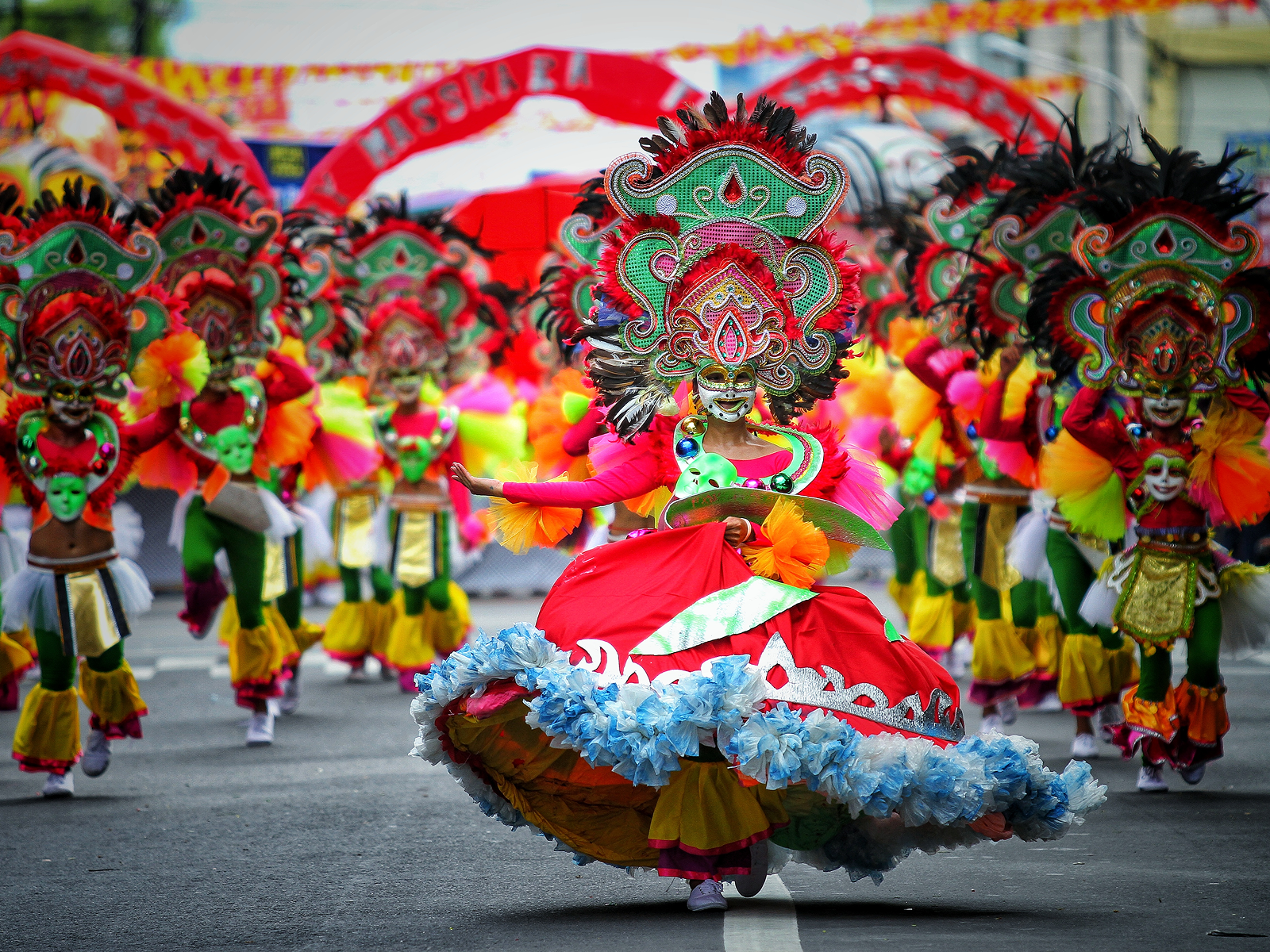
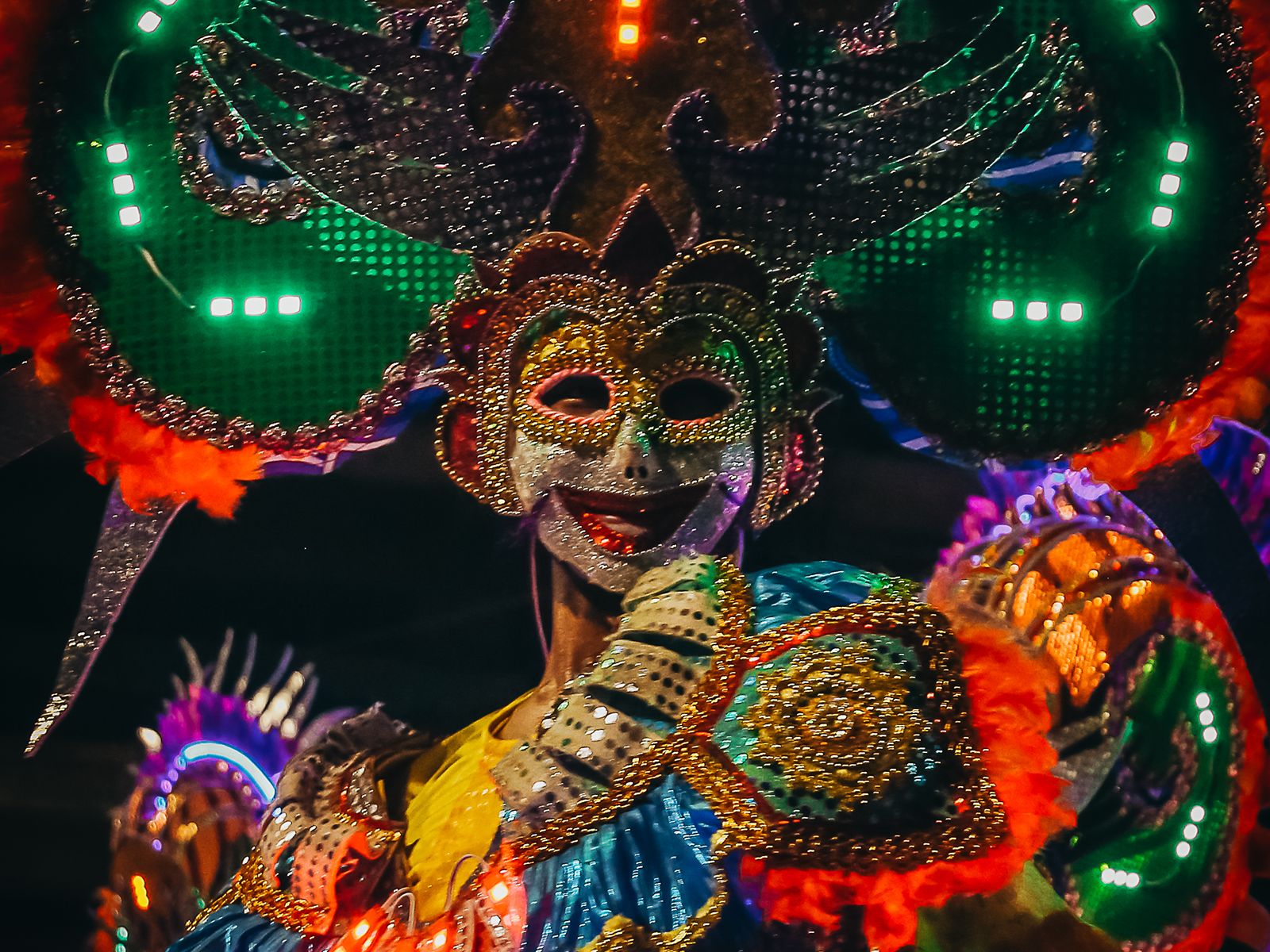
Every face in the crowd is smiling, because every mask is smiling, painted with wide exaggerated grins regardless of what the dancer underneath is actually feeling. That contrast is the entire point. MassKara was born out of grief, created in the 1980s during an economic crisis and a deadly shipwreck that devastated the city, as a deliberate choice to celebrate in spite of hardship rather than because of its absence.
Knowing that history changes how you watch the street dancing competition, dancers in feathered, sequined masks moving through choreography that's upbeat almost to the point of defiance. Bacolod, in Negros Occidental, leans into its reputation as the City of Smiles hard, and by the time you're a few hours into the festival, surrounded by thousands of painted grins under string lights along Lacson Street, the cheerfulness stops feeling performative and starts feeling like something the city actually means.
azifind.com Travel
Philippine Festival Guide
MassKara · Bacolod City 🌐
Every mask is smiling regardless of what the dancer underneath is feeling. That's the entire point.
azifind.com Travel
Philippine Festival Guide
MassKara · Bacolod City 🌐
Born out of grief in the 1980s. Knowing that changes how you watch every routine.
azifind.com Travel
Philippine Festival Guide
MassKara · Bacolod City 🌐
String lights and a thousand painted grins along Lacson Street. The City of Smiles means it.
Higantes
Angono, Rizal · November 22-23
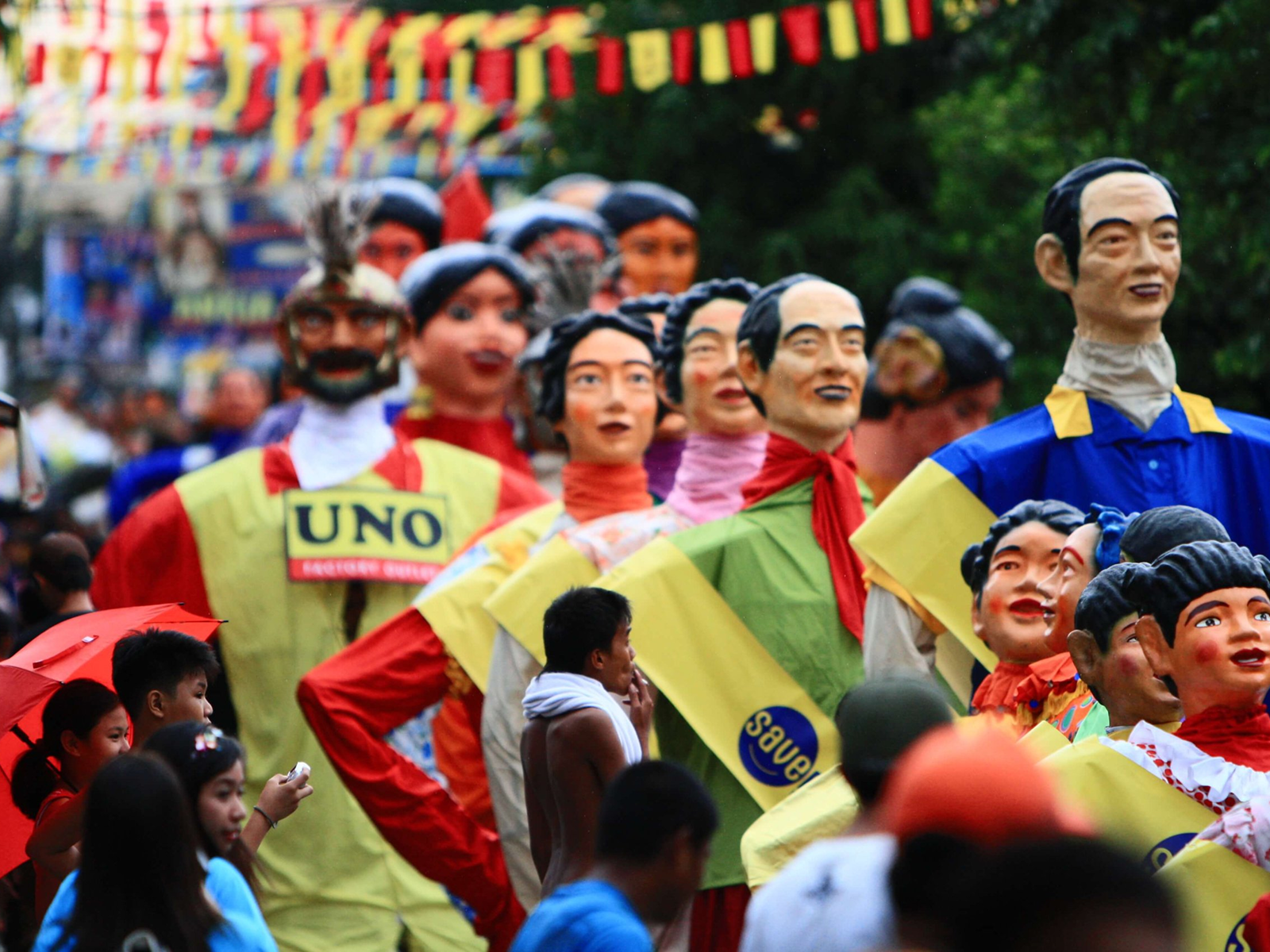
They loom before you understand why. Twelve foot paper mache giants, one for nearly every household in the barangay, sway down the streets of Angono, in the province of Rizal within CALABARZON, on the shoulders of the men carrying them, faces painted into exaggerated, almost comic expressions that were originally a quiet act of protest against Spanish landlords who forbade locals from looking them directly in the eye.
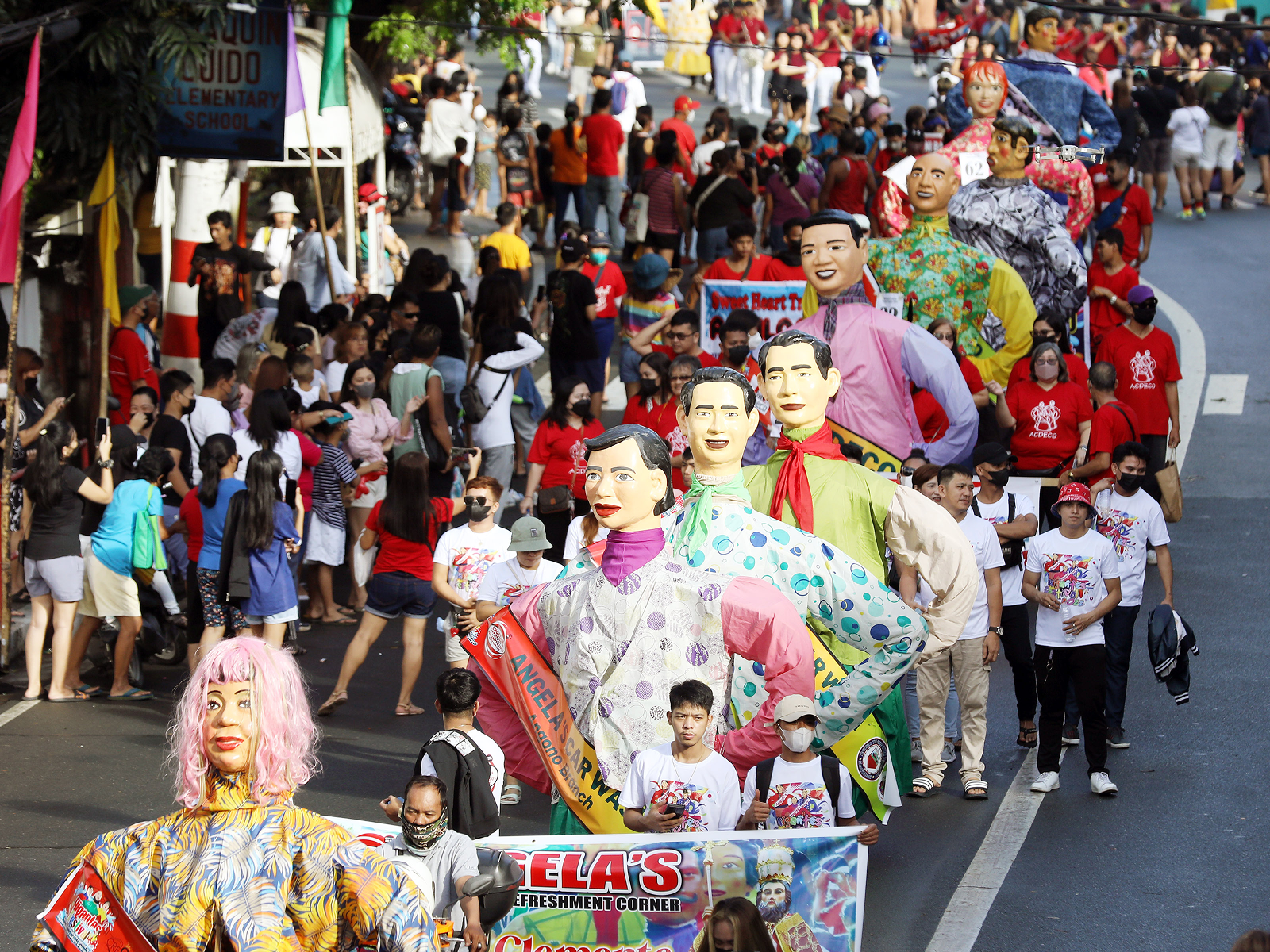
Centuries later the protest has become a parish celebration honoring San Clemente, but the defiance is still visible if you know what you're looking at. Partway through the procession comes basaan, holy water flung from balconies and doorways onto the parade below, soaking spectators and giants alike, a blessing that nobody bothers trying to dodge.
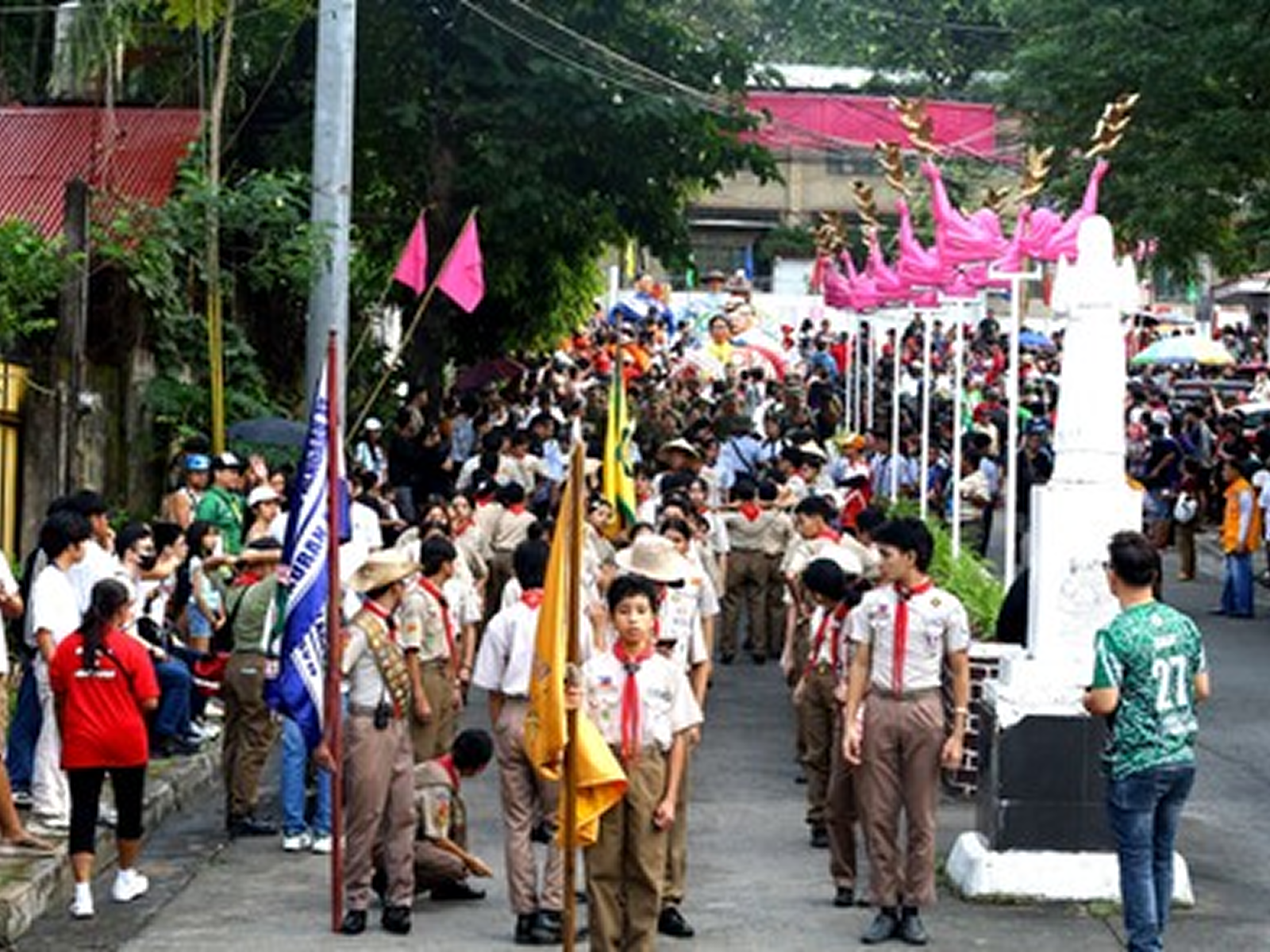
Angono calls itself the Art Capital of the Philippines, and walking through a crowd of homemade giants built by the same families year after year, you understand the claim has less to do with galleries and more to do with what an entire town is willing to build with its hands for one weekend.
azifind.com Travel
Philippine Festival Guide
Higantes · Angono, Rizal 🌐
Twelve foot paper mache giants, one for nearly every household in the barangay.
azifind.com Travel
Philippine Festival Guide
Higantes · Angono, Rizal 🌐
Holy water flung from balconies onto the parade below. Nobody bothers dodging it.
azifind.com Travel
Philippine Festival Guide
Higantes · Angono, Rizal 🌐
Same families building these by hand year after year. That's the real Art Capital claim.
Giant Lantern Festival
San Fernando, Pampanga · December
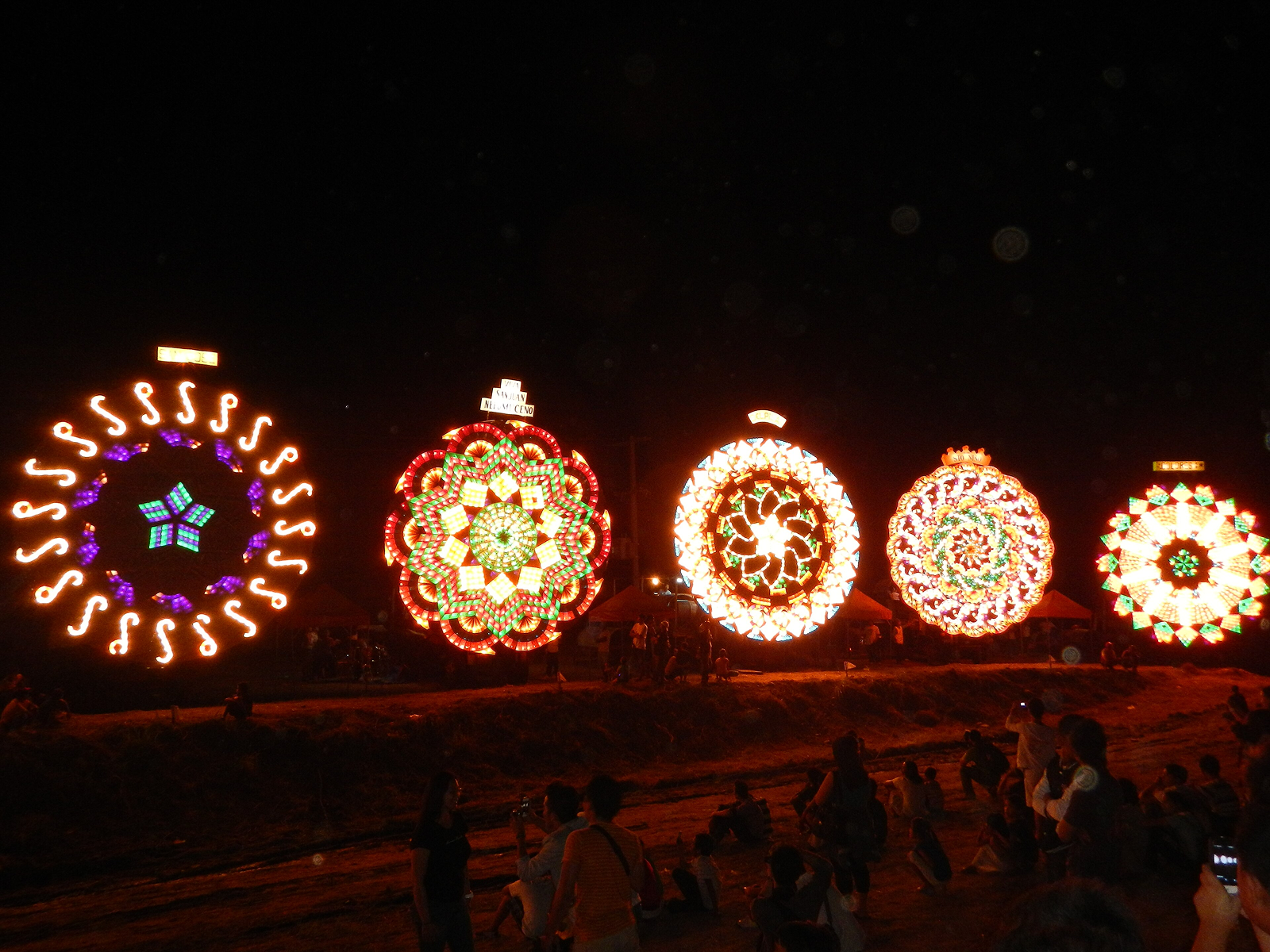
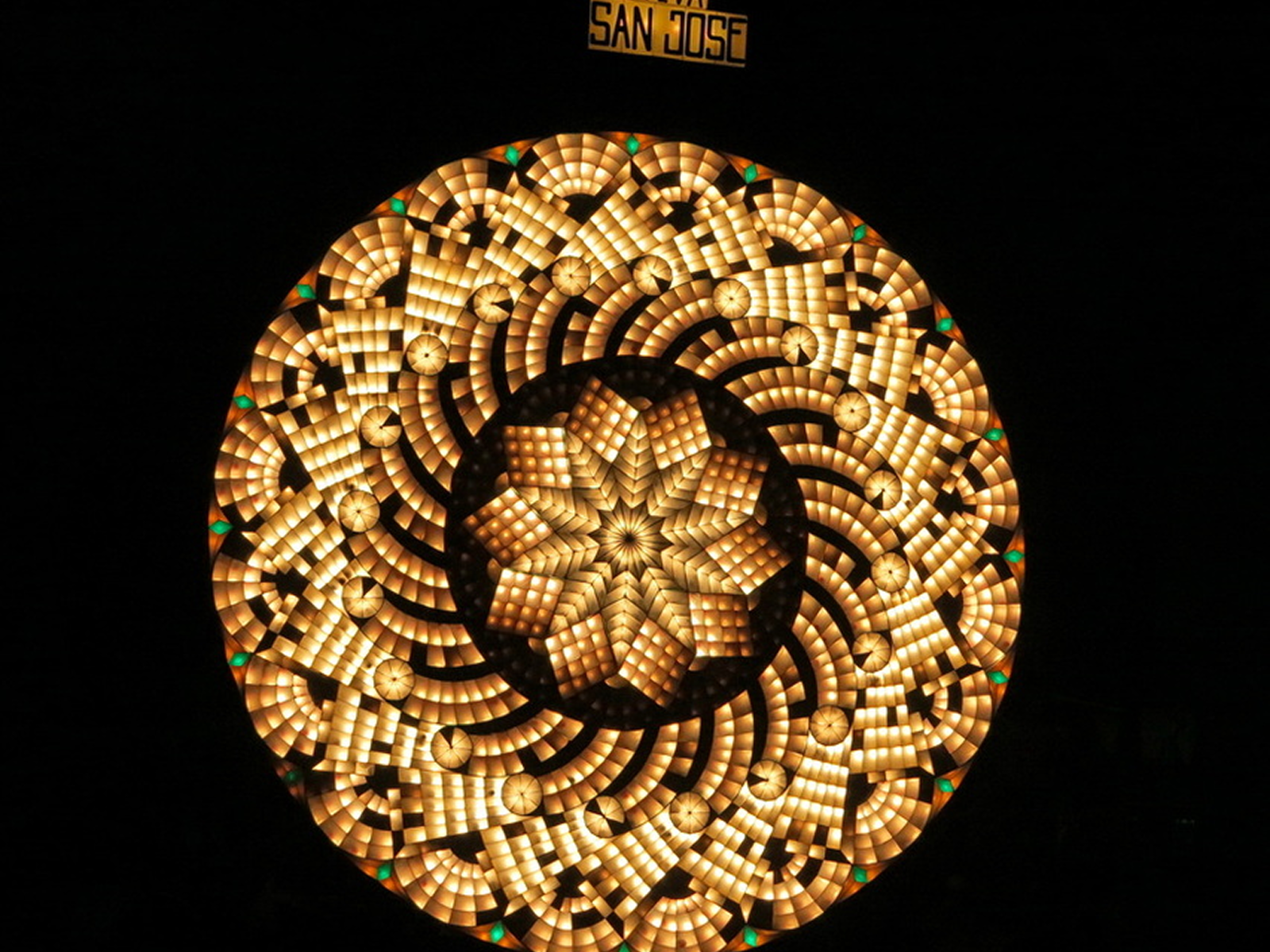
By the time the competition lanterns are switched on, the noise of the crowd briefly drops, because nothing prepares you for how a fifteen foot parol actually moves. These aren't static Christmas decorations. Each giant lantern is wired with thousands of bulbs choreographed to pulse and spin in sequence, geometric patterns rippling outward and collapsing inward in time with recorded music, an entire barangay's reputation riding on a single five minute display.
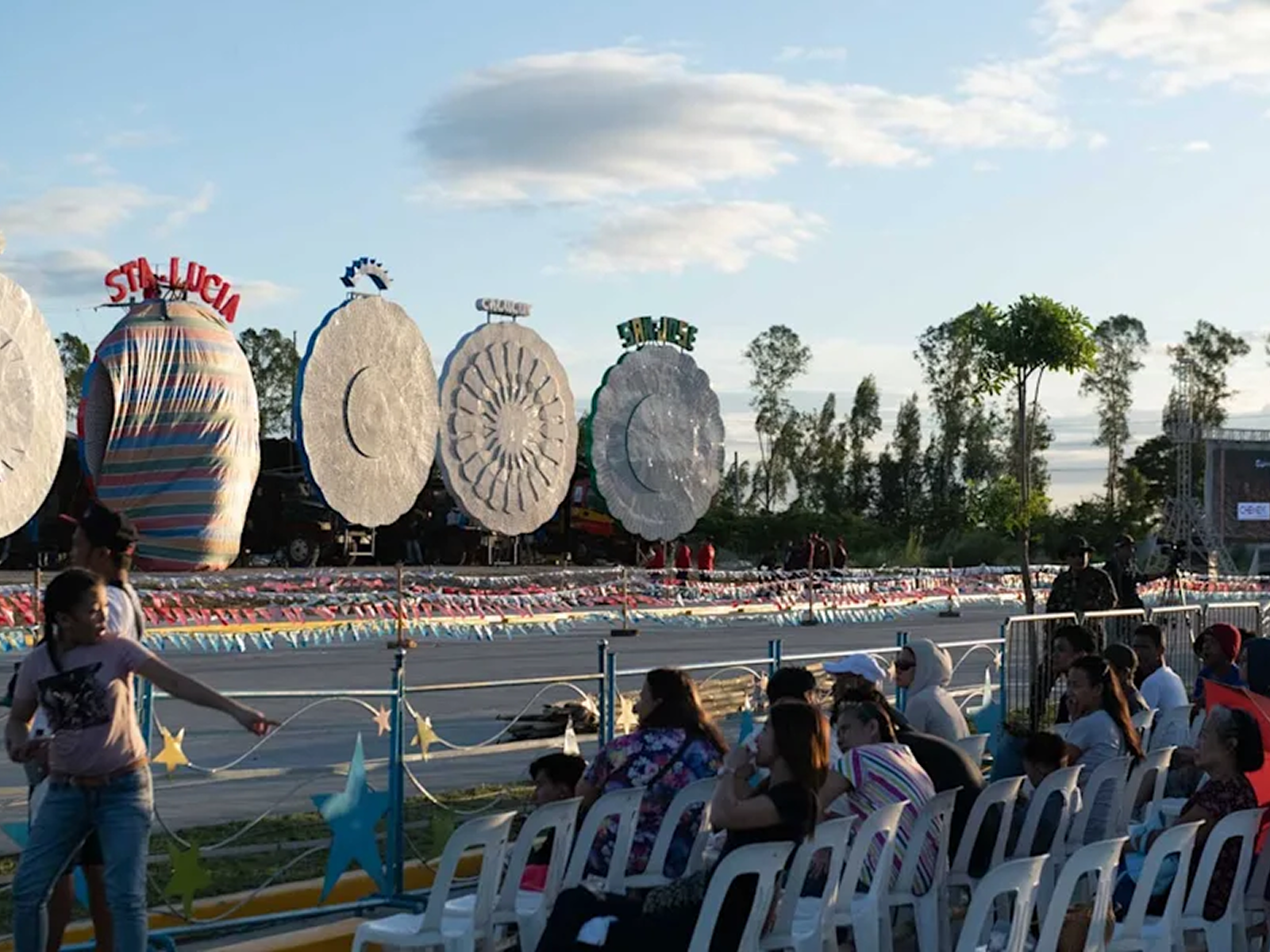
The air is colder here than almost anywhere else on this list, December in Pampanga carrying an actual chill after dark, which makes the warmth of the crowd packed shoulder to shoulder around the viewing area feel deliberate rather than incidental. Builders spend the entire month before the festival assembling these by hand using only locally sourced materials, and you can see the strain of that labor in the operators' faces as they watch their own lantern compete, visibly more nervous than anyone in the audience.
azifind.com Travel
Philippine Festival Guide
Giant Lantern Festival · San Fernando, Pampanga 🌐
A fifteen foot parol that actually moves. Thousands of bulbs choreographed to recorded music.
azifind.com Travel
Philippine Festival Guide
Giant Lantern Festival · San Fernando, Pampanga 🌐
An entire barangay's reputation riding on a single five minute display.
azifind.com Travel
Philippine Festival Guide
Giant Lantern Festival · San Fernando, Pampanga 🌐
Operators visibly more nervous than anyone in the crowd watching their own lantern compete.
Black Nazarene
Quiapo, Manila · January 9
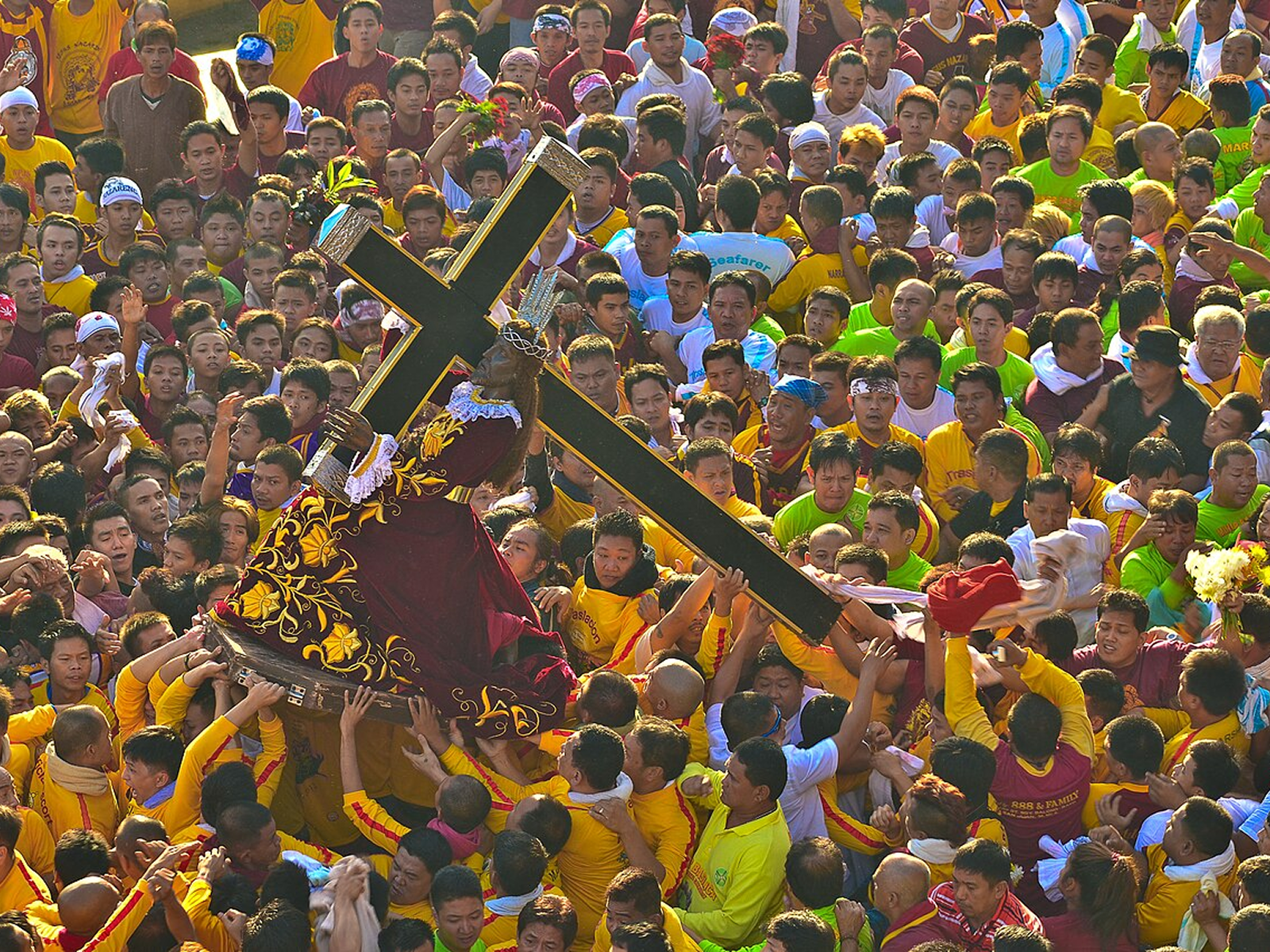
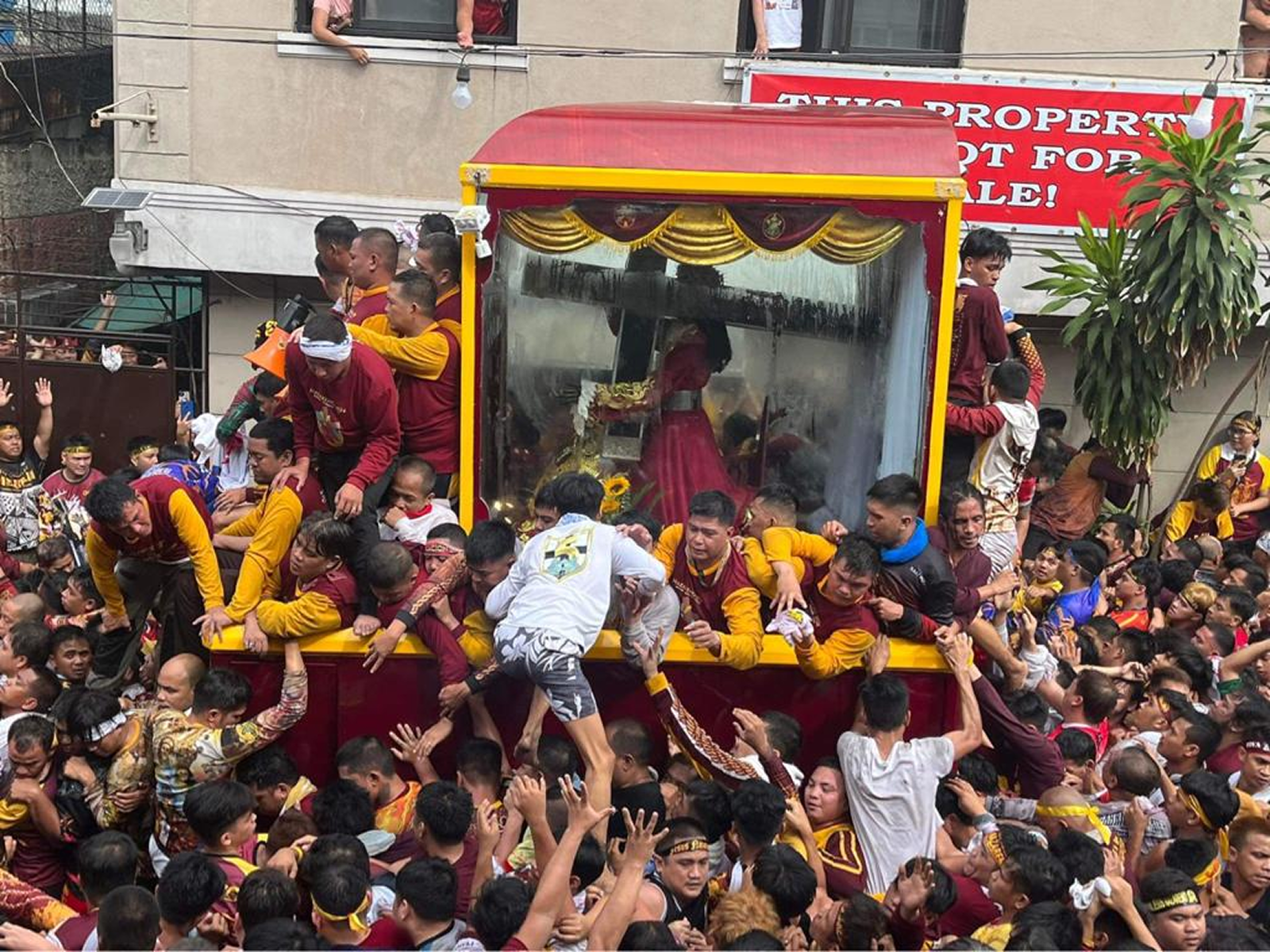
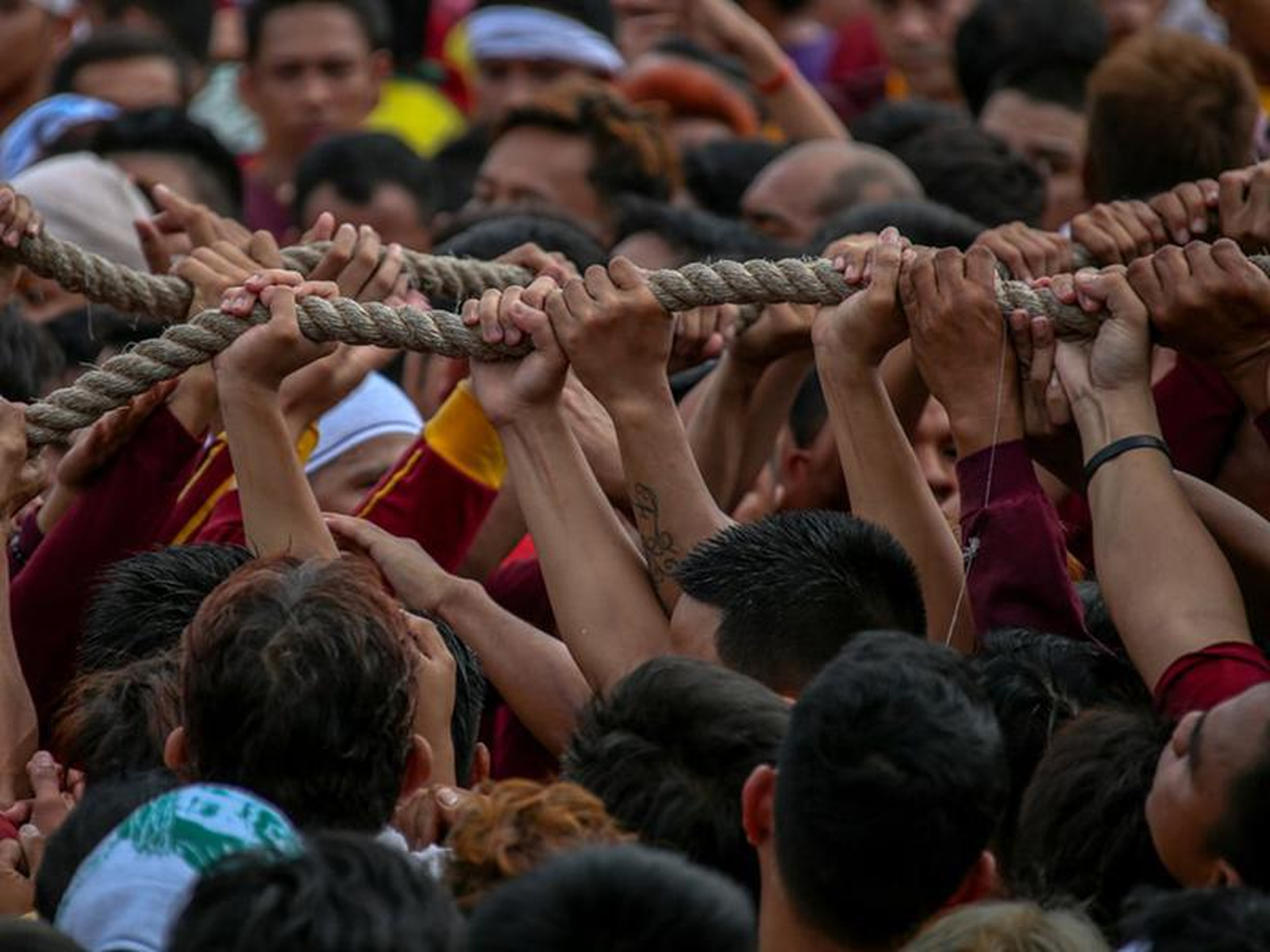
Nothing else on this list compares to the physical intensity of the Traslacion in Manila. Millions of barefoot devotees pack the streets around Quiapo Church before dawn, waiting for the chance to touch the centuries old image of the Black Nazarene as its carriage, pulled by thick ropes and hundreds of hands at once, inches through the crowd over the course of an entire day.
The crush of bodies is real and occasionally dangerous, men climbing onto the carriage itself, others fainting from heat and exhaustion and being passed hand over hand to medical tents set up along the route. This is not a festival built for comfortable viewing from a sidewalk.
It is raw devotion expressed through physical endurance, and the sound of a million people chanting "Viva!" in unison as the carriage lurches forward is something no description fully prepares you for.
azifind.com Travel
Philippine Festival Guide
Black Nazarene · Quiapo, Manila 🌐
Millions of barefoot devotees packed before dawn, waiting just to touch the carriage.
azifind.com Travel
Philippine Festival Guide
Black Nazarene · Quiapo, Manila 🌐
The crush of bodies here is real. This is not built for comfortable sidewalk viewing.
azifind.com Travel
Philippine Festival Guide
Black Nazarene · Quiapo, Manila 🌐
Holding tight to the carriage as millions of people chant "Viva!" in unison. No description prepares you for it.
Planning to Be There, Not Just to See It
Every festival on this list rewards arriving early and staying late, before the official program starts and after it technically ends, because that's when the difference between watching and experiencing becomes clearest.
- → Book early for the Big Three: Cebu, Kalibo, and Iloilo overlap by only a week in January, and hotel inventory in all three cities disappears fast.
- → Go on foot for Pahiyas and Panagbenga: The experience lives in the side streets the main parade route doesn't cover.
- → Slow down for Moriones and Peñafrancia: The emotional weight matters more than the visuals here, so give yourself time to stand still in the crowd instead of moving toward the next photo.
- → Pace yourself at the Black Nazarene: The Traslacion is a full day event with real crowd risk, so plan an exit point in advance rather than committing to the entire route.
For deeper background on the regions hosting these festivals, browse the full Things to Do guides or the Philippine history timeline.